



Hezbollah has overseen 26 years of misery.
The internal ‘occupation’

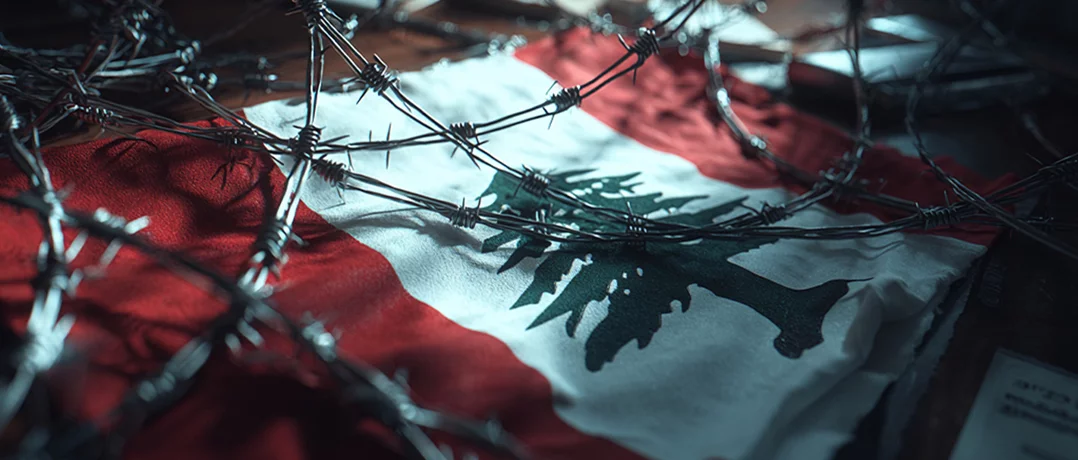
Let’s start at the beginning. On May 24, 2000, after a 22-year occupation, the Israeli army was forced by Hezbollah with whom it had been fighting a 15-year low-intensity guerrilla war, to withdraw from its self-proclaimed 800 square kilometre security zone in South Lebanon.
It was arguably Hezbollah’s greatest moment. Overnight its fighters were hailed as stout defenders of Lebanese territorial integrity, and Lebanon’s Shia community, from where most of the party’s fighters were drawn, had found ‘dignity’ in this stunning feat of arms.
That should have been the end of it, but it’s been pretty much downhill ever since. Just when most clear-thinking Lebanese expected Hezbollah to lay down its arms and, if it chose to do so, enter mainstream politics, the party dredged-up unfinished business in the shape of the ‘occupied’ Shebaa Farms, claiming it was Lebanese territory. There was still more ‘liberating’ to be done, and in any case, il Moqawama, was the only entity that could properly defend Lebanon’s borders from Israeli expansionist ambitions.
It was then that it became clear Resistance narrative was less about defending Lebanese land and more about consolidating Iranian influence. The rest of us had no say in the matter. And so began 26 years of internal ‘occupation’.
Initially, Hezbollah stayed out of politics, relying on Damascus, for political cover. But when the Syrian military was ousted after the 2005 Cedar Revolution, Hezbollah was forced to play a more high-profile political role to defend its interests. The party insisted on government portfolios, while the ambiguous “right of Lebanon, its people, its army, and its resistance to liberate occupied land and defend the country” appeared in every ministerial statement to ensure a degree of legitimacy.
In reality, the words meant nothing. Actions spoke louder and, very gradually, over the next 20 years, the mask began to slip. On July 12, 2006, Hezbollah fighters ignited a month-long war with Israel after a mission to kidnap Israeli soldiers went wrong. The conflict cost the lives of 900 Lebanese civilians. One million people were displaced, and $3.5 billion in material damages was incurred. It ended with no clear winner on either side, but this didn’t stop the late Secretary General Hassan Nasrallah, declaring it a ‘Divine Victory’.
In December 2006, emboldened by its recent heroics, the party and its ‘opposition’ allies staged an opened-ended sit-in in the middle of Beirut to force the resignation of Prime Minister Fuad Seniora and his government, which by this time were holed-up in the Phoenicia Hotel.
Eighteen months later, in May 2008, when the same government tried to dismantle Hezbollah’s private telecommunications network, Hezbollah staged an attempted coup on the streets of Beirut, the first time the party had turned its sanctified weapons on its own people and to influence internal politics.
There followed two years of relative calm and prosperity but in January 2011, eager to derail the progress of the Special Tribunal for Lebanon, which was investigating the Hariri assassination (in which Hezbollah members were implicated), the party forced the collapse of the government of Saad Hariri, using the veiled threat of violence.
To further highlight its regional, rather that national, loyalties, the party then joined the Syrian Civil War on the side of the government of Bashar Al Assad, prompting the mothers of Hezbollah fighters to ask why their sons were now killing fellow Arabs. But by then, the mask was well and truly off. Hezbollah was Iran’s unapologetic regional enforcer and for the next 13 years, the party, with Iranian backing and Syrian cover, controlled almost all the levers of power in Lebanon.
In 2019, during the protests that followed the collapse of the banking system, it was Hezbollah who sent its thugs onto the streets of Beirut to intimidate the anti-government demonstrators.. But the worst was still to come. Less than a year later, on August 4, 2020, at the height of the pandemic, 2,750 tons of Hezbollah-owned ammonium nitrate stored at a silo at the Port of Beirut, generated one of the biggest non-nuclear explosions ever recorded, wiping out a segment of the city, killing over 218 people and injuring over 7,000.
Today, Hezbollah appears to be fighting its final battle. It has pushed its chips in the middle of the table. Winner takes all. But this ignores the fact that Lebanon’s development as a progressive and prosperous pluralistic society was on hold while a party and its militia ran roughshod over the country and its institutions.
There can be no winners.
-
-
-
Michael KaramJournalist/Author
-
