

More than 99% of international data traffic travels through submarine cables, but their concentration along narrow maritime routes, dependence on a small repair fleet and growing control by technology giants are turning the infrastructure beneath the internet into an issue of economic security and geopolitical power.
The internet’s most important infrastructure is underwater
The internet’s most important infrastructure is underwater
By The Beiruter | August 25, 2026

Reading time: 5 min
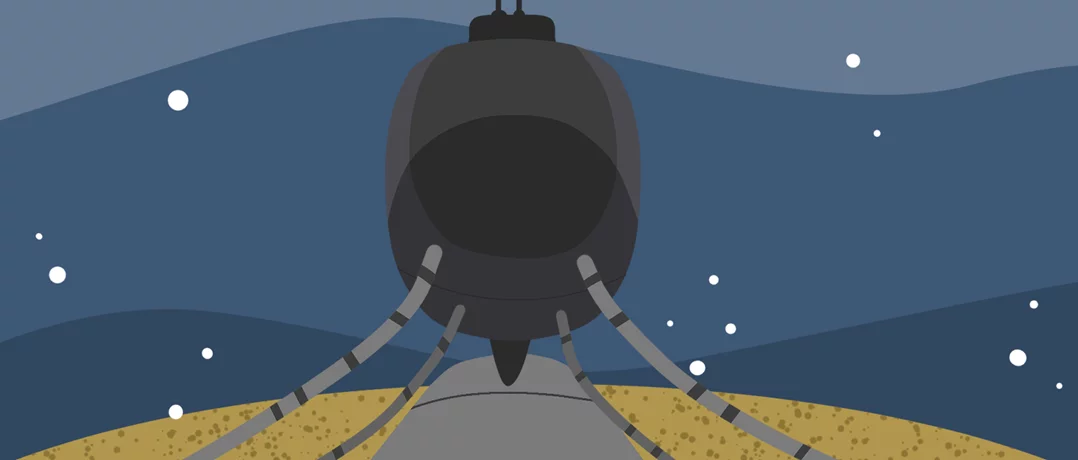
The infrastructure carrying the global digital economy is concentrated in some surprisingly narrow places. More than 99% of international data traffic travels through submarine telecommunications cables, a network stretching more than 1.7 million kilometers across the ocean floor, according to the International Telecommunication Union. Those cables carry financial transactions, government communications and the enormous flows of data required by cloud computing and artificial intelligence. The network is vast, but some of its most important components are highly concentrated. Cables connecting major markets converge through narrow maritime corridors, specialized equipment is supplied by a handful of manufacturers, repairs depend on a small fleet of dedicated vessels, and a growing share of international cable capacity is controlled by the world's largest technology companies. Four U.S. technology companies–Amazon Web Services, Google, Meta and Microsoft–now account for more than 70% of that capacity, according to a 2026 Council on Foreign Relations analysis. Those dependencies are drawing submarine cables into questions of national security and competition between major powers. Governments are scrutinizing who owns them, supplies their equipment, controls their landing points and can restore them after a failure. Control over the infrastructure carrying the world's data is therefore becoming a form of economic and geopolitical power. Individual cable failures are relatively common, yet most internet users never notice them. Between 150 and 200 faults occur each year, according to an International Telecommunication Union's July 2026 report, even as the total length of the network has grown by more than 70% over the past decade. Most failures are not acts of sabotage. More than 80% are associated with human maritime activity, particularly commercial fishing and dragged anchors, and traffic can usually be redirected onto other cables. The greater vulnerability lies in geography. At least 17 cables carrying an estimated 17% to 20% of global internet traffic pass through the Bab el-Mandeb Strait between Yemen and the Horn of Africa, where the waterway narrows to less than 14 miles. More than 90% of communications capacity between Europe and Asia passes through the Red Sea and Suez corridor. Redundancy provides far less protection when alternative cables share the same physical route. A single earthquake, maritime accident or conflict can then threaten multiple connections simultaneously. Those concentrations are particularly pronounced around the Indian Ocean. A July 2026 Carnegie Endowment for International Peace analysis identifies the Strait of Hormuz, Red Sea corridor and Strait of Malacca as strategic chokepoints connecting Asia, Europe and Africa. Their importance is growing alongside regional investment in data centers and AI infrastructure. Physical damage is only part of the problem. Repairing a cable requires specialized vessels and can involve an assortment of national regulations. Average repair response times increased from less than 20 days in 2012 to more than 50 days in 2024, according to industry data cited in the ITU report, with permits, customs procedures and restrictions on foreign vessels contributing to delays. Capacity is limited even when governments grant access. The same report found that around 70 vessels worldwide technically had submarine cable repair capabilities in 2025, but only about 20 to 25 were dedicated or contracted long term to repair work. Much of the fleet dates to the 1980s and 1990s, while a new purpose-built vessel can cost between $100 million and $150 million. Repair capacity is also geographically concentrated. Only about 13% of active vessels serve the South Atlantic, Africa and Pacific Islands combined, with just one permanently stationed repair vessel serving Africa from Cape Town. The OECD's 2025 Enhancing the Resilience of Communication Networks report identifies another concentration at cable landing stations, where undersea fiber connects with terrestrial networks. Multiple cables converging at the same facilities or coastline can remain exposed to a common disruption. The ownership of this infrastructure has undergone its own transformation. International cables were traditionally financed by consortia of telecommunications companies sharing the enormous cost of connecting distant markets. The rise of cloud computing has brought some of the world's largest technology companies directly into the business of building the infrastructure carrying their data. The scale of that concentration represents a remarkable change from little more than a decade ago, when Amazon Web Services, Google, Meta, and Microsoft accounted for less than 10% of international undersea cable capacity. Rather than simply purchasing capacity from telecommunications operators, the four companies now finance and control more of the infrastructure carrying their data. Concentration extends into the supply chain. ASN, NEC, SubCom and China's HMN Tech account for more than 95% of global production of specialized submarine cable equipment, according to the ITU's July 2026 submarine cable resilience report. Governments have begun responding to those dependencies through regulation. In June 2026, the U.S. Federal Communications Commission tightened submarine cable rules and required operators of equipment connecting undersea systems with American terrestrial networks to obtain licenses for the first time. Reuters reported that the rules restrict equipment associated with companies including Huawei and ZTE as Washington seeks to limit Chinese involvement in critical communications infrastructure. Building more cables does not necessarily solve the underlying problem. More than 80% of new submarine cable investment flows toward established routes, according to the ITU, increasing capacity without necessarily providing geographic redundancy. The ITU argues that governments may therefore need to support less commercially attractive alternative routes. The challenge captures a fundamental tension in the infrastructure of the internet. Data can be redirected between networks in fractions of a second, but the cables themselves cannot escape geography. They cross narrow seas, come ashore at specific landing points, rely on a small group of manufacturers and repair vessels, and are being consolidated under some of the world's most powerful technology companies. The internet's apparent decentralization ultimately rests on a physical system with significant points of concentration. As more of the global economy depends on the data passing through it, control over those points is becoming an economic asset, a security concern and a source of geopolitical power.An internet built to survive breaks
Breaking a cable is easier than repairing one
Control of the cables is changing
The geography of resilience
-
-

-
The Beiruter
-
