



A renewed effort to revive Oscar Niemeyer’s unfinished Tripoli fair is restoring the site’s cultural identity and honoring the architect’s vision through a new sculptural tribute.
The interrupted dream of Oscar Niemeyer


Through collaborative efforts between the Niemeyer Heritage Foundation, the Brazilian Embassy, and Lebanese artist Sandra Sahyoun, the name of Oscar Niemeyer is finally engraved in Tripoli giving due credit to the architect of the forgotten dream that is the International Permanent Fair. By reviving this interrupted venture, the Foundation is breathing life back into a monumental site and reasserting Tripoli’s rightful role as a hub of culture and creativity.
More than a faint memory or a neglected landmark, the International Permanent Fair of Lebanon remains an unfinished dream a modernist vision set in concrete, still waiting for completion. It was imagined by President Fouad Chehab and shaped by Oscar Niemeyer, the pioneering Brazilian architect whose work merged aesthetics with humility and structure with poetry. In 1962, he was commissioned to design a fair that would celebrate Lebanon’s land, people, and potential. What was conceived as a symbol of openness and progress soon fell victim to the turmoil that reshaped the country.
The civil war halted the project and buried its promise, leaving behind a silent giant a place without function or identity, yet rich in meaning. Like many architectural survivors in Lebanon, its enduring foundations stand as a reminder of interrupted ambitions, but also as an open invitation to rebuild a shared future.
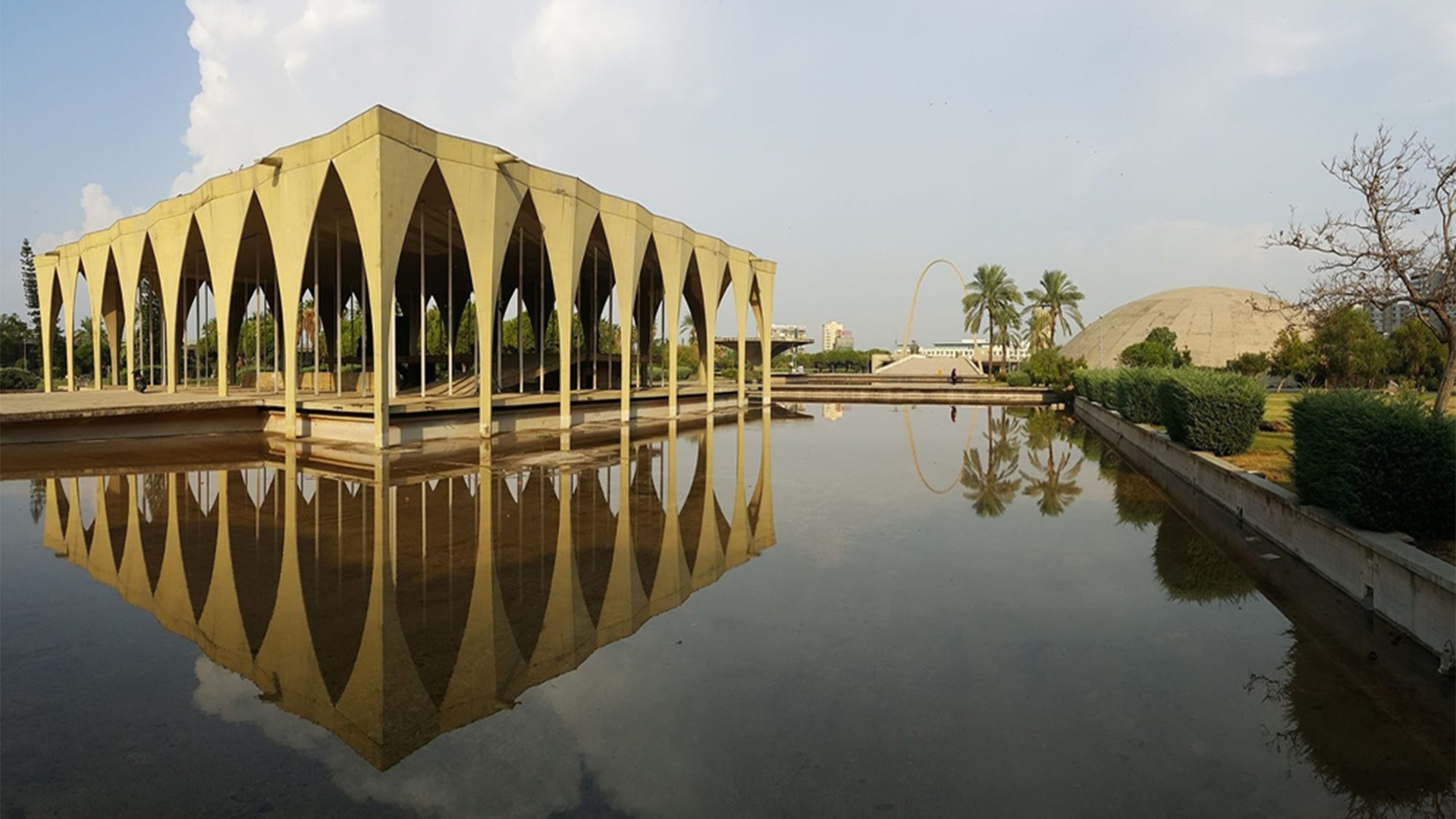
This is the mission embraced by the Niemeyer Heritage Foundation: to restore the fair’s identity as originally envisioned and revive the collective cultural role it was meant to serve. Given the immense scale of the site, restoration is advancing in phases beginning with the experimental theatre, known today as the Dome. Choosing to continue rather than restart reflects a belief in the value of what already exists and in the idea that rebuilding Lebanon must start with preserving what still stands.
The initiative has significance that extends far beyond architecture. It reconnects Tripoli to its national cultural role, strengthens long-standing Lebanese–Brazilian ties, and opens the city once again to artistic, social, and international exchange.
To mark the new chapter in this revival, the Niemeyer Foundation commissioned a sculptural installation of Oscar Niemeyer an artistic tribute that interprets how he expressed himself through architecture: with poetry, transparency, humility, and elegant simplicity. The commission was entrusted to Lebanese artist Sandra Sahyoun, whose creative philosophy is rooted in deconstruction and reconstruction. Her approach allowed her to reimagine Niemeyer’s presence layer by layer, revealing the essence of his vision rather than replicating his likeness.
His humility appears in the faceless form of the bust, built from thin stacked layers.
His transparency is seen in the anamorphic effect the face only reveals itself from the right angle, without blocking what lies beyond.
His poetry flows through the fluid metal lines, carrying subtle references to meaning, form, and movement.
Sahyoun draws inspiration from the egg-shaped curves of Niemeyer’s architecture symbols of life and potential always waiting to hatch. A messenger dove rests at the heart of the artwork, while a miniature representation of the fair is hidden within the ear’s internal layers as if the architect’s dream continues to whisper from within.

For the artist, crafting the sculpture became a personal journey unearthing the soul of a place that Lebanon once celebrated and later abandoned. Her work transforms memory into momentum, inviting a new generation to imagine what this fair can still become.
As we approach the anniversary of Niemeyer’s passing, this tribute crystallizes the synergy between the visionary who designed the fair and the city whose potential he believed in. It marks not only remembrance but renewal.
Coinciding with the 80th anniversary of diplomatic relations between Brazil and Lebanon, the installation funded by the Brazilian Embassy represents a rare cultural bridge across time and geography. It is the continuation of an interrupted story: a dream once drawn by an architect and a president, now carried forward by artists, curators, and diplomats determined to bring it to life.
