



A weakened Hezbollah struggles with mounting debts, shrinking foreign support, and reliance on illicit funding routes.
The iron pipeline: Inside Hezbollah’s quiet funding stream
The iron pipeline: Inside Hezbollah’s quiet funding stream
By The Beiruter | December 04, 2025

Reading time: 3 min
Suddenly, and without warning, Hezbollah shifted from a regional fighter projecting excess military strength and skillfully deploying it, to a perforated body consumed by multi-layered exhaustion. Today, it stands at the center of a complex web of intertwined crises tightening around its neck.
According to developments on the ground and in politics, the exposure has gone beyond the shrinking of its presence outside Lebanon’s borders and has extended into Lebanon itself: a south submerged under the weight of occupation, daily assassinations targeting Hezbollah’s security cadres, local and international demands for disarmament, international sanctions, and mounting bills, from reconstruction and restoration costs to salaries for fighters, the wounded, and families of the dead. As for the upcoming elections, they threaten to become yet another predicament if the funds needed to operate an electoral machine, one that has always lived on abundance, are not secured.
In short, Hezbollah faces an intertwined political, security, and financial landscape, having moved from an excess of power to an excess of burdens, with reconstruction emerging as its central dilemma.
A senior official affirmed that a joint meeting was held, just days after the cease-fire, between the leadership of the Amal Movement and the administration of Al-Qard Al-Hassan. In the meeting, Amal presented an initial estimate indicating that total losses amount to no less than $10 billion, while Hezbollah offered a different estimate claiming total damages do not exceed $4 billion, and that the party “has the capacity” to cover $3 billion of that amount.
The source adds that events in the following weeks proved Amal’s estimates to be closer to reality than the party’s figures. After initial payments for housing allowances and reconstruction, Hezbollah stopped settling accumulated dues for these two files starting last April, increasing resentment within its base and raising levels of discontent.
The source explains that bills are piling up while funding shrinks. Iran is not ready to invest generously in Hezbollah’s disabled arm, and money transfers no longer move without “fees” as they once did. The source notes that funds pass freely through two regional states, but Hezbollah pays a dollar for every dollar to facilitate the transfer.
Where is this money coming from?
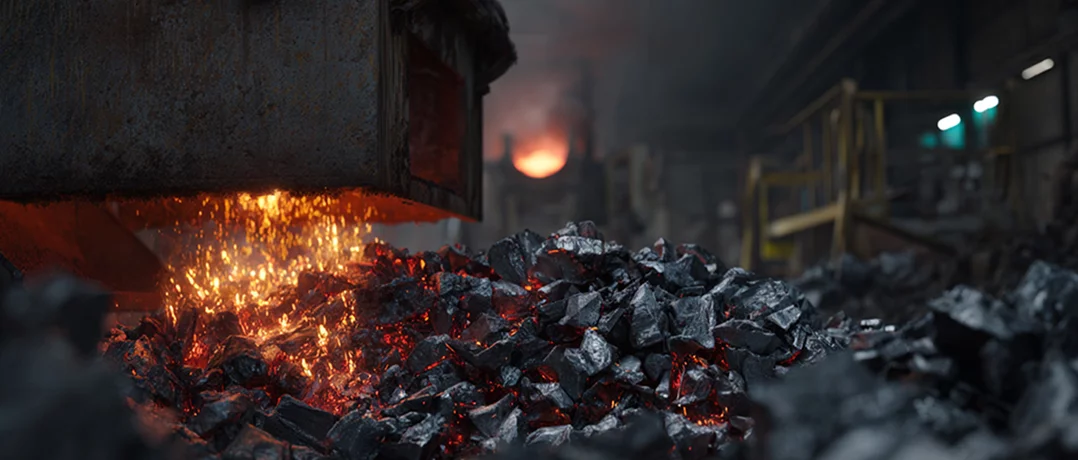
According to the source, Hezbollah’s bulldozers are the only vehicles permitted to transport rubble from buildings destroyed by Israeli military operations. Contractors affiliated with the party extract iron from the rubble, send it to two regional countries for smelting, and sell it for $350 to $400 per ton. Revenues from iron exported from Lebanon return to Hezbollah through the ports of Sidon and Tyre.
The source says Hezbollah is quietly making political use of the proceeds from smelted iron, asserting control over the material and redirecting it for its own benefit. The source believes the party is planning to use these funds to finance its parliamentary election campaigns, following the same approach it used in municipal elections and reconstruction efforts to influence voters.
Does the amount of smelted iron suffice to finance Hezbollah’s electoral campaigns?
The source explains that 500 buildings were destroyed in Beirut’s southern suburbs alone, but the amount of iron extracted there is nothing compared with what has been destroyed in southern Lebanon. Nevertheless, the source confirms that the money arriving in Lebanon through the two smelting countries does not come solely from iron; it also includes funds transported on the same ships, originating from Iran, a European country, and another in South America. This means, according to the source, that iron represents only part of a wider foreign-funding network.
However, the money entering Lebanon does not move in one direction. According to another source, there is suspicious financial activity at Beirut Airport: for about a month, around one ton of dollars, of unknown origin, has been leaving Lebanon daily. One ton equals $1.5 million. If true, this development raises a major question: Is the country being drained of dollars, and to what end?
-
-

-
The Beiruter
-
