



Israel’s recognition of Somaliland has triggered regional backlash, highlighting how Red Sea security and geopolitical rivalries are reshaping the Horn of Africa.
The Israeli gamble

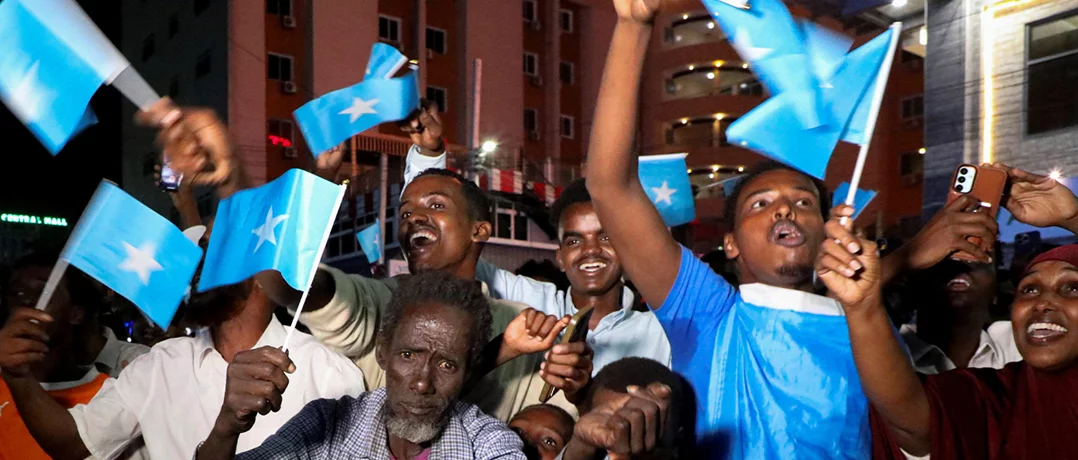
Israel has become the first country to formally recognize Somaliland as an independent state, a move that has triggered sharp condemnation from Somalia, the African Union, the Arab League, and the Organization of Islamic Cooperation. Several key regional actors, including Egypt, Turkey, and Saudi Arabia, have rejected the decision, warning that it threatens regional stability and undermines Somalia’s sovereignty.
Somaliland declared itself independent in 1991 amid Somalia’s civil war and has operated as a de facto state for more than three decades. Despite maintaining its own government, elections, and security forces, it has remained internationally unrecognized making Israel’s decision a diplomatic breakthrough for Somaliland.
Strategic geography, strategic motives
Somaliland’s strategic location lies at the heart of this controversy. Positioned along the Gulf of Aden near the Bab el-Mandeb Strait, through which nearly one-third of global container traffic passes, the territory sits astride one of the world’s most vital maritime chokepoints. This makes it particularly significant amid escalating insecurity in the Red Sea, including Houthi attacks on shipping from Yemen.
Israeli Prime Minister Benjamin Netanyahu described the recognition as “seminal and historic” congratulating Somaliland’s president and expressing interest in expanding ties, including possible participation in the Abraham Accords. For Israel, the move appears driven less by diplomatic principle than by strategic calculation.
Analysts suggest Israel’s engagement in the Horn of Africa is driven by several interrelated strategic objectives. Central among these is the pursuit of maritime security in the Red Sea and the Gulf of Aden, waterways that are vital to global trade and Israel’s own commercial and security interests. Closely linked to this is the monitoring and countering of the Houthis across the Bab el-Mandeb Strait, a chokepoint whose instability directly threatens Israeli shipping and regional security. Finally, Israel’s presence in the Horn of Africa forms part of a broader strategy aimed at the strategic encirclement of Iran, complementing its close relationship with Azerbaijan in the Caucasus by extending its geopolitical footprint into Africa’s eastern flank.
Together, these factors suggest Israel is seeking to construct a broader regional security envelope rather than advancing a normative commitment to self-determination.
Regional and international opposition
Somalia has denounced Israel’s decision as a “deliberate attack on its sovereignty”, warning it could destabilize an already fragile region. On Sunday, President Hassan Sheikh Mohamud encouraged the Somali people “to be calm and to defend the unity and the independence of our country, which is facing this naked invasion”. The African Union has echoed this concern, arguing that recognition of Somaliland sets a dangerous precedent that could encourage secessionist movements across Africa.
Arab states, particularly Egypt, Qatar, Saudi Arabia, and Turkey, have also pushed back strongly. For Egypt, the issue intersects with Red Sea security and broader geopolitical competition in the Horn of Africa. Turkey, which maintains ties with Mogadishu, views Somalia as a key regional ally and opposes any move that weakens its territorial integrity.
According to the Middle East Eye, Egypt’s foreign minister consulted with counterparts in Somalia, Turkey, and Djibouti following Israel’s recognition of Somaliland, with all four states jointly condemning the move and rejecting any plans to displace Palestinians outside their homeland. Cairo’s position reflects earlier reports that the US and Israel had explored the possibility of resettling displaced Palestinians from Gaza in Somaliland, claims denied by Somaliland’s foreign minister and viewed as highly sensitive and destabilizing domestically. It remains unclear whether such proposals were discussed as part of the recent Israel–Somaliland declaration.
As for the UAE, it has heavily invested in Somaliland’s Berbera Port, without formally recognizing the country. Moreover, Abu Dhabi refrained from joining the Arab-Islamic statement denouncing Israel’s decision. On the other hand, The EU issued a joint statement rejecting Israel’s decision and highlighting the need to find a permanent solution to the dispute.
The United Nations Security Council held an emergency meeting on Monday where the Somalian representative did not only denounce Israel’s recognition of Somaliland but also condemned continued Israeli breaches of Syrian sovereignty. He also reiterated his country’s stance that forced Palestinian displacement is prohibited. The Assistant Secretary-General for the Middle East, Asia and the Pacific of the United Nations Khaled Khiari stated that the recognition is void as it is not in accordance with international law. However, whether this overwhelming international condemnation will derail Israel’s plans in the Horn of Africa is something only time will tell.
While, the UN Security Council is expected to hold an emergency session on the issue, underscoring the seriousness with which the international community views the development.
The United States factor
For Somaliland, the ultimate prize remains recognition by the United States, which it believes would unlock broader international acceptance. To that end, Somaliland has positioned itself as pro-Western, anti-China, and committed to democratic governance and political freedoms. It has also openly signaled its willingness to join the Abraham Accords.
Yet Washington remains hesitant. US policy has long upheld a “One Somalia” framework, prioritizing support for the federal government in Mogadishu, especially given the ongoing fight against al-Shabaab. Recognizing Somaliland could be perceived as a betrayal, potentially emboldening other regions such as Puntland or Jubaland to pursue formal secession and further weakening Somalia’s fragile state structure.
Equally important is regional pressure: most Arab League states and Turkey strongly oppose recognition, and their views carry considerable weight in Washington. Furthermore, African Union member states remain wary of legitimizing unilateral secession, fearing a domino effect across the continent.
The Israeli gamble
While Israel may see Somaliland as a valuable strategic partner, recognition without parallel US backing carries risks. It could provoke backlash across parts of the Muslim world, complicate Somaliland’s regional standing, and paradoxically hinder efforts to expand the Abraham Accords.
Israel has historically been cautious about recognizing secessionist entities, mindful of precedents that could rebound in the Palestinian context. Although that concern is less salient today, pragmatic considerations remain. Recognition may generate more costs than benefits if it isolates Somaliland diplomatically or limits Israel’s room for maneuver elsewhere.
There is little doubt that Israel has strong incentives to deepen cooperation with Somaliland, particularly on the security front. Somaliland offers proximity to potential future conflict zones, access to strategic minerals, and an opportunity for Israel to build ties with Muslim populations beyond the Middle East.
However, by moving without Emirati and American coordination, Israel has altered the diplomatic landscape, raising questions not only about the Horn of Africa’s future, but about how far strategic pragmatism can stretch before it destabilizes an already volatile region.
-
-

-
Peter ChouayfatiPolitical Analyst and Researcher
-
