



How Kurdish autonomy in Syria, once led by the Syrian Democratic Forces, is being reshaped after the fall of Bashar al-Assad.
The Kurdish question in Syria

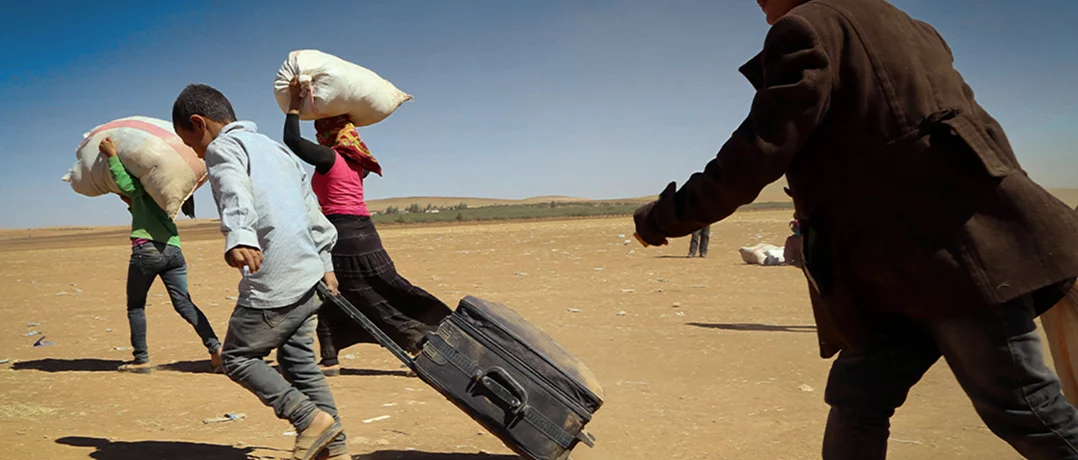
For over a century, the Kurdish question has been one of the Middle East’s most persistent unresolved political dilemmas. Numbering roughly 30 million people, Kurds constitute the world’s largest stateless ethnic group, spread across Türkiye, Iran, Iraq, and Syria (constituting around 10% of the latter’s population). Despite deep historical roots in the region, Kurdish aspirations for self-determination have repeatedly been reshaped by shifting geopolitics, regional rivalries, and state centralization.
In Syria, Kurdish political ambitions reached their peak during the country’s civil war, when Kurdish-led forces established de facto autonomous governance in the north and northeast. However, the collapse of Bashar al-Assad’s regime on 8 December 2024 and the rise of a new interim authority under former Hay’at Tahrir al-Sham (HTS) chief Ahmad al-Sharaa (also known by his previous nom de guerre, Abu Mohammad al-Julani) dramatically altered the Kurdish position. The decline of the Syrian Democratic Forces (SDF), Washington’s reduced involvement, and the recent ceasefire agreement have introduced a complex phase of uncertainty.
From here, understanding the present requires examining the Kurdish struggle through both its historical trajectory and recent political transformations.
Historical foundations of Kurdish statelessness and identity formation
The Kurds are indigenous to a mountainous region known as “Kurdistan,” spanning modern-day Türkiye, Iraq, Iran, and Syria. While absent from official maps, Kurdistan occupies a central place in Kurdish collective consciousness. Kurdish identity, grounded in language, culture, and social cohesion, began to crystallize in the medieval period. Interestingly, the most infamous historic Kurdish figure is Saladin, who was a prominent Muslim leader, the founder of the Ayyubid dynasty (1171-1250), and known for his role in the Crusades as well as the capture of Jerusalem in 1187. Although predominantly Sunni Muslim, Kurdish society includes Yazidis, Alevis, Christians, and Shiite groups, reflecting internal pluralism.
The decline of Kurdish political autonomy can be traced back to the 16th century, when the Ottoman Empire (1299-1922) gradually incorporated Kurdish territories into its expanding imperial structure. While local rulers retained limited authority, their influence diminished over time. Nonetheless, the collapse of the Ottoman Empire after World War I (1914-1918) initially created an opportunity to advance Kurdish independence. The 1920 Treaty of Sèvres included provisions for their autonomy and the possibility of statehood, signaling international recognition of Kurdish nationalism. However, the treaty was never ratified or implemented. Its replacement by the 1923 Treaty of Lausanne abandoned Kurdish self-determination altogether and instead divided Kurdish-populated regions among newly established nation-states. Since then, Kurdish movements across the region have engaged in repeated uprisings and political campaigns, yet none have successfully achieved full independence; entrenching a century-long struggle defined by repression, rebellion, and unresolved identity.
In Syria, early integration into the modern state was marked by systemic marginalization, as the rise of Arab nationalism gradually sidelined Kurdish identity within state institutions. The 1962 “Exceptional Census” in al-Hasakah Governorate (also known as the “1962 Hasakah Census”) stripped about 120,000 Kurds of citizenship, depriving generations of political, cultural, and social rights. Consequently, Arabization initiatives, including the 1970s “Arab Belt” policy, sought to alter the demographic composition of Kurdish-majority areas by displacing Kurdish populations and resettling Arab communities. Despite decades of political repression, Kurdish identity and activism persisted, creating conditions and fertile ground for rapid political mobilization following the 2011 revolution.
The rise of SDF and Kurdish de facto autonomy
The Syrian Civil War (2011-2024) fundamentally reshaped Kurdish political fortunes. As central state authority collapsed across large portions of northern Syria, Kurdish groups, led by the Democratic Union Party (PYD) and its armed wing, the People’s Protection Units (YPG), filled the power vacuum in northern Syria. Ankara claims that these groups are directly linked to the Kurdistan Workers’ Party (PKK), founded by Abdullah Öcalan in 1978, which aims for an independent Kurdish state and is designated as a terrorist organization by Türkiye, the United States (US), the European Union (EU), and other countries. Initially focused on community defense, Kurdish forces soon became central actors in the broader conflict.
The rise of Islamic State in Iraq and Syria (ISIS), which later rebranded under the name Islamic State (IS), marked a decisive turning point. The 2014-2015 Battle of Kobani became both a military and symbolic defining moment as Kurdish fighters, supported by extensive US military and logistical assistance, successfully repelled ISIS forces; solidifying American-Kurdish strategic partnership as well as transforming Kobani into a symbol of Kurdish resistance and political resilience.
Later in 2015, the creation of the Syrian Democratic Forces, a multiethnic coalition (including Arabs, Assyrians, and Turkmen), further expanded Kurdish influence. With sustained Western support, the SDF played a central role in dismantling ISIS’s territorial caliphate while managing resources, terrorist detention facilities, and displacement camps.
Beyond its military achievements, the SDF established the Democratic Autonomous Administration of North and East Syria (DAANES), often referred to as “Rojava,” promoting decentralized governance, gender equality, and local representation. For many Kurds, Rojava represented the most tangible realization of self-governance since the establishment of the Kurdistan Region of Iraq (KRI) following Iraq’s 2005 federal constitution.
The decline of SDF and Kurdish leverage amid a post-Assad Syria
The fall of former President Bashar al-Assad on 8 December 2024 ushered in a new phase of Syrian state reconstruction under interim President Ahmad al-Sharaa. Emerging from Islamist opposition networks, Sharaa sought to reestablish centralized governance across a country fractured by more than a decade of war, while simultaneously securing international recognition (crucial for legitimacy and reconstruction efforts). For the SDF, the transition represented both an opportunity for political integration and a direct threat to the autonomy it had struggled to build.
Initial negotiations between Damascus and the SDF produced the March 10 Agreement in 2025, which proposed merging SDF fighters into the Syrian armed forces, transferring control of natural resources to the central government, and guaranteeing certain Kurdish cultural rights. However, these negotiations quickly stalled as disagreements emerged over the nature of integration and local governance authority. SDF leaders insisted on maintaining decentralized administrative structures, while the new Syrian authorities rejected any political model that might weaken centralized state sovereignty.
From here, military confrontation escalated in late 2025 and early 2026. Government offensives, supported by allied Arab tribal factions and tacit regional backing, resulted in the rapid collapse of SDF territorial control across Arab-majority regions such as Deir ez-Zor and Raqqa. Tribal defections played a decisive operational role as well, providing local intelligence, manpower, and logistical support to advancing government forces. The Syrian government simultaneously cultivated tribal alliances through newly established institutions, including an Office of Tribes and Clans, designed to incorporate tribal actors into emerging state structures.
The reconfiguration of Kurdish autonomy
By early 2026, military setbacks forced the SDF to reconsider its political strategy. A series of ceasefire agreements culminated in a comprehensive integration framework on 30 January 2026, designed to transform the fragile truce into a more permanent political settlement.
The agreement mandates the gradual integration of SDF forces into the Syrian military establishment. A new military division incorporating 3 SDF brigades will be formed, alongside the integration of Kurdish fighters into existing government brigades, including deployments in Aleppo province and Kobani. Government security forces affiliated with the Ministry of Interior are scheduled to deploy to previously restricted Kurdish strongholds, including Hasakah and Qamishli.
Equally significant is the administrative dimension of the agreement. Governing institutions established under the Kurdish autonomous administration are to be merged into Syrian state structures, while maintaining employment for local civil servants. The Syrian government will also assume control over strategic infrastructure, including vital border crossings and energy facilities, consolidating economic authority within central institutions.
To reassure Kurdish communities, the agreement includes provisions recognizing Kurdish cultural and educational rights, facilitating the return of displaced populations, and formally acknowledging Kurdish identity within Syria’s national framework. Earlier decrees, namely Presidential Decree No. 13 (2026), had already granted citizenship to stateless Kurds as well as recognized Kurdish identity as part of Syria’s national fabric, designated Kurdish language as a national language alongside Arabic, and institutionalized Newroz as a national holiday.
Meanwhile, international actors have largely welcomed the agreement. The United Nations (UN) framed it as an essential step toward national reconciliation, while US Special Envoy for Syria Tom Barrack described it as
historic milestone in Syria’s journey toward national reconciliation, unity, and enduring stability
Simultaneously, the agreement strengthens the political position of President Sharaa, who continues to pursue diplomatic engagement with global powers, including the US and Russia, in an effort to secure reconstruction support and international legitimacy.
Despite the agreement’s stabilizing intent, significant uncertainties remain. Many Kurdish communities view the integration process as a forced compromise that effectively dismantles the decade-long experiment in Kurdish self-governance. The reduction of autonomous authority has generated concerns regarding future political representation, local security arrangements, and demographic stability in Kurdish-majority areas.
Kobani remains particularly sensitive. Surrounded by government forces and Turkish-backed factions, the city continues to symbolize Kurdish resistance while simultaneously representing the fragile limits of Kurdish territorial control. Türkiye’s ongoing opposition to Kurdish political autonomy remains a decisive regional factor shaping Kurdish strategic ambitions.
Reintegration without resolution
The Kurdish experience in Syria reflects the broader historical trajectory of Kurdish political struggles across the Middle East: a continuous negotiation between identity, autonomy, and state sovereignty. The rise of the SDF demonstrated the unprecedented potential for Kurdish political empowerment during periods of state fragmentation. Conversely, its recent military and political decline illustrate the structural limitations Kurdish movements face within regional and even global power politics.
The integration agreement represents a significant milestone in Syria’s post-war reconstruction, potentially stabilizing a volatile region while facilitating national reunification. Yet it does not fully resolve the Kurdish question. The latter’s political consciousness, strengthened by years of self-governance, is unlikely to accept complete reversion to centralized marginalization.
Alas, the durability of Syria’s reconstruction will depend on whether the state can reconcile territorial unity with meaningful political pluralism. Historical precedent (both in Syria and beyond) suggests that durable stability in multiethnic societies rarely emerges from coercive centralization alone. The Kurdish question, therefore, remains not merely a minority issue but a defining test of Syria’s capacity to construct an inclusive post-conflict political order based on transitional justice.
-
-

-
Anthony ChamounResearcher/WriterFocusing on Political Science and International Affairs.
-
