



As Lebanon moves closer than ever to abolishing the death penalty, The Beiruter speaks with anti–death penalty advocate Dr. Ogarit Younan and revisits powerful testimonies from victims' families, and children whose voices have shaped one of the country's longest-running human rights battles.
The last mile: Beyond the gallows

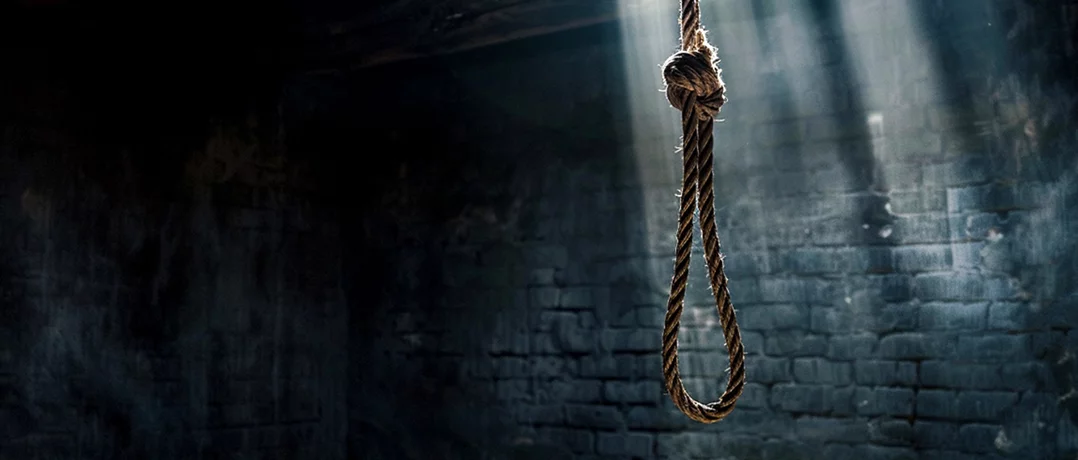
Twenty-two years after carrying out its last execution, Lebanon appears closer than ever to formally abolishing the death penalty. What has remained suspended in practice since 2004 could soon disappear from the country's legal framework altogether, marking a defining moment in a human rights and legal campaign that has spanned nearly three decades.
On June 2, 2026, Parliament's Administration and Justice Committee approved a draft law abolishing capital punishment, months after it had already passed the Human Rights Committee. The proposal now awaits a final vote in Parliament's General Assembly.
For Dr. Ogarit Younan, one of Lebanon's most prominent anti–death penalty advocates and a leading figure in the movement since 1997, the current momentum is the culmination of years of work involving lawmakers, judges, journalists, civil society organizations, schools, victims' families, and prisoners themselves.
"Lebanon is now one step away from abolishing the death penalty," she says, pointing to what she believes is a genuine political willingness to move the proposal toward final approval.
From moratorium to abolition
Lebanon has not carried out an execution since January 17, 2004. Yet capital punishment remains part of the country's legal code, leaving Lebanon in a position somewhere between retention and abolition.
For Younan, the distinction matters.
A moratorium is a political decision that can be reversed. Abolition, by contrast, removes the punishment entirely from the legal system.
If the current bill is adopted, the approximately 85 prisoners currently under death sentences in Lebanon would instead face life imprisonment, the next highest penalty available under Lebanese law.
"I refuse to live in a state of gallows"
The debate over capital punishment is often reduced to a question of crime and punishment. In Younan's view, however, it is fundamentally a debate about the kind of state and society a country wants to be.
"Abolishing the death penalty is a vision for society and a philosophy of governance," she says.
For her, violence cannot be addressed through further violence.
"I refuse to live in a state of gallows," she says. "A state that seeks to protect life cannot simultaneously grant itself the right to take it away."
At the same time, she rejects the idea that opposing executions means being lenient toward crime. "I am against crime and against the death penalty."
Justice, she argues, should not be measured by a state's ability to kill, but by its ability to hold people accountable, deliver fairness, and prevent future harm.
 Children’s drawings submitted as part of Lebanon’s anti–death penalty campaign. On the left, Mohammed Chaito’s illustration carries the message “Execution does not render justice”; on the right, Reem Rzeiq’s award-winning drawing reminds viewers that “Everyone deserves another chance.”
"The state gave me another corpse"
Throughout the years of campaigning, Younan has met death row prisoners, judges who issued death sentences, and families who demanded executions.
One story, however, remains particularly memorable.
A father whose son had been murdered became one of the strongest advocates for executing the killer. He appealed to politicians and authorities and pushed relentlessly until the sentence was carried out.
Some time later, members of the campaign visited him again.
They found him sitting outside his home with his head in his hands, visibly broken.
"I wish I had listened to you," he told them.
"My son is gone. The man who was executed is gone too. What did the state give me? Another corpse."
For Younan, the moment encapsulated the essence of the debate.
Execution does not bring victims back. It does not erase grief or repair loss. It simply adds another death to an existing tragedy.
Among the stories that continue to resonate within Lebanon's abolition movement is a letter written by Amanda Aoun when she was just fourteen years old. Amanda is the daughter of Chawki Aoun, who was killed in 1994 while his murderer faced a death sentence.
At a conference for children opposed to the death penalty held in Beirut in 2001, she took a remarkable position. Despite losing her father, she publicly opposed the execution of his killer, arguing that capital punishment neither addresses the causes of crime nor restores the life that was taken.
In her letter, she wrote that carrying out the execution would not end the tragedy but could instead create another one for a different family. The children of the condemned man, she argued, might become orphans just as she had after her father's death.
More than two decades later, her words continue to be cited in discussions surrounding the death penalty in Lebanon, not because they came from a politician or activist, but because they came from a victim's daughter who experienced profound loss and nevertheless chose not to demand death in return.
 A handwritten letter by 14-year-old Amana Aoun, daughter of murder victim Shawki Aoun, presented at a 2001 conference of children opposing the death penalty in Beirut.
Beyond the death penalty
Lebanon's death penalty debate has undergone significant changes in recent years. Yet for many advocates, the conversation does not end with abolishing capital punishment.
They argue that the focus should not rest solely on offenders, but also on victims and their families. As a result, calls have emerged for legislation and public policies that provide meaningful support to those affected by violent crime, including psychological and social assistance, access to education and healthcare, and initiatives that preserve the memory of victims and acknowledge their loss.
Ultimately, the debate over the death penalty extends beyond the fate of those sentenced to die. It raises broader questions about how societies respond to crime and its consequences. While public discussion often centers on the punishment imposed on the offender, the experiences of victims and their families frequently receive far less attention.
The loss caused by a violent crime cannot be undone, and no court ruling can restore a life that has been taken. In this context, supporters of abolition advocate a different approach, one centered on strengthening the rights of victims and their families through long-term social support, educational opportunities, healthcare access, and mechanisms that ensure their loss is neither forgotten nor ignored.
Between punishment and support, retribution and prevention, the debate ultimately evolves into a larger question about the kind of justice societies seek to uphold: Is justice measured by the number of sentences carried out, or by the ability to protect the living, support those left behind, and prevent violence from being repeated?
-
-

-
Michella RizkContent Manager/WriterFocusing on social affairs.
-
