



The Lebanese Army’s unity is not in question
The Lebanese Army’s unity is not in question

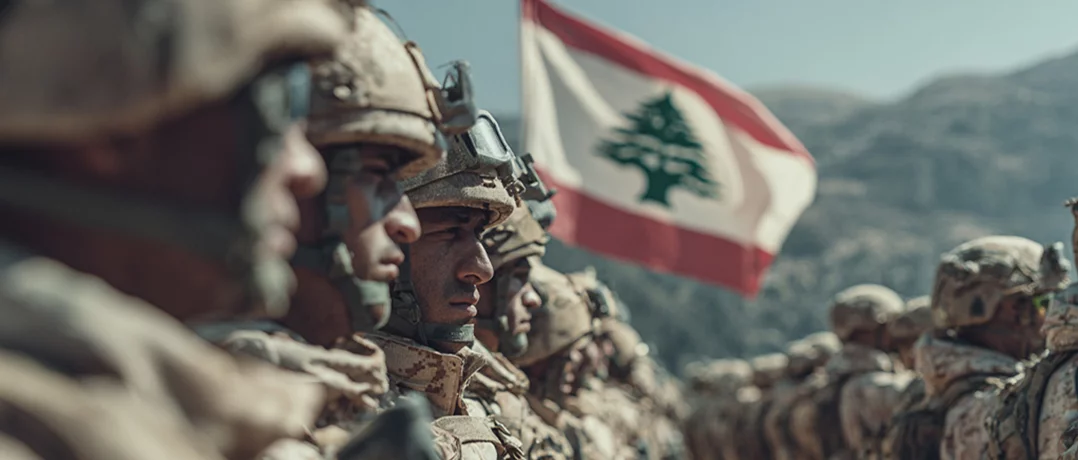
Amidst armed conflicts and political turmoil, concerns arise about the cohesiveness and possibility of divisions within the country’s military apparatus; especially in societies governed by diversity. Lebanon is no different, as part of political maneuvering, questions have been raised with regards to the Lebanese Armed Forces (LAF).
The Beiruter spoke with military expert General Fadi Daoud, who provided insight into how the LAF is organized, why its internal cohesion remains resilient, and how the institution continues to function as a stabilizing force within the country.
The structure of the Lebanese Armed Forces and the distribution of units
Addressing the issue of how the army is organized, particularly at the level of brigades and military units, Daoud explained that the Lebanese Army’s structure takes into account the diverse composition of Lebanese society.
He noted that internal diversity does not hinder the organization of the army. On the contrary, the army’s structure is designed in a way that reflects the sectarian and religious composition of the country. Military units are distributed in a manner that respects Lebanon’s communal balance, ensuring that representation within the institution reflects the broader makeup of the nation.
According to Daoud, each unit is organized in a way that maintains this balance, allowing for equal representation of the various sects and communities. This system ensures that no single group dominates the institution and that the army remains a national body rather than a sectarian one.
Regarding concerns of potential internal dissent, Daoud asserted that he has seen no evidence that would indicate division or dissent. Furthermore, he explained that his communication with military personnel at various levels, including both retired soldiers and those still in active service, reinforces his belief that the Lebanese Army possesses the necessary capabilities to confront and withstand any possible division.
Why division within the LAF is unlikely
When asked about the deeper reasons that prevent internal divisions within the army, Daoud pointed to several structural and social factors that reinforce cohesion within the institution.
First, he described the Lebanese Army as a reflection of Lebanese society itself. Just as the broader society contains multiple communities and identities, the army includes members from across the country’s social and sectarian spectrum. However, Daoud stressed that the presence of diversity does not automatically produce division. On the contrary, the institutional culture of the army tends to transcend these distinctions.
He provided a simple example to illustrate this point. Retired military personnel frequently organize demonstrations to demand better salaries and improved living conditions. During these protests, participants gather together without separating themselves along sectarian lines. According to Daoud, observers do not see these demonstrations divided into separate groups representing different sects. Instead, the participants stand together as former members of the same institution.
While the Lebanese Army does maintain a system of sectarian balance within its organizational structure, Daoud stressed that this does not translate into sectarian division inside the institution itself. In fact, he argued that sectarian polarization remains largely absent from the internal dynamics of the army despite the diversity present within Lebanese society.
Additionally, Daoud also noted that Lebanese society as a whole has not made a collective decision to divide itself. If the society had reached such a point, the country would be in a very different situation today. Since the army is composed of individuals drawn from the same society, the absence of a broader societal decision to fragment is reflected within the military institution as well.
Another major factor reinforcing unity, Daoud said, is the lifestyle experienced by soldiers. Military life involves demanding conditions that create strong bonds between those who serve. He referred to what is commonly described in English as “hardship.” The difficult missions soldiers carry out together, the training exercises they undergo collectively, and the hardships they endure side by side all contribute to building a strong sense of solidarity. These shared experiences create a unique form of cohesion among soldiers that cannot easily be undermined.
While some voices may attempt to question the strength of this unity, Daoud believes that it remains robust and respectable, allowing the Lebanese Army to withstand the pressures and challenges it currently faces.
The debate over Hezbollah’s weapons and the LAF’s role
Amid the ongoing national debate surrounding Hezbollah’s weapons and the broader question of restricting arms to the authority of the Lebanese state, Daoud utterly rejected that efforts to address this issue could lead to internal divisions within the Lebanese Army or even spark civil conflict.
He insisted that there is no basis for talk of a civil war and called for such narratives to be removed from public discussion. According to him, protecting the army requires keeping it away from political and media polarization.
He summarized his position with a clear and concise conclusion: the Lebanese Army is capable, and indeed the most capable force on Lebanese territory, of serving the country.
Hence, for Daoud, the key condition for maintaining this capability is ensuring that the army remains insulated from political rivalries and media disputes. If the institution is kept outside these tensions, he believes it will remain fully capable of fulfilling its national role and continue to stand as a capable and resilient force within Lebanon.
-
-

-
The Beiruter
-
