



Lebanese designers Elie Saab, Georges Hobeika, and Zuhair Murad led Paris Fashion Week SS26 couture with collections celebrating freedom, love, and renewal.
The Lebanese designers who defined Paris Fashion Week
The Lebanese designers who defined Paris Fashion Week
By The Beiruter | January 30, 2026

Reading time: 3 min
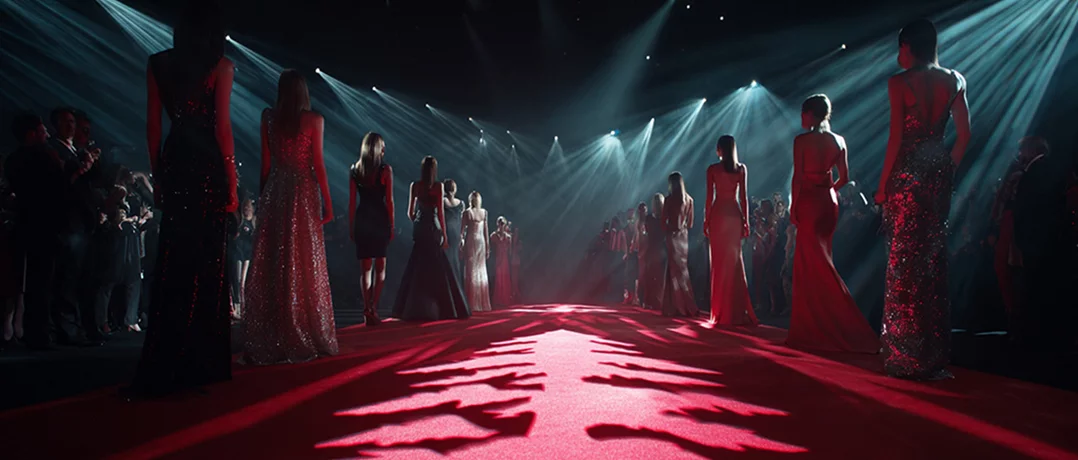
At Paris Fashion Week Spring/Summer 2026 couture, Lebanese designers shaped the emotional and aesthetic pulse of the season. Elie Saab, Georges Hobeika, and Zuhair Murad each approached couture from a distinct philosophical angle, yet together they told a broader story: one of freedom, introspection, and renewal. From jet‑set glamour to spiritual creation and chiaroscuro rebirth, Lebanese couture reaffirmed its place at the heart of Paris.
Elie Saab: Couture for the modern woman
For Spring/Summer 2026 couture, Elie Saab turns toward the golden haze of 1970s jet‑set summers, channeling the bohemian romance of Marrakech through a lens of unapologetic glamour. The collection is drenched in gold, bejeweled gowns, cascading crystals, metallic mesh, and luminous embroidery. It evokes a woman who seeks freedom and comfort as much as opulence.
Tassels sway with movement, chiffon shifts through sun‑washed ombré hues, and embroidery is treated like jewelry, embellishing the body rather than overpowering it. Many looks are designed to be mixed and matched: fluid dresses layered with gilets, sequin tops paired with matching trousers. The result is couture that feels cinematic yet wearable, indulgent yet effortless. Even the bridal moment resists tradition. A soft beige rosé gown, interwoven with lace and stones, replaces expected ivory with something more intimate and ethereal. It is a declaration of serenity.
Georges Hobeika: Love as a creative force
Georges Hobeika’s Spring/Summer 2026 couture collection is rooted not in trend, but in philosophy. Created in just two‑and‑a‑half weeks, the collection explores love as both a spiritual and creative force, an idea that shapes every silhouette, cut, and construction choice.
Pushing his atelier to invent rather than repeat, Hobeika experiments with innovative fabrics, unexpected structures, and sculptural volumes. Emotion guides the construction process, resulting in forms that feel both architectural and deeply human. Fluidity meets strength; vulnerability coexists with power.
“What inspired this collection is love, love of creation,” Jad Hobeika explains, referencing a divine origin that connects all beings. That sense of interconnectedness is mirrored in the garments themselves: pieces that reject fleeting trends in favor of personal expression and emotional truth. Deeply rooted in the maison’s codes, the collection feels timeless, couture as a reflection of inner life rather than external demand.
Zuhair Murad: From shadow to light
With Chiaroscuro, Zuhair Murad presents Spring/Summer 2026 couture as an act of quiet resistance and renewal. The collection unfolds as a journey from darkness into light, drawing on the poetic tension between shadow and luminosity. Echoes of Renaissance rebirths meet the hopeful restructuring of the female form seen in the 1950s.
Across 45 looks, Murad sculpts the body with conical corsets that define the waist, while hips are framed with majestic volume. Full skirts and airy overskirts create a sense of celestial movement, counterbalanced by deep draping and sensual necklines that soften the armour‑like silhouettes.
The colour palette moves through sfumato hues, diaphanous pastels emerging from inky depths reinforcing the collection’s emotional arc. This is couture as transformation: strength forged through softness, light born from shadow.
Lebanese couture at the center of Paris
Together, Elie Saab, Georges Hobeika, and Zuhair Murad defined Paris Fashion Week SS26 through beauty, elegance, and substance. Each collection carried a distinct emotional register: freedom, love, rebirth, yet all shared a commitment to craftsmanship, storytelling, and femininity that transcends trend cycles.
In a season marked by uncertainty and reinvention, Lebanese designers once again reminded Paris that couture is about what is worn and what is felt. And in doing so, the reaffirmed their enduring influence on the global fashion narrative.
-
-

-
The Beiruter
-
