



A deck full of memories, laughter, and friendly rivalries. Whether during village gatherings, difficult wartime evenings, or casual meetups among friends, playing cards remains a beloved part of Lebanese culture, passed down through generations.
The Lebanese tradition of playing cards

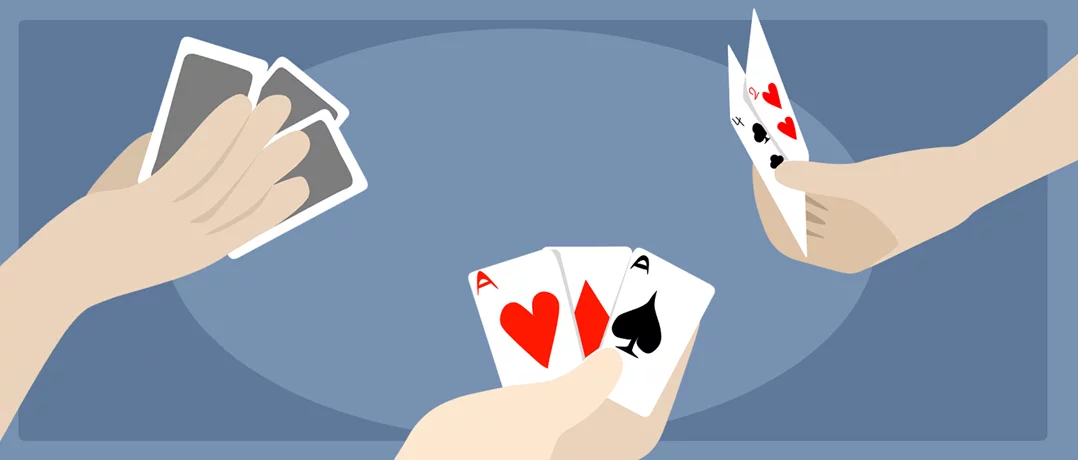
Imagine walking through a Lebanese village and coming across four older men sitting at a café, playing cards over cups of Lebanese coffee. They laugh out loud, tease one another, and argue over who is going to win. It is a familiar scene that many Lebanese have witnessed at least once in their lives. Playing cards has long been part of social life around the world, with each country having its own games and traditions. In Lebanon, games such as Tarneeb, Basra, Likha, 400 and 14 have been passed down from one generation to another, becoming a familiar part of everyday gatherings.
But playing cards in Lebanon is about more than the game itself. A simple deck of cards has brought people together for generations. During the Civil War, people played to pass the time and find moments of joy despite the difficult circumstances. This tradition has continued, with younger generations also turning to card games for company and comfort during more recent conflicts. Affordable and easy to play, card games offer a simple escape from everyday worries and a cheap source of happiness. What started as a simple pastime has become a tradition passed down through generations and an important part of Lebanese culture.
A deck full of memories
For the older generation, playing cards is tied to old memories and moments they still cherish. For Marleine Joukhad, 78, it has also become a way to pass the time and hang out with her friends and neighbors. Now retired, she plays with a group of women, and their gatherings have become a regular part of their lives.
“We play cards to have fun, but sometimes it can get frustrating,” Marleine told The Beiruter. “Some people are more professional than others, and it can get very competitive. Sometimes people provoke you, but I still love playing. When my friends are not around, I even play on Jawaker on my phone.”
Her friend group has even created its own tradition: each woman contributes a small amount of money whenever they meet. At the end of the month, they collect it and go out to eat together, often playing cards during their outing. Marleine learned how to play when she was little and she also remembers playing Tarneeb and 400 in shelters during the war, these games were the most popular back then. Card games were a way to spend time together despite the difficult circumstances.
Souad Youssef, 75, card playing brings back memories of long winter nights in the village, sitting around the fireplace and playing until late, while eating roasted chestnuts with a warm cup of tea. “Half of the night was fighting and the other half was playing,” she recalled when speaking to The Beiruter. The arguments were part of the fun, and the memories remain dear to her.
Souad also shared other memories that show how much card playing meant to her and her friends. When someone won, the group would carry them on their shoulders and run around to celebrate, as if they had achieved something special. On New Year's Eve, they would play a game called “7 w noss,” (seven and a half) with the winner taking home one Lebanese lira, which was worth much more at the time.
Her memories also go back to the difficult years of war. Souad recalled playing cards in the dark, using a small gas lantern, while keeping the shutters and windows closed so that the light would not be seen from outside. Even during those difficult nights, the game was a way to spend time together. Although she can no longer play today because of her health, she still looks back on those moments with love. “Those days will always be dear to my heart,” she said.
From grandparents to grandchildren
Nassim Khawaja, 23, has been playing cards with his grandparents since he was a child. They were the ones who taught him how to play, and he still enjoys sitting down for a game with them today. These gatherings, accompanied by cups of Lebanese coffee, have given him memories he continues to cherish. “Playing cards is an important part of our culture, and I love how it brings people together,” he told The Beiruter.
In his village, card playing is also a way to bring passionate players together. Every summer, young and old people take part in a card tournament, where experienced players compete alongside younger ones for a prize. The event has become something everyone looks forward to, with participants even training together before the tournament.
Nassim also remembered some funny moments from the games, especially when his friends got too carried away. “Some of my friends would get so excited or angry during the game that they would break the table. It happened so many times that we had to buy several plastic tables,” he recalled with a laugh.
With a cup of coffee or tea, whether at a café or at home, playing cards has always been a way for Lebanese people to make the most of their time. It keeps the mind active, brings laughter, and sometimes even causes anger and frustration. But these are the moments people remember long after the game is over.
Being Lebanese also means finding ways to enjoy life despite difficult circumstances, and card playing is one example of this resilience. Through conflicts, and hard times, people continued to gather around a deck of cards, finding happiness in something as simple as a game. And this is why a simple pastime has become part of Lebanon's culture and traditions.
-
-
-
Yara SalibaJunior Writer/Translator
-
