

As Lebanon changes, many of the customs that once united families and
villages are disappearing. Older generations look back on the traditions that
defined everyday life and continue to shape the country's cultural identity.
The Lebanese traditions time has left behind
The Lebanese traditions time has left behind
By Yara Saliba | August 08, 2026

Reading time: 5 min
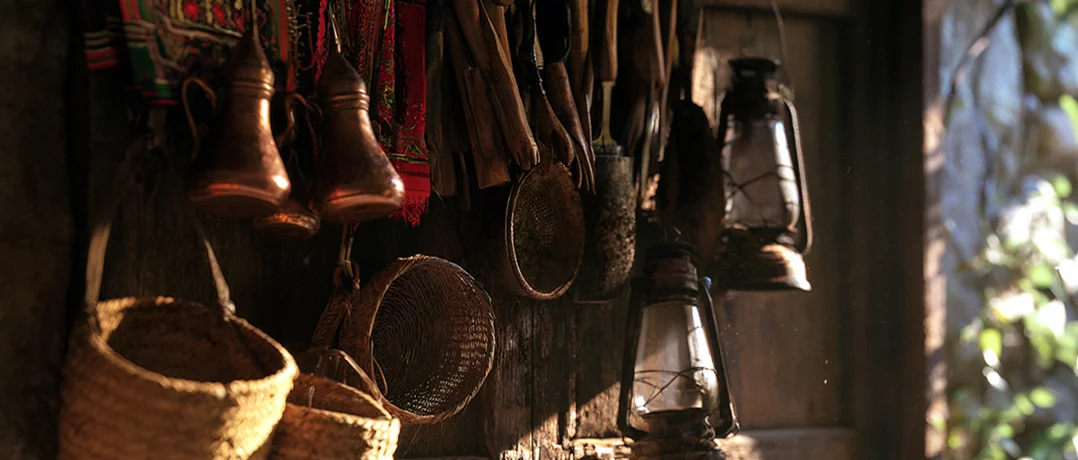
For generations, traditions were at the heart of everyday life in Lebanon, shaping how people celebrated milestones, welcomed new life, honored the dead and connected with their communities. Many of these customs were passed down from parents to children and became an integral part of village life, reflecting values of solidarity, hospitality and shared identity.
Today, however, changing lifestyles, urbanization, migration and modern social norms have transformed the way Lebanese people live, leaving many of these traditions to gradually fade. While some traditions have adapted to changing times, others have disappeared altogether, surviving only in the memories of older generations.
To explore this fading heritage, we spoke with Rania Khalil from North Lebanon, Amale Taireh from the Bekaa and Marie Diab from South Lebanon, who shared the customs they grew up with, some once common across Lebanon, others unique to their villages.
When weddings were community celebrations
Long before lavish wedding halls and carefully planned receptions became the norm, Lebanese weddings were filled with symbolic rituals that involved the entire community.
One tradition remembered by the interviewees was hanging the bride's embroidered trousseau outside the family home before the wedding for neighbors to admire the handmade linens and clothing she had prepared for her special moment.
The bride herself was also subjected to customs that reflected old beliefs about marriage. Before the wedding, elderly women sometimes pulled her hair to make sure she was not wearing a wig. She was also given almonds and nuts to crack with her teeth as a way of demonstrating strength and good health.
Several interviewees also recalled a playful tradition on the wedding night: the groom's relatives would try to "kidnap" the bride while her own family surrounded and protected her. If the groom's family managed to take her away, it was considered a victory; if not, it became a source of friendly teasing between the two families. Also, family members competed over who would donate the largest amount of money to the newlyweds in a public auction-like display of generosity.
After the couple moved into their new home, the groom's relatives would visit and secretly steal a small household item as a joke, another lighthearted custom meant to strengthen family ties.
Among the more symbolic traditions was placing a piece of dough containing money on the frontdoor of the newlyweds' home, a gesture believed to bring prosperity and abundance. Apples also played a role: after the ceremony, four apples were thrown in the four directions, and according to tradition, the young woman who caught one would be the next to marry.
How communities welcomed life and honored death
Birth was also marked by customs that blended faith and folklore. When a baby was born, families would gently break a loaf of bread over the child's head as a blessing for abundance and good fortune. During the newborn's first three days, the village midwife, or sage-femme, would wash the baby with salt, believing the practice would strengthen the child's skin and promote good health.
Perhaps the strongest memories were those surrounding death, when entire communities united to support grieving families.
According to the interviewees, if someone in the neighborhood died, nearby families would immediately stop playing the radio out of respect for 40 days. Neighbors prepared coffee, welcomed visitors and even opened their homes to help receive the large number of mourners, particularly if they lived on the same floor or nearby.
For the first week, relatives and neighbors brought meals because the bereaved family was not expected to cook. Widows were also expected to follow strict mourning customs, including wearing buttoned black clothing and avoiding cutting their hair.
Some interviewees recalled that in their villages, the deceased remained at home for three days before burial so family and neighbors could pay their respects, illustrating how mourning once centered around the family home rather than funeral halls.
Faith, festivals and New Year's beliefs
Religious celebrations also carried traditions that younger generations rarely practice today. On the night of Holy Thursday during Easter, some community believers tied seven knots in a thread after visiting each church, hoping their prayers would be answered.
Church bells also inspired friendly contests among young men, who competed to see who could ring them the loudest and the longest during religious celebrations. Festivals and celebrations also became a showcase of physical strength. In villages, men tried to outdo one another by lifting the mihdaleh the heavy stone roller traditionally used to flatten rooftops, while others competed to lift the jurn al-kibbeh, the large stone mortar used to prepare kibbeh. Successfully lifting either object was seen as a sign of exceptional strength and earned the admiration of the community.
New Year's Eve came with its own set of superstitions. Homes had to be thoroughly cleaned before midnight so the family could welcome the new year with a fresh start. Yet on New Year's Day itself, no sweeping or mopping was allowed, as many believed cleaning the house would sweep away the family's luck for the coming year.
More than memories
Not every tradition has disappeared completely, but many now survive only in stories shared by older generations. Some have faded because families are smaller, villages have become cities, and migration has scattered relatives across the world. Others simply no longer fit modern lifestyles.
Whether rooted in faith, superstition or community life, these customs tell the story of a Lebanon where neighbors shared both joy and grief, weddings involved entire villages, and everyday rituals carried meanings that extended far beyond the act itself.
As Lebanon continues to change, these memories remain an important reminder of the country's rich cultural heritage, one that older generations hope will not be forgotten, even if it is no longer practiced.
-
-

-
Yara SalibaWriter
-
