From Lebanon’s first female diplomat in 1945 to today’s ambassadors across the world, women have played a vital role in shaping the country's diplomatic history.




From Lebanon’s first female diplomat in 1945 to today’s ambassadors across the world, women have played a vital role in shaping the country's diplomatic history.

On June 24, the world celebrates Women in Diplomacy. For Lebanon, the occasion offers an opportunity to revisit a largely overlooked chapter of the republic's history.
Today, women occupy 19 of Lebanon's 74 ambassadorial posts and serve in some of its most important diplomatic missions, from Washington and London to Geneva, Vienna, and Tokyo. Their presence reflects decades of change within one of the state's oldest institutions and places Lebanon slightly above the global average for female ambassadors.
Yet this story did not begin with recent appointments or growing international attention to women's representation. It began at the dawn of Lebanese independence, when a handful of pioneering women entered a profession that was still overwhelmingly male and helped shape how a young republic presented itself to the world.
The modern story of women in diplomacy began in the aftermath of the Second World War. As the international order was rebuilt, women played a role in shaping the newly established United Nations and securing recognition of gender equality within its founding charter. The decades that followed brought a series of milestones, from the creation of the Commission on the Status of Women to the adoption of the Convention on the Elimination of All Forms of Discrimination Against Women (CEDAW) and the Beijing Conference of 1995.
Lebanon's story, however, took a distinctive path.
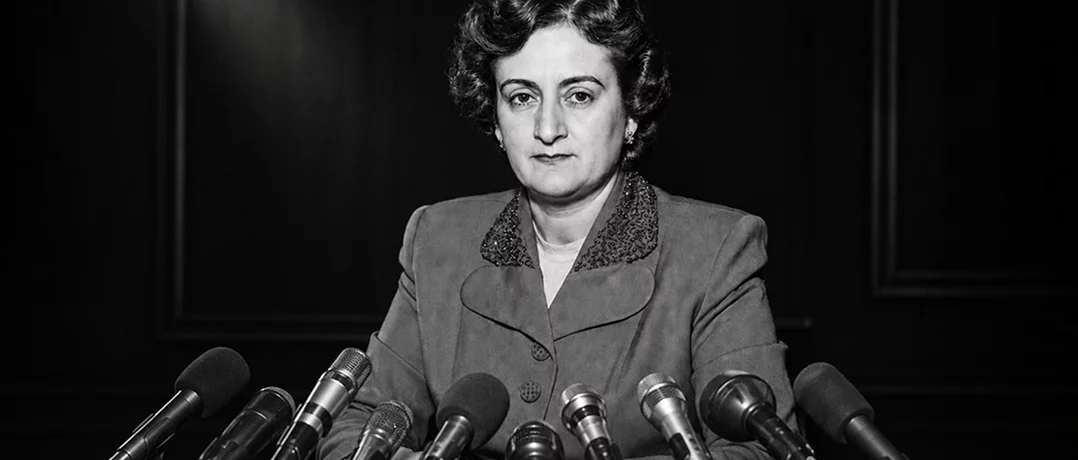
Among the pioneers who shaped the country's diplomatic history, few figures are as remarkable, and as overlooked, as Angela Jurdak Khoury.
Born in 1915, Khoury belonged to a generation of Lebanese women who entered public life at a time when opportunities remained severely limited. At the American University of Beirut, she became the first woman to study sociology and, in 1938, the first woman to earn a master's degree from the Faculty of Arts and Sciences. She later became the first woman to teach and work in social services at the university.
Her most significant achievement came in the years immediately following Lebanon's independence.
In 1945, only two years after the end of the French Mandate, Khoury joined the diplomatic service, becoming Lebanon's first female diplomat. The newly independent republic was still defining its institutions, establishing diplomatic relations, and seeking recognition on the world stage. Yet among the small group entrusted with representing the country abroad was a woman.
The timing remains striking. Lebanese women would not obtain the right to vote until 1952. Yet years earlier, a Lebanese woman was already representing her country in international forums.
Between 1946 and 1951, Khoury served on the newly established United Nations Commission on the Status of Women, placing a Lebanese diplomat at the center of some of the earliest international efforts to advance women's rights. While much of the world was only beginning to debate women's participation in public life, a Lebanese woman was already helping shape those discussions.
Her story reflects one of the enduring contradictions of modern Lebanon. Yet Khoury was not an exception for long. Over the decades that followed, a growing number of women would enter the Foreign Ministry, gradually transforming one of the state's most traditional institutions.
While parliamentary politics remained heavily influenced by patronage, sectarian balances, and inherited political networks, diplomatic careers relied more heavily on education, language skills, examinations, and professional advancement.
As Lebanese women increasingly excelled in universities, law schools, journalism, and academia, the Foreign Ministry became one of the few state institutions where merit could provide a pathway into public service.
This helps explain why women often entered diplomacy before reaching the highest ranks of political leadership. Their progress was gradual, but over time women moved from advisory and diplomatic roles into some of the most senior positions within the foreign service.
The most difficult chapter in the history of Lebanese diplomacy unfolded during the civil war.
Between 1975 and 1990, the Lebanese state was battered by conflict, foreign intervention, displacement, and political fragmentation.
Across the world, embassies remained open. Lebanese representatives continued attending international conferences, maintaining bilateral relations, and defending their country's interests abroad even as violence reshaped realities at home.
While front lines divided Beirut and political factions competed to define Lebanon's future, diplomats stationed abroad were often called upon to explain a country that seemed increasingly difficult to explain. In many respects, they became custodians of Lebanon's international presence during one of the most turbulent periods in its history.
For many women who would later rise through the ranks of the diplomatic corps, these years became an important formative experience, shaping careers that would help redefine Lebanese diplomacy in the decades that followed.
Progress came through individual careers rather than sweeping institutional reforms.
Over time, women began assuming increasingly senior responsibilities within embassies, consulates, and international organizations. Their advancement challenged long-standing assumptions about leadership in a profession historically dominated by men.
One of the most significant milestones came when Amal Mudallali became Lebanon's Permanent Representative to the United Nations in New York, the first woman to hold the position. Her appointment reflected a broader transformation that had been unfolding quietly for decades.
Other women followed. Sahar Baassiri represented Lebanon at UNESCO. Caroline Ziadeh went on to become a senior diplomat and later Special Representative of the United Nations Secretary-General in Kosovo. More recently, women have been appointed to some of Lebanon's most prominent diplomatic missions, including Washington, London, Geneva, Vienna, Tokyo, and UNESCO.
Their rise was not the result of a single reform or political breakthrough. It was the cumulative outcome of decades of professional achievement within a system that often opened more slowly than the women advancing through it.
Few countries illustrate the contradictions of women's advancement quite like Lebanon.
For decades, Lebanese women have been among the most educated in the region, building successful careers as judges, professors, physicians, lawyers, entrepreneurs, journalists, and diplomats. Yet the centers of political power have remained overwhelmingly male.
As the UN Women and ESCWA report Women at the Table notes, the challenge was often not one of competence but of access. Women repeatedly described political and institutional environments shaped by informal networks, entrenched power structures, and traditional assumptions about leadership. The obstacle was often not reaching the room, but reaching the table.
Diplomacy reflects that tension particularly well. Lebanese women have long been trusted to represent their country abroad, negotiate before international organizations, and defend national interests in foreign capitals. Yet their rise within the diplomatic corps unfolded alongside a political system where women remained largely underrepresented in parliament, government, and party leadership.
Recent appointments have brought visible progress, but not parity. Today, women occupy 24 percent of Lebanon's ambassadorial posts, a figure that places the country slightly above the global average. Previous international estimates showed that women accounted for just 21 percent of ambassadors worldwide, suggesting that Lebanon has made measurable progress in expanding women's representation within its diplomatic corps, even if full balance remains a distant goal.
From Angela Jurdak Khoury to the women who today lead Lebanese missions across the world, the story of women in Lebanese diplomacy spans nearly eight decades of the republic's history.
It is a story not only of individual achievement, but of institutional evolution. Each generation expanded a path that had not previously existed, transforming what was once an exception into an increasingly visible reality.
Their story is not a footnote to Lebanese diplomacy. It is part of its foundation.