

Bayti Restaurant is more than a dining concept it is a family tribute rooted in migration, memory, and a father’s unfulfilled dream of returning home to Lebanon.
The long road home of a Lebanese migrant dream
The long road home of a Lebanese migrant dream
By Adella Beaini | January 15, 2026

Reading time: 4 min
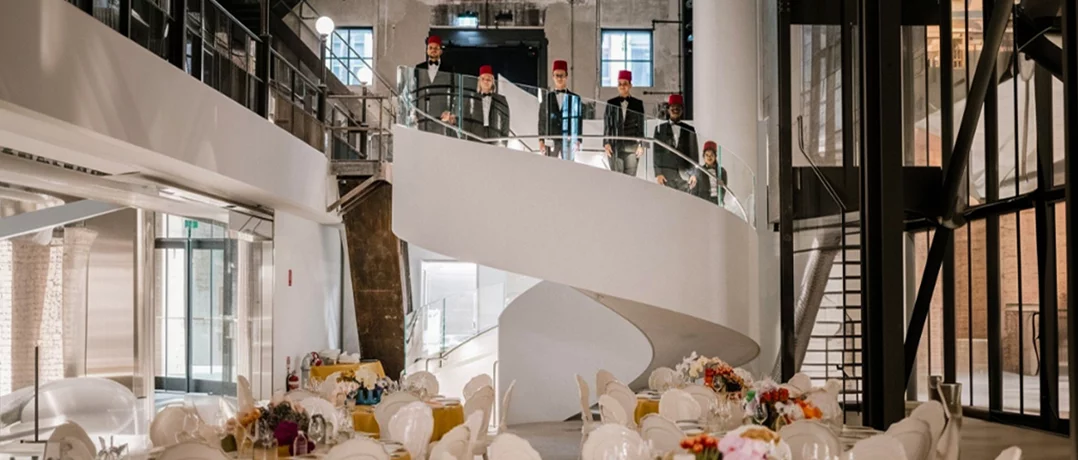
George Khouzame always dreamed of returning home to Lebanon.
A Lebanese migrant who fled the 1975 civil war in search of stability, he built a life and a legacy in Australia through food, generosity and community.
Yet when he passed away in 2014 from his cancer battle, he never saw that dream fulfilled.
Bayti Restaurant, founded by siblings Priscilla and Najee Khouzame, is the modern expression of a family story that began 40 years ago with their parents, George and Julie, arriving in Australia in search of safety and opportunity.
What started as a humble catering business in 1985 has evolved into a celebrated restaurant brand and now, a cultural homecoming.
“Bayti was born from the legacy of the George Khouzame Group, a respected family business built by George and Julie Khouzame, Lebanese immigrants who left their homeland during the civil war in search of a better future in Australia,” Priscilla said.
“Our parents’ resilience and entrepreneurial spirit laid the foundation for what would grow into one of Australia’s leading names in modern Lebanese cuisine.”
For Priscilla, the idea of Bayti was inseparable from her father’s identity and his longing for Lebanon.
“Returning to Lebanon was always dad’s dream…Though he passed away in 2014, this next chapter is a tribute to him,” she said.
“This is our way of honouring our father his legacy, his vision, and the love he never stopped carrying for his homeland.”
The name itself is deliberate.
“‘Bayti,’ which means ‘my home’ in Arabic, is more than just a name, it’s a philosophy rooted in family, tradition, and connection,” Priscilla said.
“We’re not here to reinvent the stories; we’re here to keep them alive, to carry them forward with care, authenticity, and heart, so that the next generations can experience the same sense of home we grew up with.”
That responsibility became even heavier after their father’s sudden illness and death.
“Two weeks before he passed, he sat me and my brother Najee down, handed my brother his phone, and said: ‘This is my mobile. All I ask is that you continue the work I started,” Priscilla said.
“From that moment, his words stayed with us. From a young age, he trained us to understand Lebanese culture, food, and community.”
Priscilla says Bayti exists to honour that moment and that promise.
“My dad believed deeply in the power of food to bring people together, to create warmth, belonging, and a sense of home,” she said.
“His vision was never just about cooking,it was about generosity, respect, and making every guest feel genuinely welcome, as though they were entering our own family home.”
However, the journey forward was not easy.
“When our father passed away, many assumed Bayti would close its doors,” Priscilla said.
“We didn’t have the time or space to pause. We had to show our community that Bayti was still alive and strong.”
That same community, she says, carried them through.
“Being first-generation Australian means constantly balancing two worlds: Australian and Lebanese culture,” she said.
“That experience has shaped our perspective on business, identity, and connection.”
And in July 2025, Bayti returned to Lebanon with a two-day pop-up in Kfour a moment that brought everything full circle.
“As our father always said, ‘Food is the one thing that brings people together.’”
“It’s a sentiment that holds especially true for us Lebanese pride runs deep in our veins. It’s more than just heritage; it’s something engraved in our soul.”
With plans to return to Lebanon for a month-long residency in July this year, and further expansion into the Middle East and Europe, Priscilla says Bayti’s purpose remains unchanged.
“This next chapter is deeply personal for us,” she said.
“Our parents left Lebanon in search of stability and a future for their children. Now, as first-generation Australians, we’re proud to bring an Australian-established concept back to the Middle East to honour our heritage and share our story through food.”
For the Khouzame family, growth is not measured in outlets or accolades.
“Bayti represents the resilience of migrant families, the strength of community, and the spirit of Australian-Lebanese entrepreneurship,” she said.
“It reflects a journey shaped by migration a true fusion between cultures where something meaningful was built in Australia while carrying the traditions, values, and hospitality of Lebanon.
“We believe Bayti will have truly fulfilled its vision when it is carried forward by the next generation.”
In that sense, Bayti has already succeeded not just as a restaurant, but as a reminder that even far from home, Lebanese identity endures.
And through every dish served, George Khouzame’s legacy continues to return home, one table at a time.
