Explore how poet Said Akl sought to redefine Lebanese identity by creating a unique Lebanese alphabet, sparking a lasting debate over language, culture, and nationhood that continues to resonate today.


Explore how poet Said Akl sought to redefine Lebanese identity by creating a unique Lebanese alphabet, sparking a lasting debate over language, culture, and nationhood that continues to resonate today.

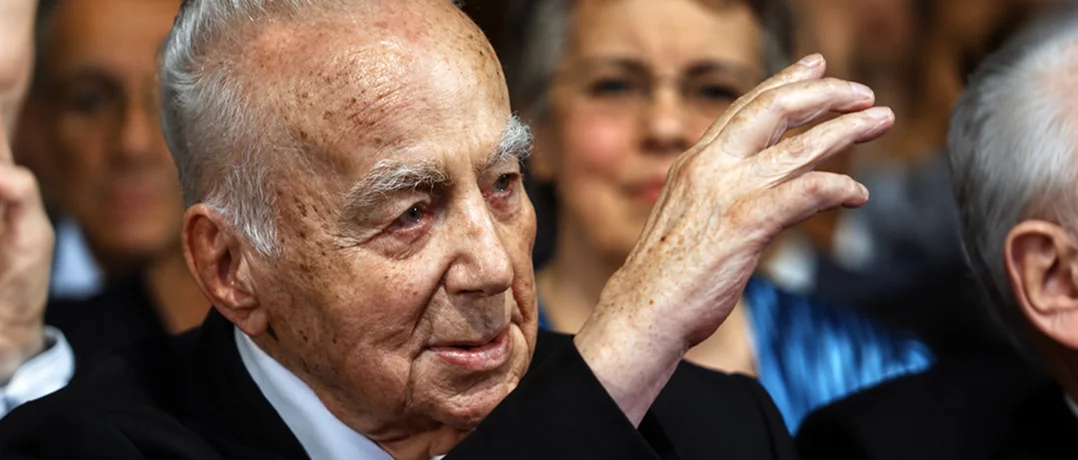
Few writers have attempted to reshape the identity of an entire nation through language, yet that was precisely the ambition of Said Akl, whose belief that Lebanon possessed its own distinct language led him to propose an entirely new alphabet, challenge centuries of linguistic tradition, and ignite a debate that continues to divide intellectuals, historians, and ordinary Lebanese decades after his ideas first emerged. While many remember Akl as one of Lebanon's greatest poets, his literary achievements represent only one chapter of a much larger story, because alongside his celebrated poetry existed an equally ambitious project that sought to redefine how Lebanese people understood themselves, arguing that language was not simply a means of communication but the clearest expression of a nation's identity, history, and future.
For most Lebanese, switching effortlessly between Lebanese Arabic, Modern Standard Arabic, French, and English is an ordinary part of daily life, but for Said Akl this linguistic diversity raised a much larger question, namely whether the language spoken in homes, cafés, and streets should continue to be viewed merely as a dialect of Arabic or whether it deserved recognition as a language in its own right. One of the reasons Lebanese sounds so different from other Arabic dialects is that it has been shaped by centuries of history. While Arabic forms its foundation, the language also carries influences from Aramaic and its later Syriac forms, which were spoken in the region long before Arabic became dominant, as well as words borrowed from Turkish, French, and other languages over time. As a result, the Lebanese dialect has its own expressions, pronunciation, and rhythm that can sometimes make it difficult for people from other Arab countries to understand, especially during fast, everyday conversations. It was this uniqueness that led Said Akl to argue that Lebanese was more than just a dialect of Arabic.
Akl firmly believed that the spoken Lebanese vernacular reflected a cultural identity that was fundamentally distinct from the broader Arab world, arguing that Lebanon's history as a crossroads of Phoenician, Aramaic, Syriac, Mediterranean, Ottoman, and European influences had produced a language that could no longer be accurately described as simply another variation of Arabic, but instead represented the natural evolution of centuries of cultural exchange unique to Lebanon. His position challenged one of the region's most deeply rooted assumptions, because throughout the Arab world Modern Standard Arabic has long served not only as a literary language but also as a symbol of shared history, religion, and cultural belonging, making any attempt to separate from it far more than a linguistic proposal, but also a political and philosophical statement.
Rather than limiting himself to theoretical arguments, Akl decided to demonstrate that his vision could function in practice by creating a completely new alphabet based primarily on Latin characters, supplemented with modified letters and symbols designed to capture sounds unique to spoken Lebanese that he believed could not easily be represented through existing scripts. He went even further by publishing poems and essays using this alphabet, convinced that writing Lebanese as it was actually spoken would make literature more accessible while encouraging people to embrace what he considered their authentic national language, even though the overwhelming majority of Lebanese continued to read and write using Arabic. To many observers, the proposal appeared astonishingly bold because it was not simply suggesting spelling reforms or pronunciation changes, but instead imagined an entirely different written future in which Lebanon would gradually move away from Arabic script altogether, fundamentally transforming the visual identity of the language itself.

For Said Akl, the alphabet was never the true objective, because the script represented something much larger than typography or grammar, serving instead as a symbol of a uniquely Lebanese national identity that he believed had existed long before the modern political boundaries of the Middle East were drawn. Drawing heavily on Lebanon's heritage, Akl argued that the country's historical development had followed its own trajectory, one shaped by trade across the Mediterranean, encounters with multiple civilizations, and centuries of cultural interaction that distinguished Lebanon from its neighbours, making the creation of a separate written language, in his view, a natural continuation of that historical identity rather than an artificial invention. Supporters viewed this philosophy as an affirmation of Lebanon's remarkable diversity, pointing to the country's multilingual traditions and complex history as evidence that Lebanese identity could not easily be reduced to a single cultural narrative, while critics argued that his ideas underestimated Lebanon's centuries-long relationship with the Arabic language, which remains central to its literature, education, religious traditions, and cultural life.
Although Akl's alphabet never entered schools, government institutions, or everyday public life, the questions it raised have proven surprisingly durable because they continue to appear, often in unexpected forms, whenever Lebanese people communicate online, where Latin letters and numbers have become a familiar way of writing spoken Lebanese through what is commonly known as "Arabizi." While Akl almost certainly did not envision today's digital writing habits, the popularity of Arabizi illustrates that many Lebanese instinctively adapt the Latin alphabet to represent their spoken language whenever technology or convenience encourages it, creating an intriguing parallel with a debate that began decades before smartphones, messaging applications, or social media existed. The widespread use of Arabizi does not mean that Akl's proposal succeeded, as his carefully designed alphabet never replaced Arabic script, but it does demonstrate that the relationship between spoken Lebanese and written language remains far more fluid than many people assume, suggesting that his ideas continue to echo, albeit in ways he could never have predicted.
Today, Said Akl's alphabet survives primarily as a historical curiosity, studied by linguists, historians, and literary scholars interested in one of the most ambitious language reform projects ever proposed in the Arab world, yet reducing it to an eccentric experiment overlooks the much larger question that motivated it in the first place, namely whether language merely reflects identity or actively creates it. Few intellectuals have attempted to redefine their country's identity as boldly as Said Akl did, and even fewer have done so by redesigning the alphabet itself, making his linguistic project remarkable not because it transformed the way Lebanese people write, but because it challenged them to reconsider the relationship between language, nationhood, and belonging. More than a decade after his death, Lebanon still speaks the same languages it always has, and children still learn the Arabic alphabet in classrooms across the country, yet the conversation that Akl began remains unfinished, because every debate about Lebanese identity, every discussion about dialect and language, and every argument over what makes Lebanon unique inevitably revisits the same question that occupied him throughout his life: can changing the language change the nation?
