A satirical reflection on Lebanon’s political paralysis through the imagined rise of a “Manoucheh Meter” around the Ministry of Defense.


A satirical reflection on Lebanon’s political paralysis through the imagined rise of a “Manoucheh Meter” around the Ministry of Defense.

To anticipate the launch of a possible US military campaign against Iran, both Western and Arab media closely monitored the so-called “Pizza Meter” around the Pentagon, a measure tracking spikes in pizza orders placed by Pentagon staff.
Employees typically turn to fast food to get through long working hours, making rising pizza deliveries an unofficial indicator that officials are staying late at the office, often interpreted as a sign that the Department of Defense may be preparing for military action. Whether those orders are vegan, pepperoni, or four-cheese remains unknown.
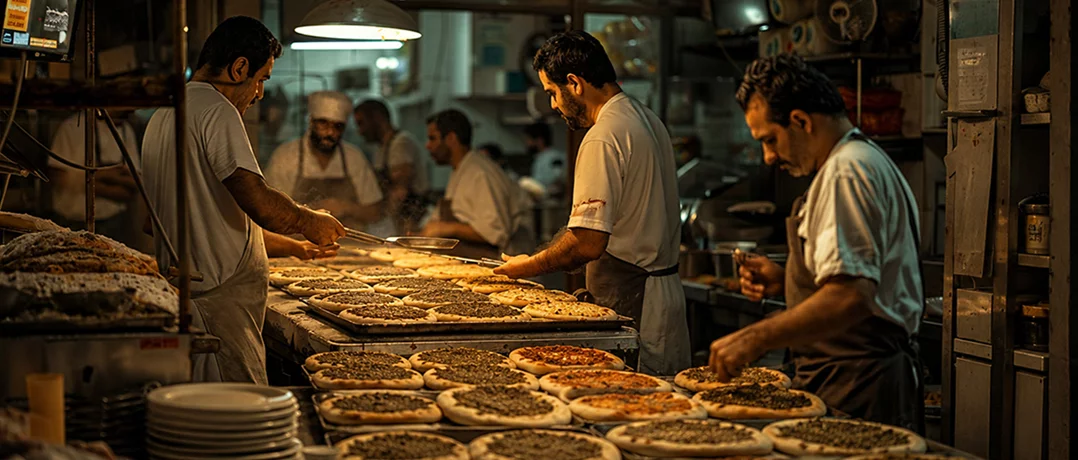
In Lebanon, however, pizza does not hold the same cultural status. Lebanese people lean far more toward manoucheh, whether zaatar, cheese, kishk, or even cocktail varieties, as a traditional meal suitable for breakfast, afternoon snacks, or even dinner for employees and middle-income households, especially when paired with a cold Bonjus or Top Juice drink.
Unlike the Pentagon, though, monitoring a “Manoucheh Meter” around a relatively secured area such as Fayadiyeh, home to Lebanon’s Ministry of Defense, is far less straightforward. We simply do not possess the tools or automated systems capable of tracking delivery orders through apps and platforms.
Still, we Lebanese can hope. We wait for the day when the “Manoucheh Meter” around Fayadiyeh starts rising, when military officers and administrative staff begin flooding local bakeries with orders. Because that, perhaps more than any official statement, would be the clearest sign that the Lebanese state is finally serious about monopolizing weapons under state authority, rather than relying on vague statements filled with “caution” and “inability.”
A rising “Manoucheh Meter” would signal that the army leadership has moved beyond hesitation and political maneuvering and stepped fully into its responsibilities, away from the corner-cutting games more suited to politicians than to disciplined military institutions.
An increase in manoucheh orders, whether with zaatar or cheese, would mean Lebanon is finally confronting the culture of loose weapons that appear at weddings, funerals, and political spectacles alike. Weapons that at times claim to defend Lebanon, and at other times claim revenge for a religious authority here or a regional leader there.
We dream of a “Manoucheh Meter,” or perhaps a foul meter, a knefeh meter, or even an “Arouss Labneh” indicator, anything capable of pulling Lebanon out of the hardship and paralysis it finds itself trapped in today.

