



The mental health burden of war
The mental health burden of war

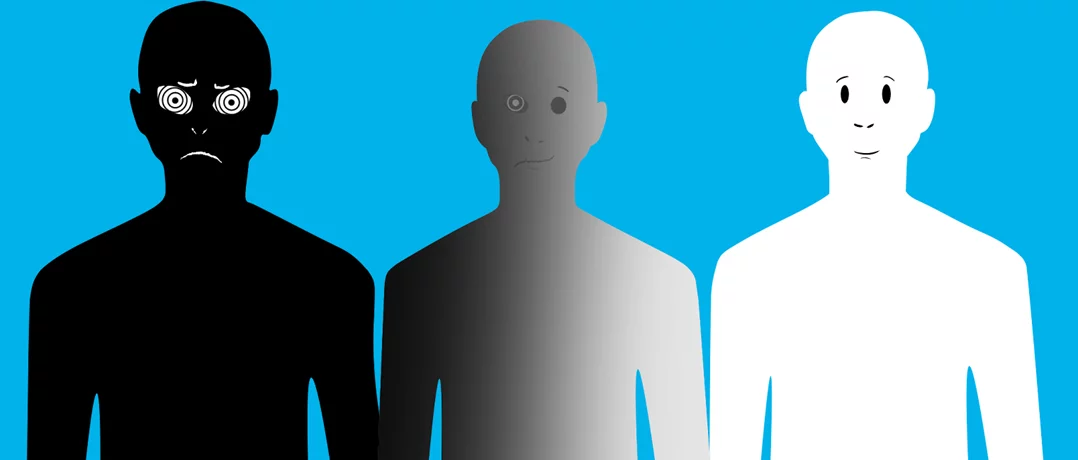
A landmark national study reveals that one in four Lebanese has experienced a mental disorder, and that exposure to war makes a person up to twelve times more likely to develop one. Yet the average Lebanese waits nearly three decades before seeking help. Why?
The Lebanese Evaluation of the Burden of Ailments and Needs of the Nation, known as the LEBANON survey carried out a study on a nationally representative sample of 2,857 adults, it examined the lifetime prevalence of mental disorders, the age at which they first appear, and the patterns or more precisely, the absence of patterns of treatment.
Its central finding: approximately one in four Lebanese, 25.8 percent, has experienced at least one mental disorder at some point in their life. Anxiety disorders are the most prevalent, affecting 16.7 percent of the population. Mood disorders, including depression, affect 12.6 percent. Impulse-control disorders affect 4.4 percent, and substance-use disorders 2.2 percent.
These results must be read against the backdrop of a society that has spent five decades lurching from one crisis to the next, and against the specific finding that distinguishes the Lebanese case from almost any comparable study: the relationship between war and the onset of mental illness.
War as a trigger
The study’s most significant contribution is its documentation of how directly war-related trauma precipitates mental illness. Researchers found that individuals exposed to war events, living in combat zones, being threatened with weapons, or witnessing violence, were nearly six times as likely to develop anxiety disorders as those without such exposure. Their risk of mood disorders such as depression tripled, while the odds of impulse-control disorders increased more than twelvefold.
For Lebanon, where the current generation of adults has lived through the tail end of the civil war, the 2006 conflict, the 2020 port explosion, the economic collapse, and now renewed bombardment in 2024 and 2026, this is not an abstraction. It is a description of what has been happening, cumulatively and without interruption, to the population for the better part of fifty years.
Twenty-eight years before asking for help
Only a minority of Lebanese who experience mental disorders ever seek professional help. And when they do, the delay between the onset of symptoms and the first moment of treatment is staggering: an average of six years for mood disorders, and as long as twenty-eight years for anxiety disorders. Twenty-eight years. A person develops anxiety in their twenties and reaches a psychologist, on average, in their fifties, if they reach one at all.
In much of Lebanese society, as across the broader Arab region, mental illness remains profoundly taboo. To acknowledge psychological distress is, in many social contexts, to invite judgment, to be seen as weak, unstable, or shameful. The pressure to appear functional, to absorb difficulty without complaint, to “move on” in the way that Lebanese are so often praised for moving on, actively discourages people from naming what is happening to them.
The study also flags something important about the reliability of its own data: because of stigma, some participants may have understated or concealed their symptoms during interviews. The true burden of mental illness in Lebanon, in other words, is likely higher than the figures already show.
What needs to change
The survey establishes that war creates mental illness at scale, that stigma prevents treatment for decades, that the true burden is likely undercounted.
What it demands is a national mental health strategy that treats psychological care as essential infrastructure rather than a luxury. It demands public health campaigns that take on stigma directly, that make it as normal to see a psychologist after a war as it is to see a doctor after a physical injury. It demands that schools, particularly in areas that have experienced direct bombardment, have trained counsellors.
And it demands, perhaps most fundamentally, a cultural shift in how Lebanese society talks about what it has been through. The resilience that Lebanon is so often praised for internationally, the capacity to rebuild, to continue, to somehow keep going, has a shadow side that is rarely named. Resilience, when it is compulsory rather than chosen, when it means suppressing damage rather than processing it, is not a virtue. It is a symptom.
-
-

-
The Beiruter
-
