



New US Justice Department files on Jeffrey Epstein detail Middle East links, intelligence claims, Israel ties, Libya’s frozen assets and emails referencing Lebanon reviving scrutiny of his global network.
The Middle East in the Epstein files

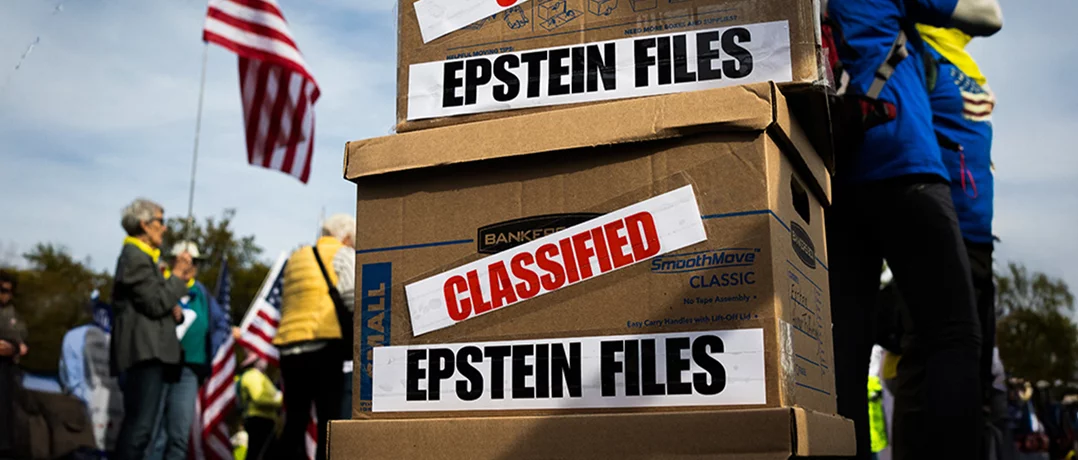
The US Department of Justice (DOJ) has released over 3 million pages of documents related to Jeffrey Epstein, the late financier and convicted sex offender, including 180,000 images and 2,000 videos.
The release, the largest since the Epstein Files Transparency Act, passed by the United States (US) Congress on 19 November 2025, mandated public disclosure of Epstein-related records, provides unprecedented insight into his extensive financial, political, and intelligence networks. The files shed light on Epstein’s dealings with high-profile figures as well as his involvement in various Middle Eastern controversies (including Lebanon as well).
Epstein emails target Lebanon
Lebanon has appeared in the recently unsealed Jeffrey Epstein files through a 2010 email linking the country to potential banking acquisitions, alongside a disturbing remark about sex tourism. The correspondence, part of court documents from civil litigation involving Epstein associate Ghislaine Maxwell and accuser Virginia Giuffre, sheds light on how Epstein’s network casually intertwined finance with predatory interests.
In an email thread dated 31 July 2010, financier Tim Collins initiated a discussion about investment opportunities in Middle Eastern banks, which quickly led Epstein to suggest Lebanon and Syria as “the next two hot spots” after a prior acquisition in Egypt. The exchange concludes with an associate referencing billionaire Wafic Saïd, while stating that “sex [is] better in Lebanon.”
The files also mention Lebanese-American scholar Nassim Nicholas Taleb, who publicly disclosed repeatedly refusing Epstein’s invitations after identifying weariness regarding Epstein’s means of fortune.
While the emails naming Lebanon do not imply wrongdoing by the country or its figures, they demonstrate how Epstein’s influence overlapped with international finance and regional contacts.
Epstein’s pursuit of Libya’s frozen assets
One of the most consequential revelations involves Epstein’s attempts in 2011 to access billions in Libyan state funds frozen abroad following the NATO-backed uprising against Muammar Gaddafi. According to emails disclosed in the DOJ release, Epstein aimed to recover portions of approximately $80 billion in assets held internationally, including $32.4 billion in US banks, noting that the real value could have been “3 to 4 times” higher.
The documents suggest that Epstein coordinated with international law firms on contingency-fee arrangements and received indications of willingness from former British Military Intelligence, Section 6 (MI6) and Israeli Mossad officials to assist in locating and recovering the assets. The correspondence highlighted Libya’s expected post-conflict reconstruction spending, estimated at over $100 billion, framing the country as a strategic opportunity for financial and legal ventures.
While these claims generated concern, Libyan officials have denied their validity. Abdulhafiz Ghoga, former vice president of the transitional council, stated that frozen assets were managed according to international financial mechanisms and dismissed Epstein-related allegations as speculative. It should be noted that Libya’s ongoing political divisions have complicated efforts to monitor and safeguard these assets, leaving them vulnerable to external and internal manipulation.
The Epstein-Israel relationship
Beyond Libya, the documents illuminate Epstein’s extensive relationship with Israel and its leaders.
Firstly, the files show he helped cultivate early relations between Israel and the United Arab Emirates (UAE) years before the 2020 Abraham Accords. Epstein reportedly promoted Israeli commercial, military, and surveillance technologies in UAE-controlled logistics hubs and facilitated meetings between high-level officials.
Secondly, former Israeli Prime Minister Ehud Barak appears extensively in the files. Communications detail years of correspondence with Epstein, covering private meetings, technology investments, and introductions to influential figures. Epstein advised Barak to consider investing in Palantir, the AI-powered tech firm critical to Israeli military operations and surveillance programs. Emails also suggest Epstein helped facilitate media interactions, including attempting to secure a US presidential interview for Donald Trump on Israeli networks during the 2016 election.
Thirdly, the DOJ’s release of Epstein-related files included a 2020 Federal Bureau of Investigation (FBI) memorandum, containing raw reporting from a confidential human source. The memo alleges Epstein had ties to US and allied intelligence operations, including Mossad, and that he influenced prominent figures such as Jared Kushner, Donald Trump, and Alan Dershowitz. Trump was described as being “compromised by Israel,” claiming that Israeli interests had leverage over Trump and that this influence shaped his presidency. Meanwhile, Kushner was considered the central conduit of this influence and was “the real brains behind [Trump’s] organization and his Presidency.”
These claims remain unverified and should be treated as uncorroborated reporting, reflecting perceptions of a single source rather than established fact.
Kaaba’s Kiswa shipment from Mecca
The files further reveal Epstein’s unusual reach into cultural and religious domains. In 2017, pieces of the Kiswa, the cloth covering the Kaaba in Mecca, were shipped to Epstein via UAE-linked contacts. This was conducted by UAE-based businesswoman Aziza al-Ahmadi working with a man named Abdullah al-Maari, who organized the shipment of the 3 aforementioned pieces.
Emails describe the pieces as carrying deep religious significance, noting that millions of Muslims had touched the cloth during pilgrimage rituals. Each year, the cloth is removed from the shrine and replaced with a new one, with parts of the previous Kiswa treated as highly valuable artefacts. The documents do not clarify the purpose of these shipments, but they underscore Epstein’s access to influential and symbolic resources worldwide.
In conclusion, the DOJ’s release of Epstein-related documents paints a complex portrait of a man whose influence extended far beyond the criminal charges for which he is most known. His dealings with frozen state assets, international intelligence networks, and global elites demonstrate the correlation between wealth, power, and influence in the modern world. His activities highlight how a single individual could operate across global networks with far-reaching implications. While many claims remain unverified, the documents serve as a stark reminder of the need for transparency, accountability, and oversight in the corridors of power, as well as cast doubts regarding the independence and reliability of world leaders in governing their countries and the world as a whole.
-
-

-
The Beiruter
-
