



The Falklands battle has moved from warships to courtrooms. Can Argentina’s sanctions and lawsuits stop Britain’s Sea Lion oil project?
The new battle for the Falklands

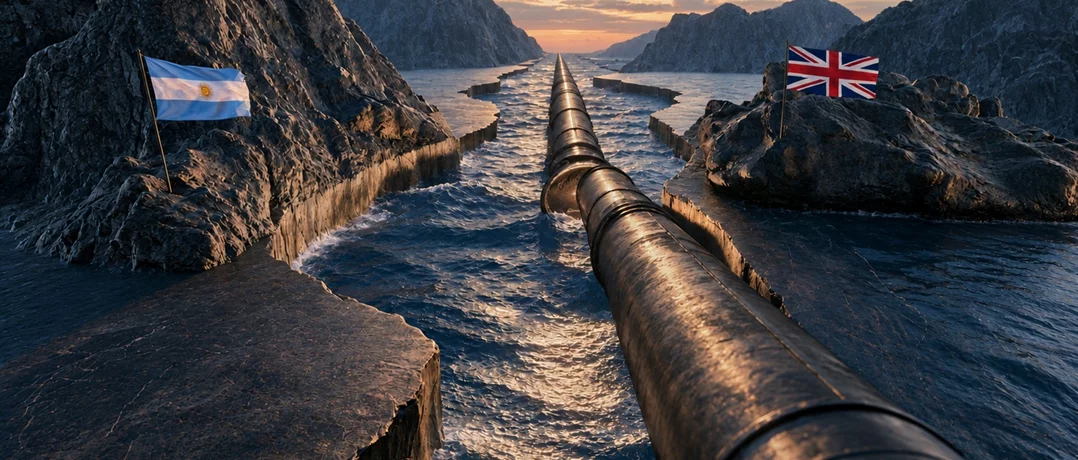
Forty-four years after Britain and Argentina fought over the Falkland Islands, a new confrontation is taking shape around the archipelago. This time, the immediate prize lies beneath the surrounding waters. The Sea Lion oil field is approaching production, promising to transform the islands' economy. Buenos Aires considers its development an unlawful exploitation of Argentine resources while London defends the islanders' right to develop them.
On 10 and 11 November, judges in Hamburg will hear Argentina's request to halt the project. Their decision cannot settle the sovereignty dispute that survived the 1982 war, but it could determine how far that dispute obstructs a major economic development.
Why Sea Lion changes the stakes
Discovered in 2010, Sea Lion remained undeveloped for fifteen years amid financing and logistical difficulties. The project advanced after Israeli company Navitas Petroleum acquired a 65% stake in 2022, alongside Britain's Rockhopper Exploration. In December 2025, the partners approved a $1.8 billion budget to reach first oil, scheduled for early 2028. Initial production could reach 50,000 barrels daily.
The economic implications are considerable. Fishing and aquaculture accounted for 58.3% of the territory's GDP in 2024. A 2025 assessment commissioned for Sea Lion projected approximately £3.6 billion in government taxes and royalties over three decades, averaging £109 million annually. For comparison, the islands' government collected roughly £120 million in 2023–2024. The size of this potential windfall, however, will ultimately depend on oil prices, output, and costs.
Fishing-license income has made the islands largely financially self-sufficient, excluding defense and foreign affairs, which remain British responsibilities. Oil could finance infrastructure and services while reducing dependence on fisheries. That greater economic autonomy would not settle sovereignty but could make any future change in the territory's status harder to negotiate.
Argentina takes aim at the companies
Argentina is targeting the businesses needed to develop Sea Lion. Laws enacted in 2011 and strengthened in 2013 expose companies conducting unauthorized hydrocarbon activities in waters claimed by Buenos Aires to penalties, exclusion from its energy market, and possible prosecution. On 4 September, Javier Milei's government initiated sanctions proceedings against 45 companies and individuals, including shareholders and suppliers, expanding the list to 60 four days later.
The campaign has produced results. On 2 October, American oilfield services company Halliburton confirmed that it would not work on Sea Lion after discussions with Argentine authorities. Three days later, Navitas announced it was replacing two contractors. Although it expected no material effect on the project, further withdrawals could threaten its schedule.
Britain responded on 13 October by announcing protections under its Protection of Trading Interests legislation, intended to shield British businesses from certain Argentine measures applied beyond Argentina's borders. The proposed rules, expected before the end of 2026, would prevent firms from being compelled to comply with specified Argentine restrictions. Yet they cannot reverse penalties imposed within Argentina or guarantee contractors access to its energy market.
For multinational suppliers, accepting Sea Lion work could therefore jeopardize established business in Argentina, even if their activities are protected under British law. Buenos Aires can obstruct the project's development without exercising control over the territory itself.
Can international law stop the oil?
Argentina is also seeking restrictions through international law. On 28 September, it opened arbitration against Britain under the UN Convention on the Law of the Sea (UNCLOS). On 13 October, it asked the International Tribunal for the Law of the Sea for provisional measures preventing hydrocarbon exploitation while arbitration proceeds. Under international maritime law, the tribunal can impose temporary restrictions if it finds that the arbitration panel is likely to have the authority to hear the case and that urgent action is needed to protect either side's rights.
Buenos Aires argues that extracting nonrenewable resources before sovereignty is resolved would inflict irreversible harm. It invokes UN General Assembly Resolution 31/49 of 1976, urging both governments to avoid unilateral changes, as well as UNCLOS obligations to protect the marine environment. The UN resolution offers political support for restraint, though it does not itself determine which government has the right to authorize drilling.
There is a precedent for restraining drilling. In 2015, a special chamber of the tribunal barred Ghana from undertaking new drilling in waters disputed with Côte d'Ivoire, while allowing existing operations to continue. But that case concerned a maritime boundary, not competing claims to the territory generating maritime rights.
This distinction is critical. In 2020, an UNCLOS arbitral tribunal found it could not decide Ukrainian claims requiring a prior ruling on sovereignty over Crimea. Britain could similarly argue that the dispute over offshore resource rights cannot be adjudicated without first determining sovereignty over the Falklands, a question outside UNCLOS jurisdiction.
London maintains that the islanders may lawfully regulate their resources and has agreed to participate in the proceedings. A favorable interim order could delay new drilling without resolving sovereignty, while rejection would leave Argentina's broader claim intact. The outcome will turn partly on whether the judges can protect disputed rights without deciding who owns the islands.
The American variable
American support played a crucial role in Britain's recapture of the Falklands in 1982. Washington initially sought a negotiated settlement, but when mediation failed, it shifted toward London. The Reagan administration supplied intelligence, Sidewinder missiles, communications assistance, and approximately 12.5 million gallons of aviation fuel.
Washington's relationships with both countries are different today. President Donald Trump has cultivated close ties with Javier Milei, reflected in a $20 billion currency-swap agreement in 2025. Relations with London, meanwhile, have suffered over Britain's reluctance to join US offensive operations against Iran. A leaked Pentagon email in April 2026 proposed reconsidering Washington's Falklands position.
Asked in September whether he would help Britain in another conflict, Trump declined to commit and criticized Britain's conduct during the Iran war. Washington has not changed its formal neutrality on sovereignty and continues to recognize British administration. Nevertheless, Trump's reluctance introduces uncertainty over how much diplomatic or operational assistance London could expect in a future crisis.
Israel complicates the picture. Navitas, Sea Lion's majority owner, is Israeli, and Israeli investment funds also hold substantial shares in Rockhopper. Milei's close ties with Israel have not stopped him from targeting the project. Meanwhile, amid a dispute over British sanctions on Israeli settlements, Israeli National Security Minister Itamar Ben-Gvir urged Benjamin Netanyahu to recognize Argentine sovereignty. This did not represent a change in official Israeli policy, and Israeli investors still have a financial interest in Sea Lion succeeding. Strained relations between London and Israel could give Argentina additional diplomatic leverage, even as Israeli investment remains central to Sea Lion's development.
Sea Lion promises the Falkland Islanders greater economic independence, but Argentina has found ways to challenge that future without confronting Britain's military control. The Hamburg tribunal may delay drilling without resolving sovereignty, while Washington's uncertain position and Israel's competing political and commercial interests introduce further diplomatic uncertainty. Forty-four years after the guns fell silent, the battle for the Falklands continues, with lawsuits, sanctions, and diplomatic pressure as its new weapons.
-
-

-
Nami El KhazenJournalistFocusing on geopolitics and international affairs.
-
