



Consumers are cutting back across much of the economy, but leisure spending has remained resilient as people grow more selective about how, and how much, they spend on enjoyment.
The new economics of leisure

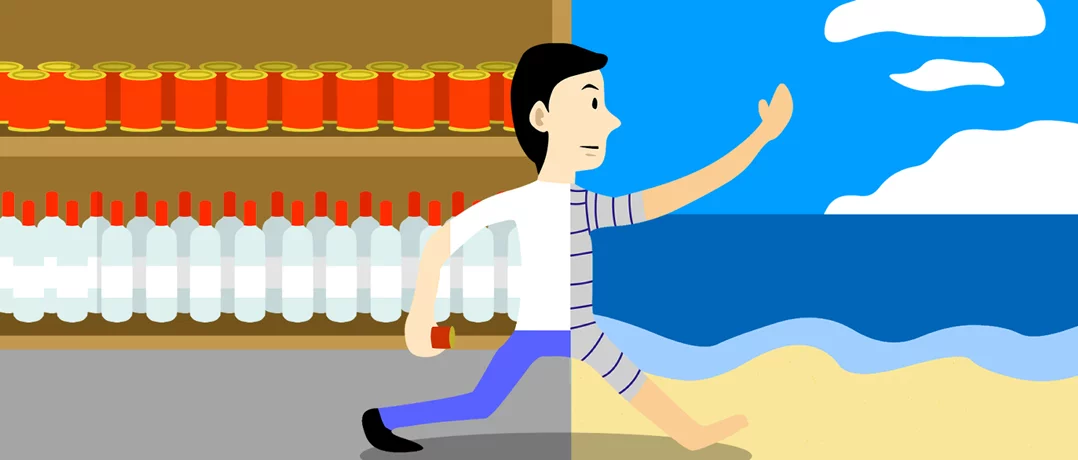
The past four years have placed sustained pressure on household budgets across much of the world, as inflation, rising interest rates, and persistent cost-of-living concerns have influenced everyday spending decisions. For industries that depend on discretionary income, the non-essential goods and services people choose rather than need, many expected entertainment and leisure to be among the first areas where consumers would cut back. That assumption, however, has largely failed to materialize.
Leisure spending has risen as a share of overall consumer expenditure, climbing from 9.5% to nearly 13%, according to NielsenIQ, a global consumer research firm, even as surveys show consumers pulling back sharply on spending in almost every other category. Consumers are not spending freely, but many appear increasingly willing to cut elsewhere in order to preserve spending on entertainment and leisure. Understanding why, and what it means for the businesses that serve it, has become one of the more revealing questions in contemporary consumer economics.
Cutting around the edges
The categories absorbing the deepest cuts reveal where consumers have drawn the line. According to NielsenIQ's Consumer Outlook for 2026, which aggregates purchasing data and sentiment across global markets, 40% of consumers have reduced spending on clothing, 32% have cut back on electronics and gadgets, and among those who expect their financial situation to deteriorate, 66% identified eating and drinking out as the first expenditure to go. Survey data shows that the share of Americans who have set formal household budgets rose from 46% in 2025 to 53% in 2026, with the majority citing a need to ensure they can cover basic essentials.
Leisure is conspicuously absent from that list of sacrifices. Deloitte's Q1 2026 Consumer Tracker, which monitors household spending intentions across the United Kingdom, found that while overall discretionary spending declined for the second consecutive quarter, holiday budgets remained, in the firm's own language, “ring-fenced.” The pattern suggests less a broad contraction than a deliberate one, with consumers making precise decisions about what warrants protection and what does not.
The “lipstick effect” revisited
Consumer behavior during economic downturns often follows a familiar pattern: people rarely abandon indulgence altogether during periods of financial strain. Instead, they scale it down. The pattern became widely known as the “lipstick effect,” a term attributed to Leonard Lauder after the 2001 recession, when consumers cut back on major discretionary purchases but continued spending on smaller luxuries such as lipstick.
The data from 2025 and 2026 suggests the theory may need updating. LVMH reported flat cosmetics and perfume revenue in the first quarter of 2025, compared to a 3% rise in the same period the prior year. L'Oréal has faced similar slowing demand. The affordable luxury products that once served as the clearest expression of the lipstick effect no longer appear to be performing as the theory once predicted.
What has changed, then, is not the underlying psychology but its form. While consumers are still protecting small sources of pleasure during periods of financial strain, they are increasingly doing so through experiences rather than goods, redirecting spending toward industries that did not benefit during earlier downturns
The rise of budget leisure
The shift is not away from leisure itself, but toward lower-cost forms of it. The 2025 Leisure Experiences Consumer Survey by Integrated Insight, which tracks how Americans plan and spend on leisure activities, found a clear movement away from higher-cost venues. Theme parks, indoor water parks, and ticketed immersive experiences saw flat or declining attendance, while beaches, national parks, and food festivals gained ground. While the frequency of leisure was not falling, its price point was.
The same pattern is visible across Europe. Mastercard's analysis of European consumer spending found the experience economy remained resilient even as spending on goods weakened, with consumers continuing to prioritize live and social experiences over material purchases. Travel behavior reflects a similar shift. The share of global consumers planning domestic leisure flights in early 2026 fell to 35%, down from 38% a year earlier, as shorter regional trips absorbed demand that would previously have gone toward international travel.
In Asia, the trajectory differs but points toward the same broader conclusion. According to KPMG's Global Leisure Perspectives report, Asia-Pacific is the fastest-growing region for leisure spending globally, driven by expanding middle classes in China and India gaining access to discretionary income at scale. The mechanism differs from the West, but the broader pattern remains consistent. Leisure is often among the last categories consumers abandon, whether they are preserving it under financial pressure or accessing it for the first time.
A habit, not a phase
What distinguishes the current moment from a typical recessionary cycle is the extent to which these spending habits appear to have endured. NielsenIQ's 2026 report found that 96% of retailers now view value-seeking behavior as a lasting shift rather than a temporary response to inflation. The frugality that intensified during the inflation spikes of 2022 and 2023 did not fade as conditions stabilized. Instead, it became embedded in how many consumers approach spending.
For the leisure and entertainment industries, that shift carries significant implications. Consumers may still be dedicating time and money to leisure, but they are increasingly selective about how much they are willing to spend and what they consider worth paying for. The audience has not disappeared, but expectations around price and value have changed. Companies still operating around the post-pandemic assumption that consumers would continue paying premiums for experiences may find the market has already moved in another direction.
-
-

-
The Beiruter
-
