



Built on Lebanon’s rich biodiversity and centuries-old beekeeping traditions, the country’s honey sector is evolving into a broader economy tied to tourism, entrepreneurship, sustainability, and rural livelihoods despite mounting environmental and economic pressures.
The new economy emerging from Lebanon’s beehives

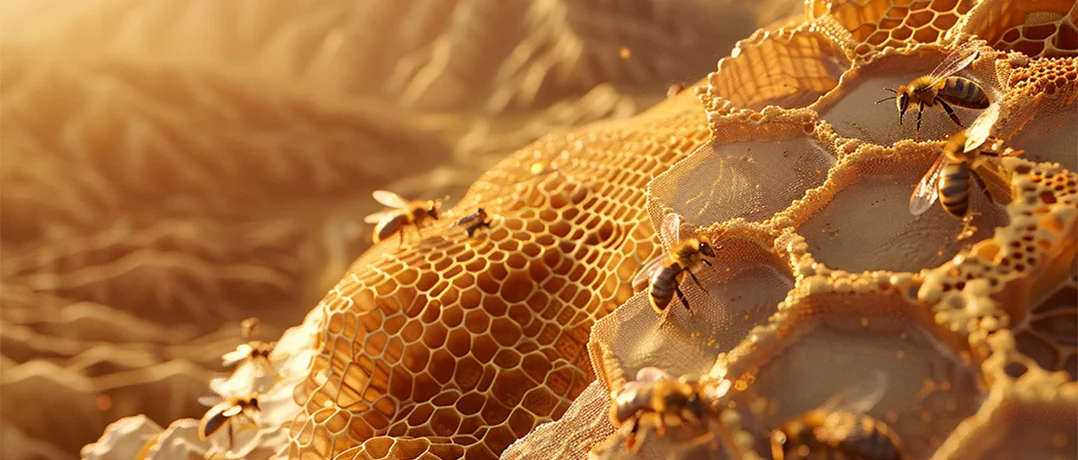
Built on one of the region’s richest ecosystems, Lebanon’s honey sector is evolving into a broader industry tied to tourism, biodiversity, and entrepreneurship.
Lebanon’s honey economy has long occupied an unusual place within the country’s agricultural sector. Far more than a heritage product, the industry stretches from coastal citrus groves to high-altitude mountain forests, where beekeepers move hives seasonally between different regions to follow flowering cycles and produce some of the region’s most distinctive honey varieties.
With more than 2,600 plant species recorded across Lebanon and roughly 3,800 tons of honey produced annually, the country’s biodiversity has helped create a highly diversified honey sector built largely around polyfloral mountain honey rather than industrial monoculture production.A 2022 regional study titled MedBEESinessHubs, shared with The Beiruter by the Chamber of Commerce, Industry and Agriculture in Zahle and the Bekaa, estimated that Lebanon’s beekeeping sector included more than 417,000 beehives, over 10,800 beekeepers, and 75 cooperatives operating across nearly the entire country.
That ecosystem has allowed Lebanese honey to develop a reputation that often exceeds the size of the market itself. In 2024, Lebanon exported more than $626,000 worth of honey, according to Observatory of Economic Complexity trade data, with Jordan, the UAE, Qatar, Kuwait, and Sweden among its primary export destinations. Yet the sector today extends far beyond honey production alone. With more than 350,000 bee colonies operating across the country, Lebanon’s bee economy is increasingly tied to broader efforts around rural livelihoods, entrepreneurship, biodiversity preservation, and agritourism growth.
A geography built for bees
Lebanon’s topography gives beekeepers an advantage difficult to replicate elsewhere in the region. The country’s sharp shifts in altitude, ranging from sea level to more than 3,000 meters, allow bees to access flowering plants across multiple climates and seasons within relatively short distances.
Professional beekeepers often practice “transhumance,” moving hives seasonally from coastal zones to intermediate and high-altitude mountain regions in search of different nectar sources and cooler temperatures. The result is a broad range of honey varieties including oak honeydew honey, wildflower honey, citrus honey, eucalyptus honey, cedar honey, and mountain “jurdi” honey.
“Lebanese honey is unique and different from honeys produced in neighboring countries,” beekeeper and honey producer Wadih Yazbek told The Beiruter.
The climate and varied flowering plants and the landscape of Lebanon all contribute to this fact.While many neighboring countries produce honey from large areas dominated by a single type of plant, Lebanon’s compact geography allows bees to feed across a far wider mix of flowers and trees. Yazbek pointed specifically to oak honey, a darker and less sweet variety produced in Lebanon’s oak forests, as one of the country’s most distinctive products.
The industry, however, is still primarily dominated by family-scale beekeepers and small independent producers. The MedBEESinessHubs study found that many operations continue to rely heavily on family labor and direct-to-consumer sales, while cooperatives, beekeeper syndicates, and even WhatsApp groups help facilitate coordination, marketing, and support across rural communities.
Pressure on production
Despite the sector’s reputation for quality, beekeepers say the past several years have become significantly more difficult.
“There is no doubt that the beekeeping and honey industry was impacted,” Yazbek said, pointing to the economic collapse, COVID-19 disruptions, and conflict in southern Lebanon as major blows to production and sales.
The pressures are both environmental and economic. Beekeepers face rising costs for imported equipment, climate-driven fluctuations in production, forest fires, pesticide exposure, and declining access to safe apiary locations. The MedBEESinessHubs study found that Lebanon’s honey yields remain relatively low compared to many European countries, averaging roughly 10 kilograms per hive annually, though production varies significantly depending on climate and geography.
At the same time, producers say low-quality and counterfeit honey imports have become one of the sector’s biggest challenges.
“Competition through fake honey is the biggest obstacle,” Yazbek said, adding that growing consumer skepticism has made it harder for many producers to convince buyers of the authenticity and quality of locally produced honey.
The issue has become particularly damaging during the economic crisis, which sharply reduced purchasing power and pushed consumers toward cheaper alternatives. The MedBEESinessHubs study also identified rising fuel prices as a major constraint because they limit seasonal hive movement between regions.
Climate volatility has added another layer of instability. Production can fluctuate dramatically from year to year depending on rainfall, flowering cycles, and temperatures. The study noted that several years between 2018 and 2020 were considered particularly poor harvest years for many producers.
Building a broader bee economy
Recognition that single-product strategies leave beekeepers vulnerable has helped drive a broader shift toward diversification and value-added production. Public institutions, cooperatives, universities, and international organizations are now attempting to professionalize the sector while linking it more closely to tourism, gastronomy,and rural entrepreneurship.
Among the most ambitious efforts is Plan-Be, a regional initiative co-funded by the European Union under the Interreg NEXT MED program. Launched in May 2020, the project mobilizes roughly €2.8 million across six Mediterranean countries over a 36-month period, with Lebanon among the participating states alongside Cyprus, Egypt, Jordan, Palestine, and Italy.
“This project is about building a whole economy from the production of honey to the subproducts of bees,” Said Gedeon, head of the Chamber of Commerce, Industry and Agriculture in Zahle and the Bekaa, said in an interview with The Beiruter.
The initiative builds on earlier MedBEESinessHubs programs that were established.
“HoneyBeeRoutes,” for instance, provided grants for entrepreneurs and trained more than 500 participants across the region. Gedeon explained that PLAN-BEE is intended to build on those earlier efforts through sustainable beekeeping training, entrepreneurship programs, gastronomy partnerships, smart beehive technologies, and “apitourism” initiatives that connect visitors to beekeeping sites, honey tastings, and rural producers.
The project also aims to train more than 120 enterprises in sustainable beekeeping and another 120 in bee-inspired gastronomy, while certifying 60 female entrepreneurs under a new “Med Queen Bee” label and expanding regional tourism routes centered around Lebanon’s honey sector.
According to Gedeon, the long-term goal is to help producers move beyond raw honey sales alone.
The people who have more advanced involvement in the value chain are doing well. If you want sustainability, you need to upgrade.
That transition is already visible across parts of the sector, where honey-based soaps, skincare products, wellness goods, and specialty food products are becoming more common among younger entrepreneurs and cooperatives seeking higher-value markets.
For Lebanon, the significance of the bee economy extends well beyond agriculture itself. Bees remain essential pollinators for food production across the country. In a period marked by economic fragility and climate pressure, many within the industry see beekeeping not simply as a traditional craft but as part of a broader effort to sustain the landscapes and communities that continue to support it.
-
-

-
The Beiruter
-
