



As geopolitical competition intensifies across the world's oceans, the international rules that have governed maritime space for decades are facing growing pressure from strategic rivalry, technological change, and competing claims over shared waters.
The new geopolitics of the high seas

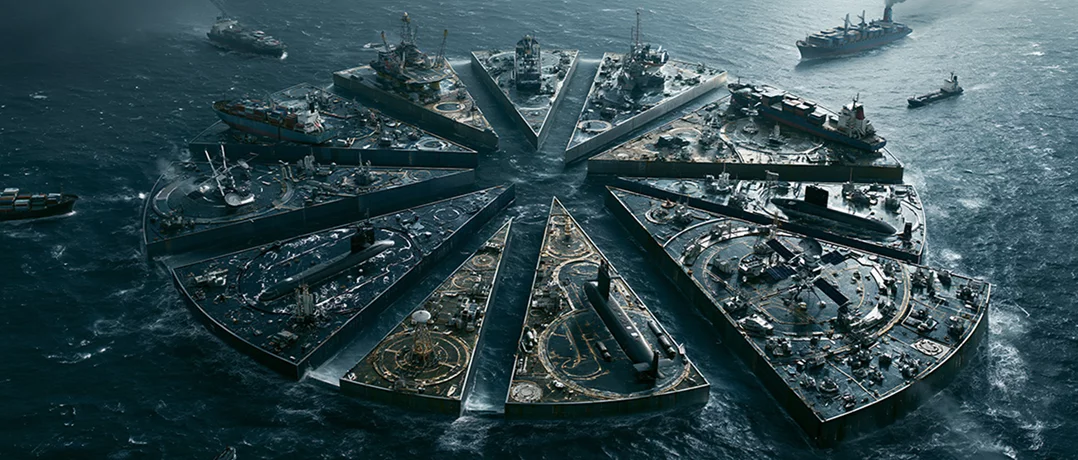
The oceans have long been treated as the world's largest shared space, connecting continents, sustaining marine ecosystems, and underpinning the global economy. Nearly 71 percent of Earth's surface is covered by the ocean, yet almost two-thirds of it lies beyond the jurisdiction of any single country, according to the United Nations' 2026 Third World Ocean Assessment. These waters carry roughly 80 percent of global trade by volume and host submarine communications cables that transmit around 95 percent of international data traffic, making them indispensable to both internal trade and digital communications.
They are also becoming a focal point of geopolitical competition. Disputes in the South China Sea, attacks on commercial shipping in the Red Sea, renewed interest in deep-sea mining, and growing naval activity in the Arctic have exposed the challenge of governing spaces that no state fully controls. As strategic competition intensifies, pressure is mounting on the international institutions responsible for managing one of the world's most important global commons, raising difficult questions about whether a rules-based maritime order built decades ago can keep pace with new political, economic, and technological realities.
A rules-based system under strain
Unlike land, much of the ocean is governed not through sovereignty but through international law. The foundation of that system is the 1982 United Nations Convention on the Law of the Sea (UNCLOS), often described as the constitution of the oceans. The treaty established territorial seas extending 12 nautical miles from a country's coastline and Exclusive Economic Zones stretching up to 200 nautical miles, where coastal states hold sovereign rights over natural resources. Beyond those limits lie the high seas, where principles including freedom of navigation, scientific research, and lawful commercial activity apply to all states.
Maintaining that system, however, requires far more than a single treaty. According to the United Nations, ocean governance depends on a network of international agreements and specialized institutions responsible for shipping, fisheries, seabed resources, marine conservation, and maritime safety. Rather than operating under one central authority, these responsibilities are divided among organizations with different legal mandates.
That arrangement has helped support decades of relative stability at sea, allowing commercial shipping and international trade to expand under commonly accepted rules. Yet the assessment concludes that overlapping responsibilities, uneven implementation, limited enforcement capacity, and differing national priorities continue to constrain effective governance, particularly in waters beyond national jurisdiction where no country exercises sovereignty. As new technologies make offshore resources more accessible and geopolitical competition extends farther into the maritime domain, those gaps have become increasingly visible.
Strategic rivalry reaches the seas
The contest for the oceans today extends well beyond competing territorial claims. Commercial shipping routes, submarine communications cables, offshore energy infrastructure, fisheries, and strategic chokepoints have all become potential points of confrontation as governments seek greater influence over critical maritime corridors.
Recent events illustrate how quickly disruptions at sea can reverberate through the global economy. Beginning in late 2023, attacks by Yemen's Houthi movement on commercial vessels transiting the Red Sea forced hundreds of ships to divert around the Cape of Good Hope, adding thousands of nautical miles to voyages between Europe and Asia while increasing transit times, fuel costs, and insurance premiums. The episode highlighted the vulnerability of strategic maritime chokepoints, a concern reinforced during the 2026 Israel–U.S.–Iran conflict, when renewed fears of disruption in the Strait of Hormuz—through which roughly one-fifth of global oil consumption passes each day—sent energy markets on edge and underscored how instability in a single waterway can carry global economic consequences.
Competition is also playing out through infrastructure development and maritime law enforcement. The Center for Strategic and International Studies has documented China's continued expansion of offshore energy infrastructure in disputed areas of the East China Sea, where resource development, coast guard activity, and competing territorial claims increasingly intersect. Similar dynamics continue across the South China Sea, one of the world's busiest maritime corridors.
Governing the high seas
Many of the fastest-growing challenges lie in areas beyond national jurisdiction, where governance has historically been limited despite the economic and environmental importance of the high seas.
The 2025 World Bank Ocean Governance Summaries note that effective ocean governance depends on coordination across institutions responsible for shipping, fisheries, marine conservation, seabed resources, and environmental protection. As economic activity expands farther offshore, fragmented governance creates opportunities for regulatory gaps and inconsistent enforcement.
Recognizing those shortcomings, countries negotiated the Agreement on Biodiversity Beyond National Jurisdiction, commonly known as the High Seas Treaty, which entered into force in 2026. The agreement establishes mechanisms for marine protected areas, environmental impact assessments, and the governance of marine genetic resources beyond national jurisdiction. While the treaty focuses primarily on conservation rather than security, it represents one of the most significant additions to international ocean governance since UNCLOS entered into force more than three decades ago.
Preserving an open maritime order
The growing competition at sea reflects a broader shift in international politics. For much of the post-Cold War period, policymakers largely assumed that the principle of open seas would remain broadly accepted. Today, states and non-state actors alike have demonstrated a greater willingness to challenge freedom of navigation, disrupt commercial shipping, threaten critical infrastructure, or use strategic waterways to advance political objectives.
As geopolitical competition accelerates and technological advances extend human activity farther into the oceans, preserving open access under commonly accepted rules may prove just as important as protecting any individual stretch of water. The defining challenge of the coming decades may not be determining who controls the seas, but ensuring that the world's shared maritime spaces remain governed by international law rather than geopolitical leverage.
-
-

-
The Beiruter
-
