



Geopolitical tensions, tariffs and China’s industrial transformation are reshaping global procurement, prompting companies to rethink sourcing strategies and prepare for multiple possible futures.
The new reality of global supply chains

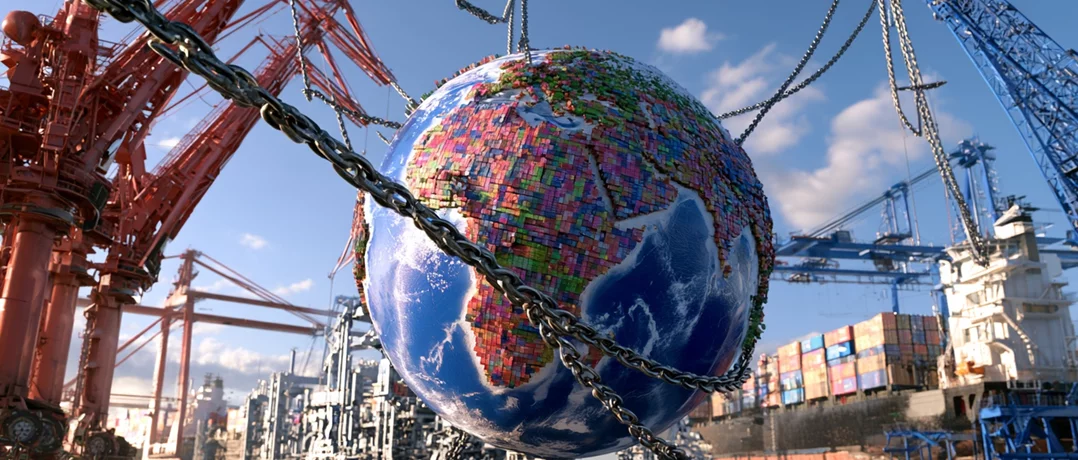
The Strait of Hormuz has become a reminder of how quickly geopolitical developments can disrupt global business. A conflict in one region can affect shipping routes, energy prices, transport costs and supply chains across the world.
At the same time, a shifting geopolitical world order, changing tariffs and growing trade tensions are challenging the foundations on which international supply chains have been built for decades.
What does this mean for global procurement and supply? How can companies prepare for developments that are increasingly difficult to predict?
I discussed these questions with Yuanyuan Zheng, a senior procurement and supply chain leader with 25 years of international experience across China and Europe. We share an IKEA background and work together, combining her expertise in global procurement and supply chain strategy with mine in strategic foresight.
Our discussion revealed that the changes go far beyond finding alternative suppliers. They affect fundamental decisions about where companies manufacture, source and do business.
The changing reality of global sourcing
For Yuanyuan, one principle of procurement remains unchanged: multiple sourcing. What has changed is how companies apply it. In the past, having several suppliers within China could provide sufficient diversification. Today, international buyers increasingly pursue what is known as China Plus One: maintaining their Chinese supply base while developing alternatives in other countries.
The ambition remains unchanged. "Companies are still looking for the lowest total cost," Yuanyuan explains. But lower manufacturing costs and tariffs must be weighed against production capacity, quality, logistics and supply security.
The objective is not simply to find the cheapest supplier. It is to balance total cost, quality, reliability and risk.
A concrete example comes from Switzerland. In early 2024, the price of Dafalgan, a widely used painkiller, more than doubled. Its manufacturer, UPSA, pointed to investments in European production to strengthen supply security. The case illustrates how greater supply security may come at a price ultimately paid by consumers.
Another development is the shift towards strategic supplier relationships. Traditionally, many international buyers relied heavily on competition between suppliers, negotiating prices and awarding orders without committing to longer-term relationships. Increasingly, procurement is developing suppliers as strategic partners. This can include multi-year planning, joint innovation, supplier development and even co-investment in critical production capacities.
Yuanyuan points to IKEA's development of global category management as an example. Instead of managing suppliers primarily through regional trading organisations, the company strengthened global category strategies and supplier relationships. Suppliers gained greater transparency, access to business opportunities beyond their regional markets and a clearer long-term direction. The underlying principle is to develop suppliers from simply delivering products into strategic partners within the business ecosystem.
China is changing, too
While the Western debate often focuses on reducing dependencies on China, the reality seen from a Chinese perspective is more complex. Yuanyuan challenges the impression that international companies are simply moving away. "In my experience, major international buyers are not saying they want to stop sourcing from China. They are looking to rebalance their dependencies."
China has developed an extensive manufacturing ecosystem over several decades. Its combination of industrial capabilities, supplier networks, infrastructure and experience cannot simply be replaced overnight.
Chinese manufacturers are facing their own transformation. Traditional advantages such as low labour costs, favourable production conditions and government incentives are changing.
Tariffs further affect competitiveness in international markets. China is increasingly promoting advanced manufacturing, automation, robotics, artificial intelligence and higher value-added industries.
According to Yuanyuan, traditional manufacturers are responding in three different ways.
Some are relocating production to countries in Southeast Asia where labour costs and investment conditions may be more favourable.
Others are upgrading their manufacturing operations through automation and new technologies.
A third group is taking a more fundamental strategic step: moving beyond manufacturing for international brands and developing their own products, brands and distribution channels. Instead of remaining suppliers to Western companies, they increasingly seek to become competitors in international consumer markets.
Changes in global supply chains are therefore not only driven by Western trade policies. They also reflect the transformation of China's own economy. And they raise another question: What happens when yesterday's supplier becomes tomorrow's competitor?
From reacting to preparing
There is a fundamental contradiction in today's global economy.
On one hand, countries are increasingly competing for strategic industries, technologies, critical materials and economic independence.
On the other, global supply chains depend on cooperation, trust and long-term relationships across national borders.
As Yuanyuan observes, decades of globalisation have created interdependencies that cannot simply be dismantled through tariffs or political decisions. For procurement leaders, this creates a difficult challenge. Strategies must respond to today's developments while remaining viable under very different future conditions.
Will trade barriers remain high or gradually decline? Will global manufacturing become increasingly regionalised? Will new technologies change the competitive position of different sourcing markets?
Nobody knows.
This is where strategic foresight becomes relevant. Traditional planning often starts with the most likely development and builds a strategy around it. Strategic foresight explores several plausible futures and examines what each would mean for the business.
What happens if tariffs remain high? What if international trade relationships improve? What if production technologies make manufacturing closer to customers more competitive?
Testing sourcing strategies against such scenarios can reveal vulnerabilities and opportunities that conventional planning might overlook.
The purpose is not to predict which scenario will materialise. It is to identify strategic options, recognise early signals of change and prepare decisions before circumstances force immediate action.
Combining procurement expertise with strategic foresight is probably the best way to connect today's operational realities with tomorrow's strategic choices.
The combination is important Procurement provides the understanding of suppliers, markets, capabilities and costs. Foresight broadens the perspective towards developments that may fundamentally change these conditions.
Procurement becomes a strategic business responsibility
The implications of these developments extend beyond procurement and supply departments. Decisions about sourcing increasingly influence where companies manufacture, how they organise their operations and which markets remain attractive.
A change in tariffs can make an established business model uncompetitive. A new manufacturing technology can change the economics of production locations. A supplier developing its own brand can become a competitor.
These are not merely procurement questions. They are strategic business decisions.
Traditionally, procurement has been seen primarily as an operational function focused on purchasing, costs and supplier management. But today's geopolitical and technological changes are transforming procurement into a strategic business function.
Procurement and Supply is evolving beyond managing costs and securing supply towards becoming a strategic partner in shaping where and how companies manufacture, source and compete.
-
-

-
Peter ThommenColumnistFinance-rooted Futures Strategist with 30 years of international leadership experience at IKEA, including 25 years in C-level and board roles across Finance, Strategy and Global Business Services.
-
