



As Ethiopia inaugurates the GERD, Nile water disputes intensify, exposing deep tensions between development, sovereignty, and survival.
The Nile at a crossroads: Power, water, and the GERD standoff
The Nile at a crossroads: Power, water, and the GERD standoff
By Peter Chouayfati | January 01, 2026

Reading time: 3 min
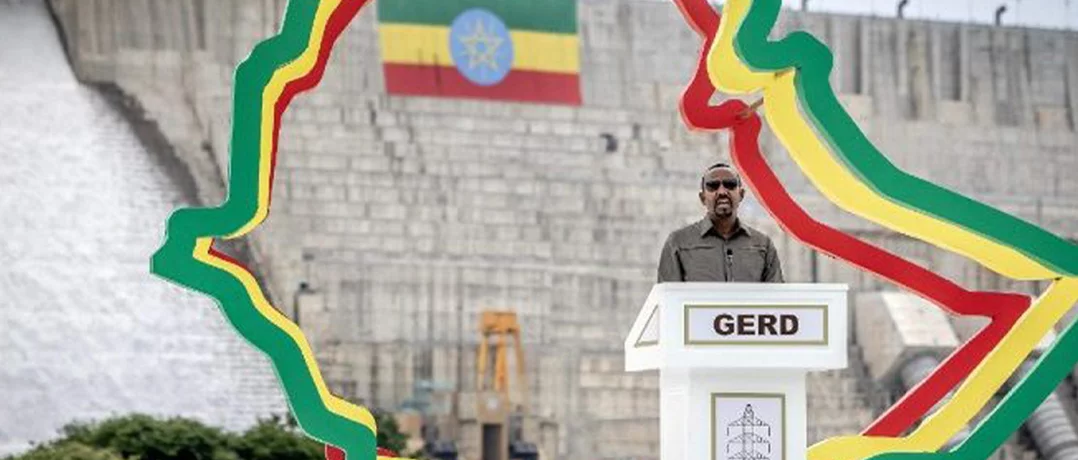
Access to vital resources has long driven conflict, imperial expansion, and great power competition. Water, as an irreplaceable resource essential for survival, has increasingly become a source of political tension, with scarcity pushing states toward confrontation and even threats of military force. Nowhere is this struggle more apparent than along the Nile River where nearly 95 percent of Egyptians depend on it for survival. As competing claims over Nile waters intensify, disputes over access, control, and sovereignty have transformed the river into a focal point of regional insecurity and geopolitical rivalry.
The inauguration of the Grand Ethiopian Renaissance Dam (GERD) in September 2025 marks a watershed moment for the Horn of Africa, redefining centuries-old tensions over the Nile River. Ethiopia hailed the dam as “a generational victory” and a symbol of national pride, promising a new era of electrification and regional energy exports. Yet for Egypt, the project is an existential threat. As Foreign Minister Abdelatty warned, “any misconceptions that Cairo would turn a blind eye to its existential interests...are pure delusions”. With more than 90% of its freshwater needs dependent on the Nile, Cairo views unilateral Ethiopian control over the river as a direct danger to its water security, agriculture, and social stability (Elhag & Fishman, 2025).
Egypt’s concerns are not new. The country has repeatedly called on Ethiopia to sign a binding legal agreement regulating the filling and operation of the GERD to ensure downstream water rights are not compromised (Egypt Today, 2025). Foreign Minister Badr Abdelatty has underscored the gravity of the situation, declaring that “Egypt has the full right to use all available means, in accordance with international law, to defend its water interests if any harm occurs”. When pressed about potential military options, Abdelatty reiterated, “once again, in line with what international law guarantees states in terms of the right to defend their interests if harm occurs, Egypt has the full right to defend itself” (Egypt Today, 2025).
From Cairo’s perspective, the dam is not simply a technical or environmental challenge, it is a political and security concern. Estimates suggest that Egypt loses roughly 20-25% of its Nile water due to inefficiencies, and the threat of unilateral water reduction by Ethiopia could exacerbate shortages amid a rapidly growing population and climate pressures (Elhag & Fishman, 2025). Egyptian officials have warned that uncoordinated water releases have already caused “man-made floods,” endangering Sudan and Egypt, and demonstrating the risks of Ethiopia’s unilateral approach.
Ethiopia, however, frames the GERD differently. For Prime Minister Abiy Ahmed, the dam represents national development and sovereignty. At the inauguration, he declared that the project was “absolutely not to harm its brothers,” emphasizing electricity generation for the country’s population and the potential for regional energy exports (Holyoke, 2025 Euronews). National pride in the dam is palpable: the project has been widely funded domestically through bonds and public contributions, creating a sense of ownership that transcends Ethiopia’s ethnic and political divisions (Chothia & Nagish, 2025 BCC).
Ethiopia has consistently rejected Egypt’s claims, dismissing historical treaties as “colonial” relics and asserting that it has “no obligation to seek permission from anyone to use natural resources found within its borders” (Kedir, 2025 AFP). Addis Ababa argues that the Blue Nile, which provides roughly 85% of the river’s waters, originates within Ethiopia, granting it sovereign rights over the dam and its operations. In doing so, Ethiopia frames the GERD not as a threat but as an exercise of its legitimate developmental rights and a step toward continental self-determination.
The historical context of the Nile complicates matters further. Colonial-era agreements, particularly those brokered by Britain in the 1920s and reinforced by the 1959 Egypt-Sudan treaty, granted Egypt the lion’s share of the Nile waters, privileging Cairo over upstream nations (Holyoke, 2025). While these treaties long dictated water diplomacy, Ethiopia has argued that such arrangements no longer reflect the modern realities of the region. The GERD’s construction is the first major challenge to Egypt’s perceived monopoly, signaling a shift in power dynamics along the Nile (Chothia & Nagish, 2025; Abdi cited in Chothia & Nagish, 2025).
Regional politics and domestic considerations have further intensified the standoff. In Egypt, President Abdel Fattah al-Sisi has emphasized the Nile’s existential importance, warning in 2021 that “no one can take a single drop of water from Egypt”. Analysts argue that opposition to the GERD also functions as a domestic political tool, uniting Egyptians around an external threat amid economic pressures and soaring food prices. Similarly, in Ethiopia, the dam serves as a unifying national project in a country grappling with political instability, ethnic divisions, and decades-long energy deficits.
Sudan’s position has oscillated. Initially viewing the dam as an opportunity to regulate flows and reduce floods, Khartoum has since expressed technical and safety concerns, gradually aligning more closely with Cairo.
International mediation has been inconsistent. U.S. involvement under the Trump administration has been sporadic, with public statements acknowledging the dispute but little evidence of sustained diplomatic engagement (Elhag & Fishman, 2025). Washington has threatened sanctions in the past but ultimately failed to halt construction. The African Union has attempted to facilitate dialogue, and the European Union has increasingly aligned with Cairo, citing “support to Egypt’s water security and compliance with international law, including concerning the Ethiopian Dam” (Holyoke, 2025). Yet, without comprehensive mediation and binding agreements, tensions remain high, and the risk of escalation persists.
The GERD dispute highlights the broader challenge of transboundary water management in a climate-constrained future. Water cannot easily be substituted. For Egypt, losing predictable access to the Nile risks destabilizing agriculture, energy production, and urban water supplies. For Ethiopia, the dam is essential to electrification, economic development, and national pride. Both positions are rooted in legitimate concerns and historical grievances, yet the lack of mutual trust and coordination exacerbates the danger of conflict.
Practical solutions are possible but require political will. A revised legal framework, updating the 2015 Declaration of Principles, could define reservoir management, water release protocols, and transparent data-sharing. Technical guarantees could assure downstream countries during periods of drought, while international mediators might facilitate agreements linking water security with broader regional development projects (Elhag & Fishman, 2025). Crucially, diplomacy must be insulated from domestic political gamesmanship; otherwise, the GERD will continue to symbolize division rather than shared prosperity.
The Nile has historically been the lifeblood of civilizations, linking diverse peoples and nations. Today, it stands at the center of a complex negotiation over sovereignty, survival, and development. Ethiopia’s GERD represents a bold step for an energy-starved nation, yet Egypt’s existential fears are equally undeniable.
-
-

-
Peter ChouayfatiPolitical Analyst and Researcher
-
