



Lebanon’s vast gold reserves have become the focus of a fierce national debate over whether they should remain untouchable or be partially used to aid recovery amid financial collapse, legal barriers, and a deep crisis of trust.
The paradox of hidden wealth: Lebanon’s Gold between salvation and sacrilege
The paradox of hidden wealth: Lebanon’s Gold between salvation and sacrilege
By Josiane Hajj Moussa | February 02, 2026

Reading time: 11 min
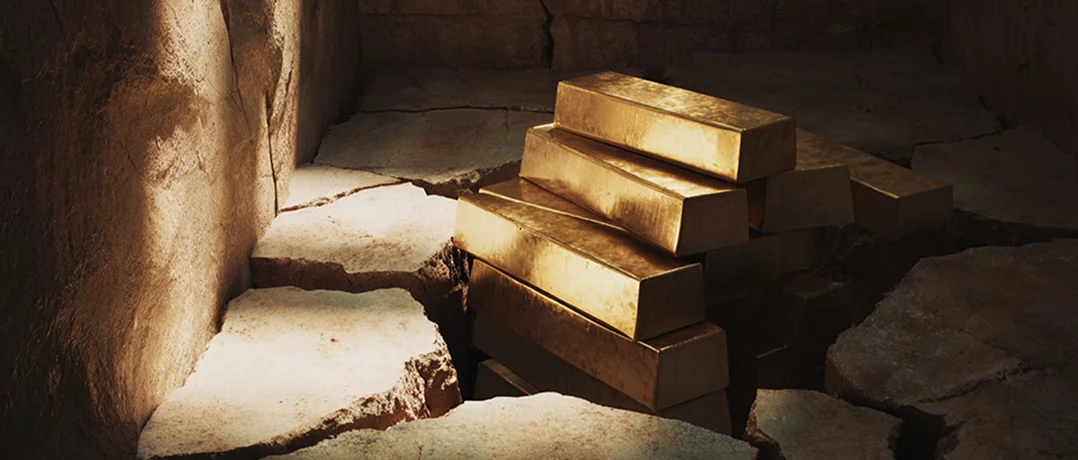
Lebanon holds the second-largest gold reserve in the Arab world after Saudi Arabia, which possesses around 323.1 tons, while Lebanon retains approximately 286.8 tons a staggering stockpile for a country enduring one of the world’s most severe financial collapses since the mid-19th century. Depositors remain locked out of their savings, the banking sector is effectively insolvent, and public trust in state institutions has nearly disintegrated.
Against this backdrop, Lebanon’s gold has emerged as the most politically charged asset in the country and the center of an increasingly urgent national reckoning. The question is no longer theoretical, but explosive: What should Lebanon do with its last untouchable reserve?
Should the gold remain a sacred strategic safeguard, protected from political misuse? Could it be pledged or securitized to unlock international financing? Or should part of it be monetized to compensate depositors and restore a minimum foundation of confidence?
The stakes could not be higher. The fate of Lebanon’s gold carries profound consequences for depositor recovery, the country’s credibility in negotiations with the International Monetary Fund, and its ability to manage sovereign wealth transparently after decades of systemic mismanagement.
How much Gold, where it is, and what it Ii worth
According to figures reported by Banque du Liban (BDL), Lebanon holds approximately 286.8 metric tons of gold, equivalent to about 9.22 million troy ounces. The volume has remained broadly unchanged for decades (since the seventies) and is the basis of Lebanon’s official reporting to international datasets.
The location of the gold is less transparent. It is historically understood to be split between vaults at BDL in Beirut and custody at the Federal Reserve Bank of New York. Public estimates most often cite roughly 60% held domestically and about 40% abroad, though the precise breakdown has never been officially disclosed.
What changed dramatically is the value of the gold. With the recent sharp rise in global gold prices, reaching levels exceeding $5,000 per ounce (before declining during the past few days), and the severe collapse of the Lebanese pound, the notional value of Lebanon’s gold reserves increased substantially. Based on valuing one ounce of gold at $1,517 at the end of 2019, equivalent to about $13.98 billion, the value rose to nearly $50 billion in early 2025, when gold prices reached around $5,500 per ounce. This is according to BDL balance-sheet data and independent market analyses. At peak prices, some assessments estimated the value even higher. Based on the current gold price, which hovers around $4,850 per ounce, Lebanon’s official reserves are estimated at around $45.6 billion. Considering Lebanon’s nominal GDP of $35 billion, this means that gold alone amounts to nearly 130% of the GDP.
Because Lebanon’s dollar-measured GDP has shrunk sharply during the crisis, the gold stock now represents one of the highest gold-to-GDP ratios globally, placing Lebanon among the world’s top holders relative to economic size. By volume, the country ranks around 21st worldwide and second in the Middle East, typically behind Saudi Arabia.
Indeed, Lebanon’s gold reserves are exceptional globally. Advanced economies typically hold gold equivalent to about 6% of GDP, emerging markets around 3%, and lower-rated countries roughly 2.5-3%. Therefore, Lebanon far exceeds these benchmarks, as noted earlier; yet this wealth has not translated into financial stability or a credible recovery plan. The issue lies not in the gold itself but in governance: legal and political restrictions, lack of public trust, and stalled political decision-making prevent effective use.
Why Gold is hard to touch
Lebanon’s gold reserves are protected by Law No. 42 of 1986, enacted during the civil war to prevent political authorities from liquidating national assets during instability. The law explicitly prohibits the sale, transfer, leasing, or investment of the gold without an act of Parliament.
Legal ambiguity remains over whether pledging gold as collateral or issuing gold-backed financial instruments would constitute “disposal” under the law. Legal opinions diverge, but any attempt to mobilize the gold would almost certainly require parliamentary involvement.
Former acting BDL governor Wassim Mansouri publicly pledged that he would not authorize the movement of “even a gram” of gold without full legal cover, reflecting the sensitivity surrounding the issue. His successor, Karim Souaid, has entered office under intense pressure to demonstrate transparency in reserve management.
Lebanon’s Gold is not on the table
Despite persistent rumors, the IMF has not demanded that Lebanon sell its gold.
In ongoing talks between Lebanese authorities and an IMF team led by Ernesto Ramirez Rigo, the Fund has highlighted comprehensive reforms banking restructuring, fiscal adjustment, exchange-rate unification, and governance improvements as prerequisites for financial assistance.
Gold policy, IMF officials have indicated, sits within a broader asset-liability discussion but is not a standalone condition. Internationally, however, greater transparency around sovereign assets, including gold, is viewed as a credibility test particularly after amendments to Lebanon’s Bank Secrecy Law were passed in April 2025.
The missing audit and what is known
Public suspicion has long centered on whether Lebanon’s gold physically exists as reported.
According to Banque du Liban, a physical verification conducted in late 2022 at the IMF’s request confirmed that the gold stock matched accounting records. The inspection was carried out by ALS Inspection UK, commissioned by KPMG, and included the examination of more than 13,000 gold bars and 600,000 gold coins.
The verification was separate from the forensic audit of BDL’s broader financial operations conducted by Alvarez & Marsal, which documented extensive governance failures but did not dispute the existence of the gold.
What remains absent is a regularly updated, fully transparent audit covering custody arrangements, liens, and legal encumbrances a gap that continues to fuel mistrust.
Amer Bisat: “Gold is a red line”
Minister of Economy and Trade, Republic of Lebanon
Economy Minister Amer Bisat has taken a clear position in Lebanon’s ongoing debate over its gold reserves.
Bisat has underlined that Lebanon’s gold holds strategic value in supporting economic stability and sustaining confidence, both at home and abroad. In his view, the reserves serve as an important safeguard during the financial collapse, rather than a resource to be used without careful consideration.
He has rejected suggestions that the government is preparing to liquidate part of the reserves under IMF guidance, describing such claims as unsubstantiated. Any move involving the sale or disposal of gold, he noted, would require amendments to Law 42; a step he framed as primarily political rather than technical.
Bisat has also cautioned that revisiting the gold issue under current conditions could weaken one of the few remaining pillars of trust in Lebanon’s economy. Instead, he argues that the country’s priority should remain focused on structural reforms, institutional rebuilding, and the gradual restoration of confidence ensuring that national wealth is preserved rather than depleted.
Ghassan Hasbani: Before any talk of using Gold, Lebanon must first address the State’s role in the rescue
Member of the “Strong Republic” parliamentary bloc
Ghassan Hasbani, cautioned against framing Lebanon’s gold reserves as an immediate solution to the country’s financial collapse, stressing that accountability must first be addressed across the state, the banking sector and Banque du Liban.
Hasbani said that before any discussion of using Lebanon’s gold in any form, the country must confront the role of the state in the rescue process. The government, he noted, remains the largest borrower from the central bank effectively from depositors’ funds and spent those resources while still holding significant capacity to generate revenues through improved management and operation of public assets.
He stressed that Lebanon’s gold is not the property of the state but of Banque du Liban, where it is held as a strategic reserve separate from the government’s responsibilities in resolving the crisis. Its role, he explained, is tied to the valuation of the central bank’s assets and to preserving its solvency without the need for liquidation.
Any move to monetize or sell the gold, Hasbani added, would require a law passed by Parliament, and such legislation should only be considered under strategic conditions that ensure the long-term preservation of the reserve’s value and the financial soundness of Banque du Liban.
On the broader question of Lebanon’s financial losses, Hasbani argued that responsibility falls on multiple actors, though to varying degrees. Banks, he said, bear responsibility within the limits of the risks they took in using depositors’ funds or through mismanagement, given that they are the direct contractual party with depositors. He said banks must recapitalize in line with international standards and provide the liquidity required.
Banque du Liban, he added, also carries part of the responsibility stemming from its oversight of the banking sector, its monetary policies, financial engineering operations, and any governance failures that occurred.
The state, meanwhile, remains responsible for the funds it borrowed from BDL and wasted on operational spending, leaving the public burdened with accumulated debt. Hasbani also pointed to policies pursued in coordination with the central bank as part of the broader collapse.
For these reasons, he warned against treating gold as an easy or substitute solution, arguing that it must not replace a fair distribution of responsibility among all parties involved.
Hasbani said the ultimate authority over the fate of Lebanon’s gold lies with Parliament. He noted that the reserves have been audited in the past and said there is no obstacle to conducting such audits periodically. Banque du Liban, he said, remains the custodian, but Parliament retains the final decision.
Ghassan Ayyash: Verified Gold, but not a piggy Bank
Former Vice-Governor of Banque du Liban and Economist Specializing in Fiscal and Monetary Policy
Former BDL vice-governor Ghassan Ayyash has addressed the gold debate against the backdrop of collapsing confidence in the central bank.
Ayyash has acknowledged that trust in BDL deteriorated sharply due to improper financial practices and inaccurate balance sheets, prompting the forensic audit that confirmed widespread mismanagement. However, he has stressed that these failures do not extend to the gold itself.
He explained that in 2022, KPMG, in coordination with the IMF, commissioned ALS Inspection UK to conduct a full physical inspection of Lebanon’s gold reserves. After examining more than 13,000 gold bars and 600,000 gold coins, the firm confirmed that the gold held by BDL fully matched the quantities recorded in official financial statements.
Ayyash has been unequivocal that gold must not be used to cover the financial sector’s losses or close the so-called “financial gap.” The gold, he argues, belongs to Lebanese society and future generations, while responsibility for the collapse lies with the state, the central bank, and the commercial banks.
At the same time, Ayyash has allowed for nuance. He has said that a limited and carefully considered sale could be justified if proceeds were used to finance productive projects that increase national wealth. As an example, he has suggested investing in advanced sectors such as artificial intelligence to position Lebanon within emerging regional and global economies.
He has also dismissed claims that the IMF is pressuring Lebanon to sell its gold, saying the negotiations focus strictly on reforms in exchange for financial assistance.
Nassib Ghobril: Breaking the taboo
Chief Economist and Head of Economic Research & Analysis department at Byblos Bank
Ghobril has noted that Lebanon’s gold value rose from about $13.9 billion in 2019 to roughly $38.5 billion at recent peaks, an increase of 17%. He argues that treating gold solely as a reserve for future generations is effectively the same as acting as if Lebanon has no gold at all. Keeping it permanently unused, he says, turns it into a non-productive asset like a painting admired in a museum but economically inert.
He also stresses that gold is not cost-free, pointing to custody and maintenance fees paid by Banque du Liban for reserves stored abroad, even though figures are not publicly disclosed. More importantly, he notes that gold did not prevent the Lebanese pound’s collapse in 2020 despite substantial reserves.
In his view, gold exists for moments of crisis, and Lebanon has faced one of the world’s worst economic collapses for 6 years. He warns that price volatility could quickly erase gains, citing swings of nearly $2 billion within weeks. Ghobril rejects claims that Parliament should block any use of gold, arguing that lawmakers seeking to restore confidence must allow Lebanon to benefit from rising prices.
He outlines several options, including partial sales, investing price gains, issuing gold-backed bonds for large depositors, or selling part of the increase in value to inject liquidity. He also cites a proposal by an independent international research institution calling for a multi-year strategy combining gold sales, investment returns, diaspora bonds, privatization, and fiscal surpluses to recover up to $80 billion in frozen deposits though he acknowledges current political conditions make such plans unlikely.
Ramzi El Hafez: Gold is not a substitute for trust
Founder of InfoPro, a Market Research and Business Consultancy Firm
Market researcher Ramzi El Hafez, founder of InfoPro, has cautioned against viewing gold as a standalone solution.
El Hafez has argued that while Lebanon’s gold exists and is legally protected, leveraging it outside a comprehensive reform strategy would simply repeat past mistakes. Gold, he has stressed, was intended to support the national currency not to underwrite foreign-currency liabilities or replace structural reform.
No economy, he has said, can function without trust. Without credible governance and sound management, any funds injected into Lebanon’s economy would quickly exit through imports or capital flight. The crisis, in his assessment, is not the result of misfortune but of prolonged mismanagement and only disciplined planning and restored confidence can offer a way forward.
Mounir Rashed
Founder of the Lebanese Economic Association, former economist at the International Monetary Fund
Lebanon’s Gold: Safeguard or solution
As debate returns over Lebanon’s gold reserves amid persistent transparency concerns, economist Mounir Rashed argues that part of the country’s gold could be used to address the deposit crisis and revive the economy. He cautions, however, that policies leading to deposit write-offs would further erode public trust.
Rashed explains that gold forms part of Banque du Liban’s reserves, like foreign currencies, but its use is restricted under Law No. 42 (1988), which prohibits any disposal unless Parliament passes a new law with a qualified majority. He notes that amendments remain possible, particularly since the Code of Money and Credit obliges the central bank to settle liabilities through its reserves. Banque du Liban’s debts to commercial banks estimated at around $83 billion are essentially depositors’ funds, placing the reserves at the center of the legal and economic debate.
Available reserves
According to Rashed, Banque du Liban currently holds:
- Approximately $11 billion in cash reserves
- Around $42–43 billion in gold reserves
Using part of the Gold
Rashed also cautions against pledging Lebanon’s gold as collateral, warning that such a step would impose high interest costs and additional financial burdens. Instead, he proposes restructuring successful public entities into joint-stock companies and listing shares, allowing depositors to recover part of their funds through investment mechanisms rather than direct liquidity alone.
He argues that the crisis will not be resolved through deposit write-offs or limited foreign assistance, but through strategic domestic measures liquidity injections, the protection of depositors’ rights, and exchange-rate unification as a pathway to restoring confidence and economic recovery. In his view, gold remains the only realistic source of liquidity in the absence of meaningful external financing.
Lebanon’s last strategic asset
Lebanon’s gold is no longer a dormant reserve. With 286.8 metric tons valued at roughly $45.6 billion, it stands as one of the country’s last sovereign assets amid institutional collapse, frozen deposits, and a financial system stripped of credibility. Yet this debate is not only about price, but about governance and trust. Protected under Law No. 42 (1986), the reserves cannot be mobilized without parliamentary approval, turning any move into a political and constitutional test.
Lebanon’s gold, in the end, is not simply a reserve of wealth. It is a mirror of the state itself a measure of whether Lebanon can finally manage its sovereign assets with legality, discipline, and transparency, or whether even its last untouchable safeguard will be consumed by the same failures that brought the country to ruin.
-
-
-
Josiane Hajj MoussaReporter
-
