As security fears disrupt Lebanon's summer wedding season, couples are postponing, downsizing, or moving celebrations abroad, putting an entire event-driven economy under strain.




As security fears disrupt Lebanon's summer wedding season, couples are postponing, downsizing, or moving celebrations abroad, putting an entire event-driven economy under strain.

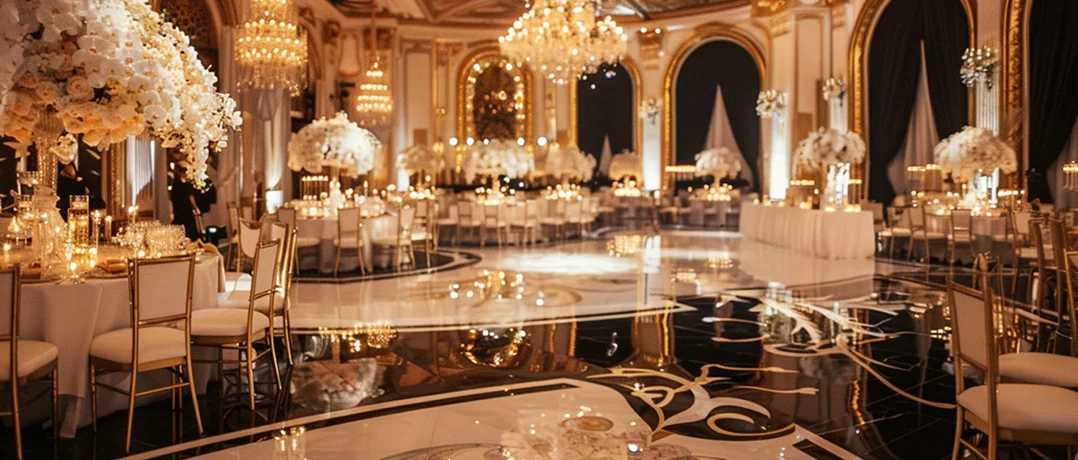
As war fears reshape summer plans, couples are postponing, downsizing, or moving their weddings abroad, putting one of the country’s most vibrant seasonal industries under pressure.
In Lebanon, weddings are never just weddings. They are social performances, status markers, family projects, and increasingly, high-cost productions with their own internal economy. Behind every ceremony lies a dense network of venues, caterers, florists, photographers, entertainers, transportation providers, decorators, beauty teams, lighting crews, and hospitality workers. In recent years, even social media pages built around the spectacle of Lebanese weddings have become part of that machine, monetising the images, videos, and visibility that now accompany the modern wedding.
This summer, that machine has been jolted by something far larger than bridal budgets or changing tastes. Security fears and the broader fallout of war have begun to alter the economics of celebration itself.
Wedding and celebrity event planner Elias Khalil says summer 2026 had initially looked promising.
“Bookings had been strong for weddings in Lebanon in summer 2026, but because of the security developments, weddings costing $100,000 and above were either postponed or moved to a European country. Some couples also reduced their guest lists from 500 people to 100, while others postponed their wedding from summer to autumn,” says Khalil.
He adds that “around 80 percent of couples either postponed their wedding or chose to hold it outside Lebanon.” For a sector that depends heavily on the summer calendar, that figure points to a major contraction at the very moment when planners, venues, and service providers are usually counting on peak business.
The scale of the disruption matters because the wedding season is not simply about one-off events. It is a concentrated period of demand that sustains a web of businesses over several months. When weddings are delayed or moved abroad, the loss is not absorbed by one planner or one venue. It ripples across an entire chain of suppliers.
One of the more striking features of the current slowdown is that it is not being driven by Lebanon losing its pricing edge. On the contrary, planners insist the country remains significantly more competitive than many foreign destinations.
“A wedding that costs $100,000 in Lebanon would cost three times as much in Europe, because prices in Lebanon remain excellent compared to abroad, in addition to the quality of service we provide, the generosity in every detail, and a level of wedding execution that no other country offers,” Khalil notes.
That formula has long been one of the industry’s strongest selling points: a wedding in Lebanon could offer the scale and production value of a luxury event abroad, but at a much lower cost. For years, the country sold a combination that few destinations could match: large-scale production, strong hospitality infrastructure, and luxury-style celebrations at a lower price than Europe. Yet this summer, cost has not been the decisive variable. Security has.
Khalil stresses that the wedding sector has been hit hard, but says planners have tried to absorb some of the pressure rather than pass it immediately on to clients.
“Despite inflation and rising prices in Lebanon and around the world, we did not raise our prices, although prices will inevitably rise next year,” he says.
That restraint, however, is unlikely to hold indefinitely. Weddings depend on transport, imported goods, flowers, food inputs, décor, technical equipment, and a wide range of services that are themselves exposed to inflation and fuel costs. Holding prices steady in a year of instability may help protect the current season, but it also squeezes margins in an industry already facing a drop in volume.
Khalil argues that the damage goes far beyond planners themselves, noting that “hundreds of Lebanese families rely on this sector, and if it is damaged, they are damaged too. A single wedding can employ more than 500 people across different services, most of them young men and women.” Every postponed or cancelled wedding, in other words, translates into lost income not just for the couple’s chosen planner, but for photographers, florists, musicians, drivers, waiters, make-up artists, designers, production teams, and countless others whose work is tied to the event economy.
The high-end wedding market, meanwhile, has not vanished. But it has clearly narrowed.
“Weddings costing $1 million and above are still taking place in Lebanon, but their number has fallen by around 50 percent. It is natural for some weddings to cost that much, because entertainment alone and bringing in top-tier artists can exceed $500,000,” Khalil says.
He also notes that Lebanon has lost foreign demand that once looked like a promising avenue for growth. “There were foreign couples who contacted us to hold their weddings in Lebanon after seeing Lebanese weddings on social media and how they are celebrated, but they too cancelled because of the situation,” he says.
That is a significant loss for a sector that had increasingly begun to treat destination weddings as a growth opportunity.
The contraction is visible not only at the top end of the market, but across the wider wedding industry. Wedding planner Rasha Abi Aad Nader paints an equally stark picture. “We were hit in Lebanon’s wedding sector by 70 percent this summer because of the situation and the war,” she says.
According to Nader, “half of the weddings were postponed to autumn, winter, or even a full year later, while some were cancelled and moved to another destination considered safer.” The result is a split market: some of the business may return later in the year if conditions stabilise, but some of it has already left the country altogether.
Like Khalil, Nader says planners have deliberately avoided raising prices this summer despite clear cost pressures.
“It is only natural that inflation would hit this sector, especially with rising oil prices affecting every service involved in weddings, particularly transport, catering, flowers, and other goods, but we have not raised our prices in order to preserve the season this summer,” she says.
That does not mean weddings in Lebanon are cheap. According to Nader, “a fully planned wedding for 150 guests starts at around $50,000 and can exceed $300,000,” while “million-dollar weddings are still taking place, but at a lower rate.”
She also breaks down the cost structure itself: “The cost of food per person ranges from $60 to $120 without drinks or alcohol, and once beverages and alcohol are added, another $6 to $20 is added per person. Venue rental in Lebanon ranges between $7,000 and $30,000 depending on the location and specifications of the space, table flower arrangements range from $50 to $350, and photography ranges from $2,000 to $6,000.”
If anything, the modern Lebanese wedding has become more expansive, not less. “The after-wedding party in Lebanon can sometimes cost more than the wedding itself, especially if it is headlined by an international DJ, and its cost starts at $20,000,” Nader says.
That detail is revealing because it shows how weddings in Lebanon have evolved from a single evening into a multi-stage experience, each stage carrying its own cost. There is the ceremony itself, the reception, the after-party, the visual production, and now the digital afterlife of the event on Instagram and wedding-focused platforms.
That digital afterlife has become an economy in its own right. According to information obtained by The Beiruter, social media pages specialising in Lebanese weddings have increasingly turned wedding coverage into a business model, capitalising on the glamour and visibility of these events through posts, reels, and on-the-ground content production. In some cases, a single post begins at $1,000, while full event coverage by prominent pages can cost around $7,000.
The war has also hurt Lebanon’s ability to attract non-resident clients. “Before the war, Arab and foreign couples contacted us to hold their weddings in Lebanon, but they later cancelled. A wedding in Athens, for example, costs one and a half times more than in Lebanon, but the service in Lebanon is far better,” Nader says.
Even so, she notes that some couples still insisted on holding at least a small celebration in their home country. “The joy of a wedding in Lebanon cannot be found anywhere else,” she notes.
At the same time, many Lebanese couples are moving in the opposite direction, away from spectacle and towards lower-cost, simpler alternatives. According to information obtained by The Beiruter, a growing number have opted for small civil weddings abroad, particularly in Cyprus and Turkey, both of which have become key destinations for Lebanese couples seeking civil marriage. Demand for that option has risen after the country’s last two wars.
In Istanbul, for example, civil wedding packages can start at $2,070, including hotel accommodation, transport, and civil marriage paperwork. In Larnaca, packages start at $1,220. Some travel agencies have even begun offering couples the option of paying for their honeymoon in instalments.
What is happening to weddings in Lebanon is not just a story about changing social habits. It is a story about what happens when one of the country’s most emotionally charged industries collides with insecurity, inflation, and declining confidence.
The wedding sector does more than produce beautiful nights. It circulates money through hospitality, food, transport, media, entertainment, design, and freelance labour. It creates seasonal work. It attracts spending from abroad. It sells a polished and aspirational version of Lebanon.
That is what makes the current slowdown significant. When weddings shrink, migrate, or disappear, the loss is felt across an ecosystem of workers and suppliers whose incomes depend on the season.
In a country where celebration has often functioned as a form of resilience, the state of the wedding season now says something larger about the economy itself. The desire to celebrate is still there, and so is the expertise behind it. What is missing is certainty, and that may be the most expensive wedding cost of all.

Focusing on economy and social affairs.
