

Behind Valentine’s Day’s commercial image lies Saint Valentine of Rome, a third-century martyr whose story of faith and legend evolved from secret marriages into a global symbol of love.
The priest who became the face of love

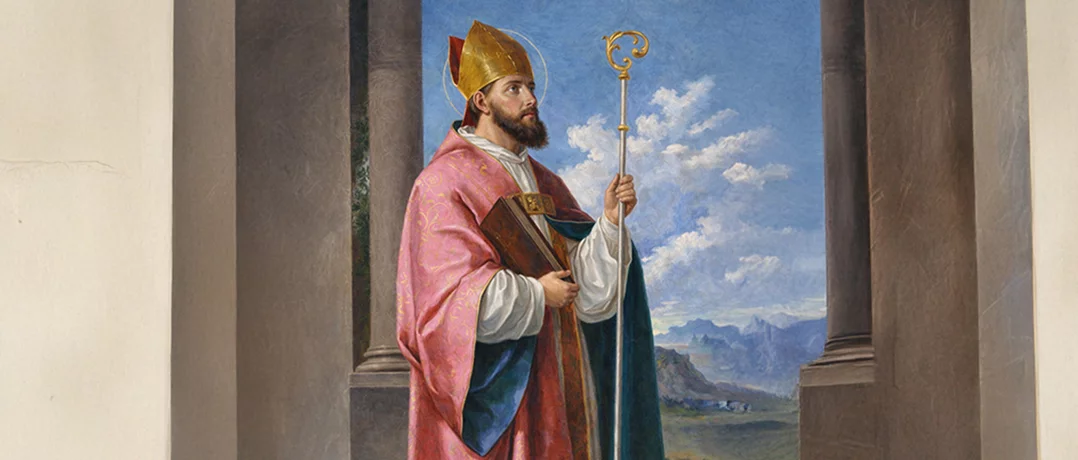
The world celebrates love on February 14. But behind the commercial holiday stands a far more complex religious figure: a third-century Christian martyr whose life is wrapped in both documented history and enduring legend, a Roman priest named Valentinus.
Saint Valentine of Rome lived in the 3rd century AD, during one of the most unstable periods of the Roman Empire. Christianity was still illegal. Christians were persecuted intermittently, and loyalty to the emperor was expected above all.
Valentine served as a priest in Rome during the reign of Emperor Claudius II Gothicus (268–270 AD). He would not live to see the 4th century.
Rome under Claudius II
Claudius II ruled during a time of near-constant military conflict. According to later Christian tradition, the emperor believed unmarried men made better soldiers and allegedly restricted young men from marrying. Valentine is said to have defied this order.
Christian accounts describe him secretly performing marriages for young couples, protecting what he believed was a sacred sacrament. This would have been a direct act of religious defiance in a state that tightly controlled social order.
Valentine was imprisoned for his Christian ministry and refusal to renounce his faith. According to Christian tradition, while in prison he befriended the jailer’s daughter, who was blind. One legend claims he miraculously restored her sight. Valentine was executed on February 14, around 269 AD (some sources date it to 270 AD). He was buried along the Via Flaminia, one of Rome’s major roads. A church was later built near the reported burial site.
Recognition as a Saint
By the late 5th century, Valentine was formally recognized as a martyr. In 496 AD, Pope Gelasius I declared February 14 as Saint Valentine’s Feast Day. In a letter, the pope acknowledged that Valentine was among those “whose names are justly reverenced among men, but whose acts are known only to God.” That line is important. Even by the 5th century, details of Valentine’s life were already uncertain.
When did he become the Saint of Love?
That connection developed in the Middle Ages. In 14th-century England and France, it was commonly believed that mid-February marked the beginning of birds’ mating season. Poet Geoffrey Chaucer reinforced this idea in his 1382 poem Parliament of Fowls, linking Saint Valentine’s Day to romantic pairing. From there, Valentine’s feast day gradually transformed from a religious observance into a celebration of courtly love.
By the 15th century, nobles were exchanging handwritten “valentines.” By the 18th century, the tradition spread among the public. By the 19th century, mass-produced Valentine’s cards appeared. A martyred Roman priest had become the patron of romance.
More than 1,700 years later since Saint Valentine’s execution, February 14 carries his name. History rarely unfolds this way, where martyrdom transforms into romance, and sacrifice evolves into celebration. But Saint Valentine of Rome remains at the center of it, as a powerful symbol of love and as a figure shaped by faith, resistance, and legend.
-
-

-
The Beiruter
-
