



Athlete superstitions are less about magic and more about psychology, repetitive rituals create an illusion of control that reduces anxiety and sharpens focus in high-pressure environments.
The psychology behind sports superstitions

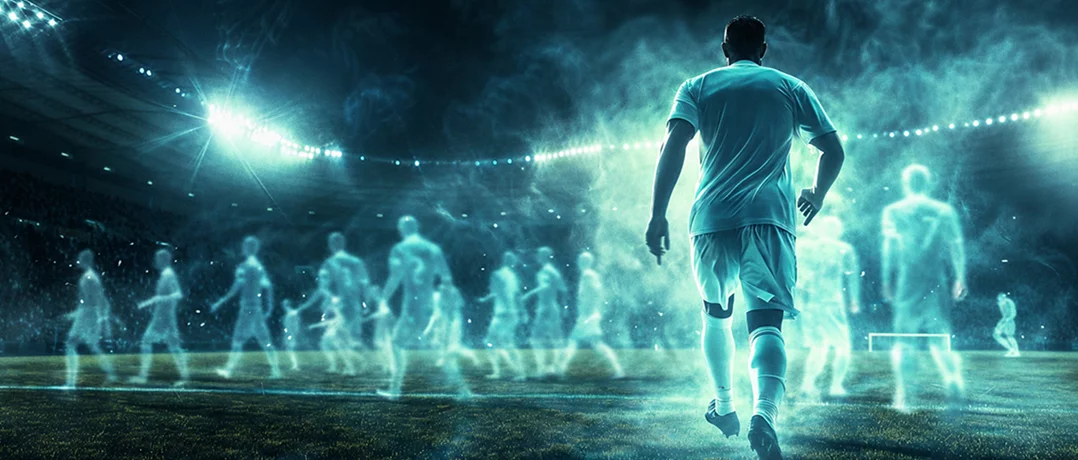
Superstitions have followed human beings into every high-stakes arena imaginable, the battlefield, the casino, the operating room. But nowhere do they flourish quite as visibly, or as elaborately, as in professional sport. From Rafael Nadal arranging his water bottles with surgical precision before a Grand Slam serve, to footballers who have entered the pitch on the same foot for the entirety of their careers, the rituals athletes cling to are as varied as the sports they play, and far more psychologically significant than they appear.
None of it, strictly speaking, should matter. And yet, for the athletes performing these rituals, it matters enormously.
Control in a world of uncertainty
Sport, at its highest levels, is a theater of uncertainty. A tennis match can hinge on a millimeter. A football season can turn on a deflection. A career can end in a single moment of bad luck. For athletes who have dedicated their lives to mastering their craft, the gap between preparation and outcome can feel agonizingly arbitrary, and it is precisely in that gap that superstitions take root.
Psychology describes this through the concept of the "illusion of control", the human tendency to believe that personal actions can influence outcomes that are, in reality, largely beyond our reach. The term was coined by psychologist Ellen Langer in the 1970s, who demonstrated that people consistently behave as though they can control chance events through personal involvement. Throw a dice yourself rather than letting someone else throw it, and you instinctively feel more confident about the result, even though the odds are identical.
Athletes live this phenomenon at an extreme. When the stakes are enormous and the margin for error is microscopic, the mind reaches for whatever lever of control it can find. A ritual becomes that lever. It may not move outcomes, but it moves the internal state of the person performing it, and in sport, internal state is everything.
Anxiety, routine, and the brain
There is hard neuroscience underneath the superstition. Repetitive pre-performance rituals activate the brain's reward circuitry in ways that reduce cortisol, the primary stress hormone. When an athlete completes a familiar sequence of actions, the brain interprets the familiar pattern as a signal of safety, a kind of neurological shortcut that says: you have been here before, and you were fine.
This is why superstitions are so often born in moments of success. A goalkeeper wears a particular pair of gloves on the day of a clean sheet, and the association is forged. The logical mind knows the gloves did not keep the ball out of the net. The emotional brain does not care. It has logged the correlation, and it will resist breaking it.
The flip side is equally revealing. When athletes are forced to abandon their rituals, through injury, changed circumstances, or sheer circumstance, many report heightened anxiety and diminished confidence. The ritual, it turns out, was doing real psychological work all along: not altering fate, but managing the fear of it.
When ritual becomes performance
There is another dimension to athlete superstitions that is rarely discussed: they are also a form of focus. In this sense, the superstition functions less as a magical belief and more as a psychological technology, a repeatable, portable system for arriving at peak mental readiness on demand.
Sport will always be uncertain. Outcomes will always be partially beyond any athlete's control. And so, as long as human beings compete under pressure, they will arrange their water bottles, pull on their lucky socks, and knock on whatever wood is nearest. Not because they believe in magic, but because they believe, correctly, in the power of the mind that performs the ritual.
-
-

-
The Beiruter
-
