



The Housing Bank has resumed housing lending, offering renewed opportunities for affordable homeownership through a sustainable and long-term financing strategy.
The return of affordable housing loans

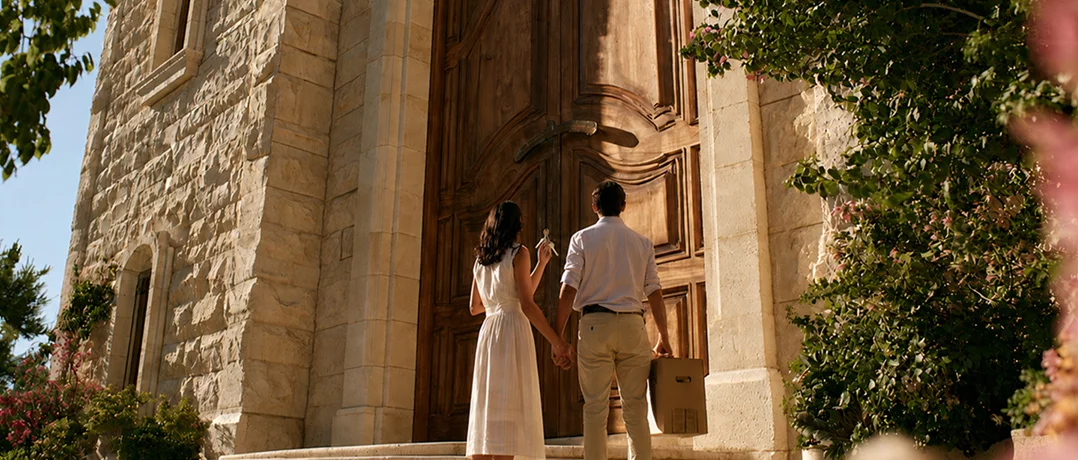
After years of paralysis caused by Lebanon’s unprecedented financial and banking crisis, the country’s housing finance sector is gradually regaining momentum. At the center of this recovery is the Housing Bank, which resumed lending in early 2025 after securing new sources of long-term financing. The return of housing loans has provided renewed hope for thousands of Lebanese families seeking affordable homeownership at a time when soaring property prices, rising living costs, and limited access to commercial credit continue to make purchasing a home increasingly difficult.
In this context, The Beiruter reached out to Antoine Habib, Chairman and General Manager of the Housing Bank, to better understand the funding mechanisms that enabled the Bank to resume lending, the priorities guiding its loan programs, eligibility requirements, and the long-term vision for establishing a sustainable housing finance model capable of serving future generations.
Rebuilding housing finance through long-term funding
According to Habib, the resumption of housing lending was the outcome of a comprehensive effort to restore the Housing Bank’s role following years of economic disruption. Rather than simply restarting previous operations, the Bank focused on securing long-term financing compatible with the nature of housing loans, which require stable funding over extended repayment periods.
Resuming housing lending was not simply a return to previous operations; it was about rebuilding a sustainable housing finance system after years of financial crisis.
The cornerstone of this recovery has been a financing facility of 50 million Kuwaiti dinars provided by the Arab Fund for Economic and Social Development (AFESD). Since lending resumed at the beginning of 2025, this funding has enabled the Housing Bank to provide housing loans primarily to low- and middle-income households, benefiting more than 1,200 Lebanese families.
Habib noted that approximately $80 million has already been utilized from the overall financing package, whose total value is estimated at around $165 million. However, he stressed that the Bank’s long-term strategy does not rely on a single funding source. Instead, it seeks to diversify financing through partnerships with Arab development funds, international financial institutions, and development agencies capable of providing concessional, long-term financing. “Housing finance requires stable, long-term funding. It cannot depend on short-term financing sources,” he added.
Reducing borrowing costs also remains a central objective. Habib noted that the recent reduction of the interest rate on AFESD-funded loans from 6% to 5.75% reflects the Bank’s efforts to ease borrowers’ financial burdens while expanding access to affordable housing finance.
Meeting strong demand while preserving financial sustainability
Demand for housing loans has increased significantly as a result of rising property prices, higher construction costs, escalating rents, and declining purchasing power. Habib explained that many Lebanese families possess stable incomes but lack the financial capacity to purchase homes without affordable long-term financing.
To address this need, the Housing Bank prioritizes low- and middle-income households as well as people with disabilities, groups that often face the greatest obstacles in accessing conventional commercial loans.
The Bank’s activities extend beyond financing the purchase or construction of homes. Depending on the available financing programs, Habib stated that borrowers may also obtain loans for home renovations, improvements, solar energy installations, and wastewater treatment systems. These initiatives not only improve living conditions but also help households reduce long-term energy and utility expenses.
Habib stressed that the Bank measures success not merely by the volume of loan applications received but by its ability to transform demand into financially sustainable lending. Careful assessment of borrowers’ repayment capacity remains essential to ensuring that loans improve living standards without creating excessive financial burdens.
For this reason, Habib asserted that “priority is consistently given to applicants purchasing a primary residence rather than financing speculative real estate investments,” reinforcing the Housing Bank’s social mission of promoting residential stability.
Eligibility criteria and available loan programs
Habib explained that the Housing Bank seeks to balance its social mandate with prudent credit management. Loan eligibility is therefore determined through a comprehensive evaluation of the applicant’s financial situation alongside the intended purpose of the loan.
A successful loan is one that enables citizens to own a home without imposing monthly installments beyond their financial means.
Eligibility generally considers nationality, residency status, income level, property ownership, the purpose of financing (whether purchasing, constructing, or renovating a home) and the applicant’s overall credit standing. Importantly, the programs remain accessible to both Lebanese residents and members of the Lebanese diaspora.
The Bank also evaluates borrowers’ repayment capacity, the property’s value, the loan-to-value ratio, collateral requirements, insurance coverage, and other financial indicators to ensure long-term sustainability.
Current financing programs include purchase and construction loans of up to $100,000, with repayment periods reaching 20 years for home purchases and 18 years for construction projects. Renovation loans are available up to $50,000 with repayment periods extending to 10 years. These loans currently carry an interest rate of 5.7%, fixed during the first year before becoming subject to subsequent adjustments.
Construction and renovation loans also cover environmentally sustainable investments, including solar energy systems and wastewater treatment facilities.
Recognizing that many Lebanese citizens earn their salaries in local currency, the Housing Bank has also introduced renovation loans denominated in Lebanese pounds. These loans reach up to LBP 2 billion, are repayable over 10 years, and carry an annual interest rate of 7%.
We seek to provide financing that remains affordable while preserving the Housing Bank’s financial soundness.
A long-term vision for Lebanon’s housing sector
Habib believed Lebanon must move beyond temporary financing solutions toward a comprehensive and sustainable housing finance system capable of supporting long-term economic recovery.
The Housing Bank’s strategy rests on several key pillars. First is the continued diversification of funding sources through cooperation with Arab and international development institutions. Stable, long-term financing remains indispensable for maintaining affordable lending.
Second, the Bank intends to broaden its range of housing finance products to address evolving needs beyond traditional home purchases, including construction and renovation financing.
A third priority involves developing innovative housing models designed to reduce the cost of homeownership. Among the projects under consideration is the introduction of rent-to-own housing programs, alongside affordable housing initiatives targeting low- and middle-income families.
Digital transformation also forms an important component of the Bank’s modernization strategy. Habib highlighted ongoing efforts to simplify loan applications and file management through online platforms, allowing applicants to review eligibility requirements and submit requests electronically.
Ultimately, he stressed that resolving Lebanon’s housing crisis requires coordinated action involving the Housing Bank, the Lebanese government, Banque du Liban (BDL), international financial institutions, the private sector, and real estate developers. While the Housing Bank serves as a key driver of housing finance, lasting solutions depend on broader institutional cooperation.
The Housing Bank can serve as the primary driver of housing finance, but it cannot solve Lebanon’s housing crisis on its own.
The Housing Bank’s role in Lebanon
Established in 1977 as a Lebanese joint-stock company, the Housing Bank operates as a mixed public-private institution, with 80% of its paid-up capital owned by private shareholders (including commercial banks, insurance companies, and individual investors) and 20% held by the Lebanese government. Today, its paid-up capital amounts to LBP 150 billion.
The Bank is a member of the Association of Banks in Lebanon and operates under collective labor agreement regulations. Since its establishment, it has focused primarily on providing long-term housing loans in Lebanese pounds to assist low-income citizens in purchasing, constructing, or renovating homes, while also financing housing cooperatives.
In addition to its lending activities, the Housing Bank manages public and private funds allocated to housing finance programs and administers the portfolio of deposit certificates associated with the employment of non-Lebanese workers under the provisions of Lebanese legislation.
Beyond its financial role, the institution considers housing finance a social responsibility. Its mission is to support the housing and real estate sectors, contribute to national economic development, strengthen communities, and help Lebanese citizens build stable futures through affordable and sustainable homeownership.
Therefore, the Housing Bank’s return to lending represents an important milestone in Lebanon’s gradual economic recovery. While significant challenges remain, the Bank’s strategy reflects a broader commitment to making homeownership more accessible while preserving the financial sustainability necessary to serve future generations of Lebanese families.
-
-

-
Anthony ChamounResearcher/WriterFocusing on Political Science and International Affairs.
-
