



El Niño and La Niña reshape global weather patterns, while fears grow over a potential Super El Niño intensified by climate change.
The return of Super El Niño?

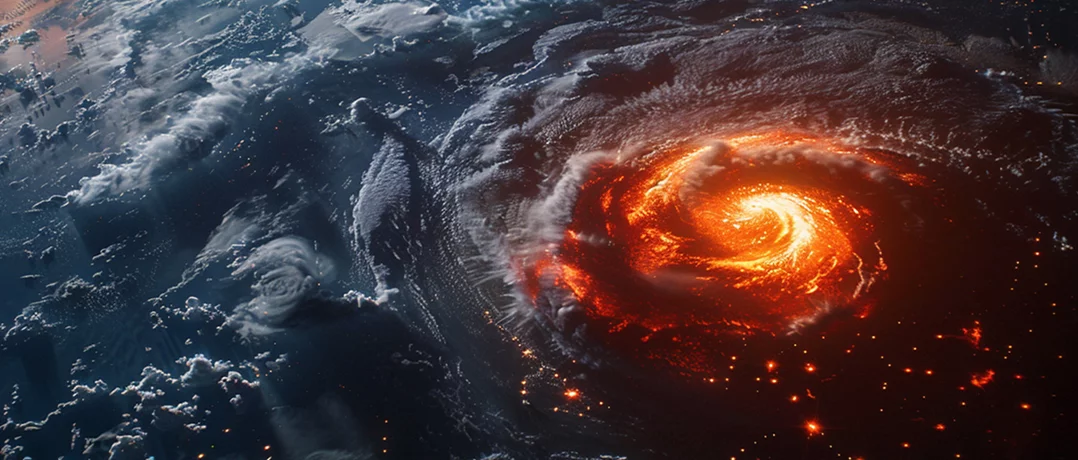
El Niño and La Niña are among the most influential natural climate phenomena on Earth. Originating in the tropical Pacific Ocean, these events have the power to alter weather systems across continents, affecting rainfall, temperatures, storms, agriculture, marine ecosystems, and global economies. Together, they form part of a larger climate system known as the El Niño-Southern Oscillation (ENSO), a recurring cycle of warming and cooling ocean temperatures combined with shifts in atmospheric pressure and wind patterns.
Although ENSO events are natural, their impacts have become increasingly significant in an era of global climate change. Most recently, growing attention has focused on the possibility of a new “Super El Niño,” which could further amplify extreme weather events worldwide.
What are El Niño and La Niña?
Under normal Pacific Ocean conditions, trade winds blow from east to west along the equator, pushing warm surface waters from the western coast of South America toward Asia and Australia. As warm water moves westward, colder and nutrient-rich water rises near the South American coast through a process known as upwelling. El Niño and La Niña disrupt this natural balance.
El Niño is the warm phase of the ENSO cycle. During El Niño, the trade winds weaken or reverse direction, allowing warm water to shift eastward toward the Americas. This reduces upwelling and increases sea surface temperatures in the eastern and central Pacific Ocean.
La Niña is the opposite phase. During La Niña events, trade winds become stronger than usual, pushing more warm water westward and intensifying the upwelling of cold water in the eastern Pacific. As a result, sea surface temperatures become cooler than average.
These climate events generally occur every 2 to 7 years and usually last between nine and twelve months, although some episodes can persist for much longer.
What is the difference between El Niño, La Niña, and Super El Niño?
The main difference between El Niño and La Niña lies in ocean temperatures and atmospheric circulation patterns in the tropical Pacific.
During El Niño, warmer ocean temperatures release additional heat into the atmosphere, often producing warmer global temperatures and shifting rainfall patterns. In contrast, La Niña cools the ocean surface in the eastern Pacific, often contributing to slightly cooler global temperatures and opposite weather effects in many regions.
A “Super El Niño” refers to an exceptionally intense El Niño event in which sea surface temperatures rise far above average levels, often exceeding 2°C above normal. These rare events are associated with severe climatic disruptions worldwide.
While ordinary El Niño events already influence weather systems significantly, Super El Niño episodes can produce much stronger and more widespread consequences, including catastrophic flooding, prolonged droughts, agricultural collapse, destructive wildfires, and record-breaking global temperatures.
How do El Niño and La Niña change global weather patterns?
El Niño and La Niña strongly influence atmospheric circulation, particularly through changes in the Pacific jet stream.
During El Niño, the Pacific jet stream shifts southward. This often brings wetter conditions to the southern United States and Gulf Coast while causing warmer and drier winters in northern parts of the United States and Canada. Regions such as Southeast Asia, Australia, and parts of Africa frequently experience drought and heat waves.
El Niño also tends to suppress hurricane formation in the Atlantic Ocean while increasing tropical storm activity in the Pacific.
La Niña generally produces the opposite effects. The jet stream shifts northward, leading to wetter conditions in the Pacific Northwest and Canada and drier weather across the southern United States. Australia and Indonesia often receive heavy rainfall and flooding during La Niña years.
La Niña also tends to increase hurricane activity in the Atlantic Ocean because atmospheric conditions become more favorable for storm development.
What are past events of El Niño, La Niña, and Super El Niño?
Several ENSO events have become historically significant because of their global consequences.
The 1982-1983 Super El Niño was one of the first extensively studied major ENSO events. It caused devastating floods in South America, severe droughts in Australia and Africa, and substantial economic damage worldwide.
The 1997-1998 Super El Niño is often described as the “El Niño of the Century.” It triggered catastrophic flooding in parts of the Americas, widespread wildfires in Indonesia, and severe drought conditions across many tropical regions. Scientists estimate that the event caused trillions of dollars in global economic losses
The 2015-2016 Super El Niño also had major consequences, contributing to record global temperatures, coral bleaching events, crop failures, and widespread humanitarian crises linked to drought and flooding.
Strong La Niña episodes have also produced notable disasters. The 2010-2011 La Niña contributed to severe flooding in Australia, deadly landslides in South America, and an unusually active Atlantic hurricane season.
What is the coming super El Niño and its potential impacts?
Scientists are closely monitoring signs that another strong El Niño could emerge in the near future; particularly this summer. Some climate models suggest that the next event could potentially reach Super El Niño intensity.
If such an event develops, its effects may be amplified by ongoing global warming. Rising ocean temperatures mean that future El Niño events could occur in an already warmer climate system, increasing the likelihood of unprecedented heat waves, droughts, floods, and ecosystem stress.
Potential impacts of a future Super El Niño include intensified wildfires in drought-prone regions, severe agricultural losses, disruptions to food and water supplies, stronger Pacific storms, and further coral reef destruction due to marine heatwaves.
Climate scientists also warn that a major El Niño could temporarily push global temperatures beyond critical climate thresholds, including the 1.5°C warming target established under international climate agreements.
Is climate change affecting El Niño and La Niña?
The relationship between climate change and ENSO remains one of the most complex areas in climate science.
Some studies suggest that global warming could increase the frequency and intensity of extreme El Niño and La Niña events. Warmer oceans may provide more energy to the climate system, potentially amplifying ENSO-related weather extremes.
However, scientists emphasize that there is still uncertainty regarding how climate change specifically alters ENSO behavior. Natural variability remains an important factor, and not all climate models agree on future trends.
What is clear, however, is that ENSO events are now occurring in a much warmer world than in previous decades. This means their impacts may become more severe even if the ENSO cycle itself does not fundamentally change.
To conclude, the emergence of increasingly intense Super El Niño events has heightened scientific and political concern, especially as climate change amplifies global environmental instability. While modern forecasting systems have improved preparedness and disaster response, uncertainties remain regarding how future ENSO events will evolve in a warming world.
-
-

-
The Beiruter
-
