



Beirut’s Hkeeli Ya Jnoub exhibition transforms museums into immersive spaces where visitors actively engage with Lebanon’s history, collective memory, and lived experiences.
The rise of immersive museum exhibitions in Lebanon
The rise of immersive museum exhibitions in Lebanon
By Lynn El Khalil | July 06, 2026

Reading time: 5 min
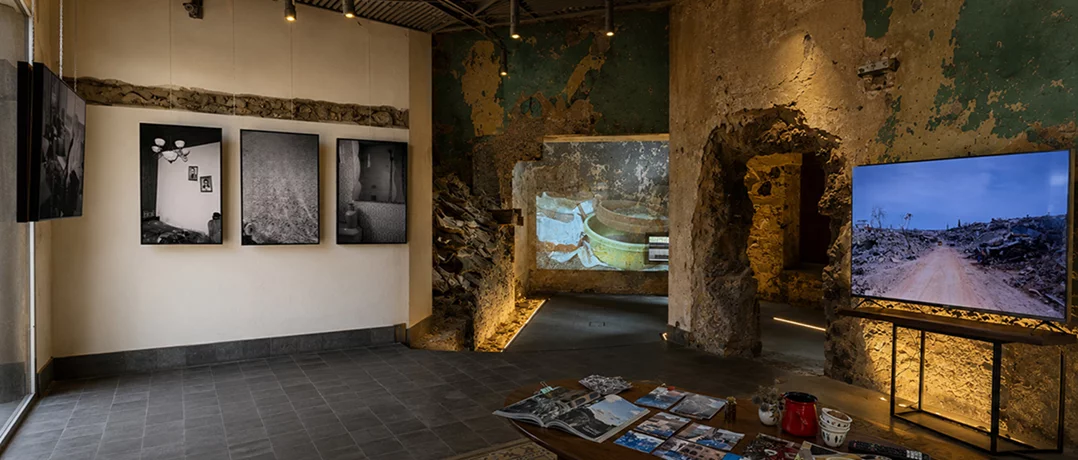
For decades, museums in Lebanon largely followed a familiar formula. Visitors walked through galleries, read explanatory labels, observed objects behind glass, and left. History was something to look at rather than something to experience. Increasingly, however, a new generation of exhibitions is challenging that model, transforming museums from places of passive observation into spaces where visitors become active participants in remembering, questioning, and contributing. This shift reflects a broader international trend toward immersive museology, but in Lebanon it carries particular weight. In a country where war, displacement and contested histories remain deeply embedded in everyday life, immersion is not simply a design choice. It has become a way of engaging audiences with memories that official narratives have often failed to reconcile.
The exhibition Hkeeli Ya Jnoub at Beit Beirut exemplifies this transformation. Rather than presenting South Lebanon's history through chronological timelines or static displays, the exhibition invites visitors to physically move through memories, interact with personal archives and contribute to an evolving collective conversation about identity, home and displacement. The exhibition forms part of the larger Hkeeli initiative, which deliberately positions itself not as a commemorative exhibition marking the Lebanese Civil War as a closed chapter, but as "a public invitation" to continue conversations about memory, identity, and healing. Its philosophy is rooted in participation rather than consumption, arguing that memory is something created collectively rather than simply preserved. Unlike traditional exhibitions that ask visitors to read information panels before moving on, Hkeeli Ya Jnoub constantly invites interaction.
One installation, Stories from the South, combines audiovisual testimonies with archival materials documenting life under the Israeli occupation of South Lebanon between 1978 and 2000. Rather than separating historical documents from oral histories, the exhibition layers recorded voices, photographs, and physical objects to create what it describes as a collective memory built from individual experiences. Another installation, After Supper, explores displacement through something deceptively ordinary: the dinner table. Built around stories collected from people across South Lebanon, the installation demonstrates how food, recipes and shared meals become archives in themselves. Everyday rituals become vessels for preserving identity long after homes have been destroyed or families displaced.
Perhaps one of the exhibition's most symbolic works is Keys Without Homes. Built around the familiar image of families carrying house keys after displacement, the installation explores how these keys have evolved from practical objects into symbols of memory and hope. Visitors are confronted with the paradox that while homes may have been reduced to rubble, the keys continue to survive, representing both loss and the possibility of return. Throughout the exhibition, visitors also encounter family photographs, handwritten letters, archived documents, and domestic objects collected from homes across South Lebanon. Together, they transform private family archives into public historical records, blurring the distinction between museum collections and lived experience.
The immersive experience extends well beyond observation. Visitors are encouraged to write their own memories in notebooks placed throughout the exhibition, contributing personal recollections to an expanding archive. Instead of preserving history behind institutional authority, the exhibition positions every visitor as a potential storyteller. Elsewhere, recipe books sit beside bags of flour and traditional kitchen ingredients, allowing visitors to connect memories through food rather than text alone. In another room, tables display books, photographs, and handwritten notes that visitors are invited to browse freely, turning archival research into an intimate domestic experience rather than a formal academic exercise.
Simple signs reading "Don't be shy, be curious" reinforce the exhibition's philosophy. Visitors are encouraged not merely to observe but to touch, write, question, and reflect. The exhibition's setting inside Beit Beirut amplifies this immersion. Once known as the Barakat Building, the structure itself bears the physical scars of the Lebanese Civil War. Bullet marks, damaged walls and exposed concrete remain intentionally visible, making the building itself part of the exhibition rather than merely its container. Visitors do not simply learn about conflict. They walk through architecture that has witnessed it.
The wider Hkeeli initiative expands participation even further through walking tours along Beirut's former Green Line, interactive games that transform the city into a living archive, human library conversations with activists and former fighters, storytelling workshops and public discussions. Together these activities redefine museums as civic spaces where history is continually negotiated rather than permanently settled. This participatory model marks a significant departure from older museum practices in Lebanon. Historically, many museums prioritized preservation, displaying archaeological artifacts, historical documents or artworks while maintaining a clear distance between the object and the visitor. Immersive exhibitions such as Hkeeli Ya Jnoub instead emphasize emotional engagement, personal testimony, and collective authorship. Visitors are no longer spectators looking at history through glass. They become participants helping shape how that history is remembered.
That distinction matters in Lebanon, where collective memory remains fragmented across political, regional, and generational lines. Immersive exhibitions cannot resolve these divisions, but they can create spaces where multiple memories coexist. By combining archival materials with lived experience, encouraging participation rather than passive viewing, and treating ordinary domestic objects as historical evidence, exhibitions such as Hkeeli Ya Jnoub suggest that museums are no longer simply repositories of the past. They are becoming laboratories for public memory. In doing so, they reflect a broader evolution in Lebanon’s cultural landscape: one in which museums are shifting from places that preserve history to places where history is continually made, debated, challenged and collectively reinterpreted. In a country where the past remains deeply contested, these spaces encourage visitors not simply to inherit history, but to engage with it, question dominant narratives and participate in the ongoing conversation about what should be remembered and why.
