



Lebanon’s water crisis is now a nationwide emergency, driving food insecurity and deepening social and economic vulnerability amid climate stress and failing infrastructure.
The rising threat of water scarcity

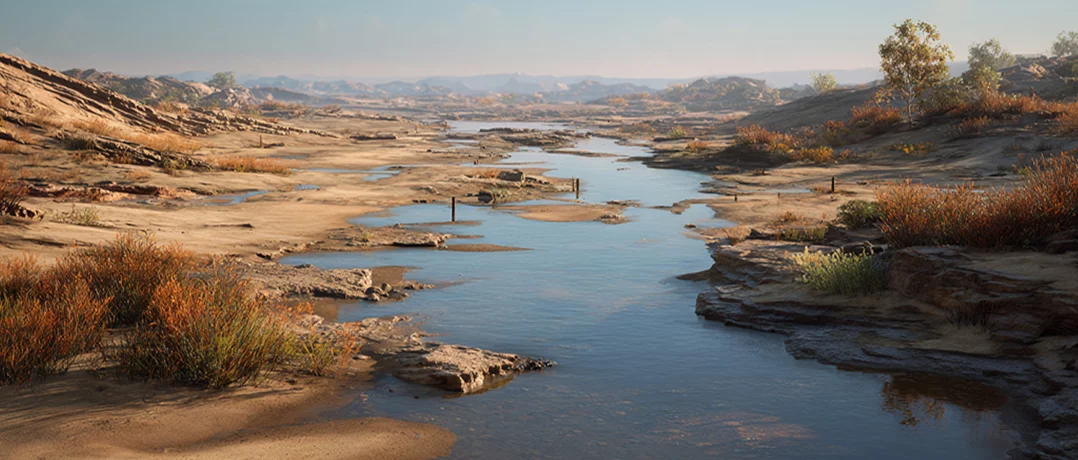
Intensifying drought, rising temperatures, and years of strain on Lebanon’s fractured infrastructure have made reliable access to water increasingly elusive for many communities. What was once considered a manageable seasonal challenge has evolved into a persistent crisis, touching households from the coast to the Bekaa and deepening vulnerabilities across the country. The pressures unfolding in Lebanon echo a broader pattern across the Levant, where climate shifts and conflict-driven disruptions are reshaping agriculture, public health, and long-term stability.
A humanitarian alarm: Water scarcity and food insecurity
A November 2025 report published by USAID’s Famine Early Warning Systems Network (FEWS NET) warned that Lebanon’s deepening water scarcity, combined with conflict and intensifying drought, is now a major driver of food insecurity nationwide. The report highlights severe rainfall deficits, early-season dryness, and significant reductions in available irrigation water as pressures that have forced farmers to scale back agricultural production, contributing to rising prices for staples.
These concerns are echoed in other humanitarian assessments. UNHCR’s 2025 Lebanon Response Plan and a report prepared by the international NGO Action Against Hunger both show that water shortages are no longer confined to rural areas but increasingly affect towns and urban neighborhoods dependent on intermittent and overstretched public networks.
In coastal and urban centers, intermittent electricity and aging pipelines undermine supply even when water is available. Lebanon’s public water establishments struggle to operate pumps and treatment facilities consistently, leaving many neighborhoods dependent on private vendors. These stopgap solutions are often expensive for households already living under economic strain.
Rising temperatures, earlier droughts
Climate researchers have also traced how Lebanon’s drought patterns are shifting. A December 2025 peer-reviewed study in the Journal of Hydrology: Regional Studies found that although total annual precipitation has not declined significantly over the last 60 years, higher temperatures are intensifying drought severity and accelerating soil moisture loss. Dry spells now begin earlier, sometimes by more than two weeks, and last longer, especially in eastern and interior regions. As temperatures climb, more water evaporates from soil and vegetation, leaving less available for agriculture, groundwater recharge, and public networks.
Conflict’s hidden hydrological cost
Lebanon’s water crisis is not purely climatic. Conflict, both within its borders and across the region, has played a significant role in degrading water systems and compounding scarcity. More than a decade of spillover from the Syrian conflict has pressured Lebanese infrastructure as displaced populations increased demand on already-limited networks. In agricultural areas like the Bekaa Valley, disrupted access to irrigation canals, reduced maintenance due to insecurity, and the destruction or abandonment of farmland have all contributed to diminished food production.
Humanitarian assessments emphasize that conflict and water scarcity are now interlocking stressors, with water shortages fueling economic pressure and economic pressure heightening social tensions. The FEWS NET update notes that households facing repeated water shocks are adopting harmful coping mechanisms that deepen long-term vulnerability, including cutting hygiene practices, reducing food quality, or selling off agricultural assets.
Ripple effects through agricultural and food markets
Water scarcity is reshaping agricultural patterns across Lebanon, forcing farmers to scale back irrigation and rely on more costly water sources. The Action Against Hunger report notes that growers in the Bekaa are abandoning water-intensive crops, shifting to lower-yield varieties, and facing rising fuel costs to pump groundwater. As irrigation becomes harder to secure, the price of locally produced food continues to climb, adding pressure to households already strained by inflation.
These pressures are contributing to acute food insecurity projected to persist into mid-2026, with falling yields threatening seasonal labor income and deepening economic stress in rural communities.
A region on the brink
Lebanon’s water crisis reflects a broader Levantine reality: across Syria, northern Jordan, and parts of Palestine and Israel, declining river flows, depleted aquifers, and rising temperatures are reshaping daily life. Shared hydrological systems that once sustained dense populations are now strained far beyond their natural recharge rates. Analyses from regional think tanks, including Carnegie and CSIS, warn that without coordinated water management and climate adaptation, scarcity could heighten political tensions in an already volatile region.
For many Lebanese households, the crisis is already immediate. The intersection of climate pressures and conflict-related disruptions has created conditions that demand rapid action: stronger water governance, investment in infrastructure, better data monitoring, and support for climate-resilient agriculture. Without such steps, the Levant risks a future increasingly defined by drought, insecurity, and growing competition over dwindling resources.
-
-

-
The Beiruter
-
