

An informed American diplomatic source, who spoke on condition of anonymity, discussed whether the U.S. and Iran are moving toward negotiated de-escalation or renewed regional confrontation.
The road to peace or renewed conflict?

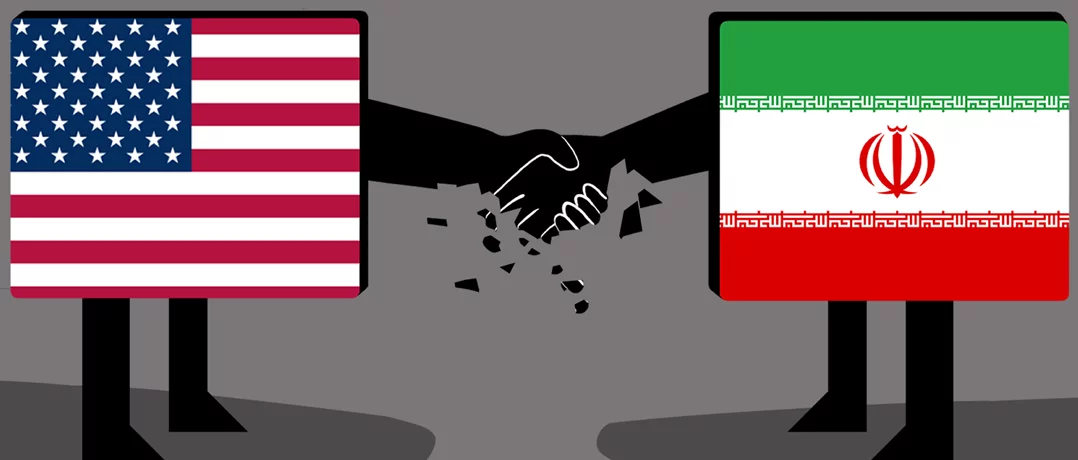
The latest exchange, of both military strikes and diplomatic messages, between the United States (U.S.) and Iran has revived a critical question: are Washington and Tehran drifting back toward direct armed conflict, or are they nearing toward a political settlement?
When analyzing political developments in International Relations (I.R.), theoretical frameworks and forecasts cannot be treated as absolute and definitive, as they are inherently subject to uncertainty and a margin of error arising from the complexity and the unpredictability of political dynamics. Political outcomes are shaped by a wide range of variables, including strategic miscalculations, implicit intentions, domestic considerations, and unforeseen developments that can impact the course of events.
From here, it is not possible to determine with certainty whether the United States and Iran are moving toward war or a negotiated agreement. Nevertheless, it is possible to examine and analyze the conditions and constraints that could drive either outcome, drawing on observable facts, strategic calculations, and the broader regional and international context.
The reasons for possible de-escalation and a negotiated political settlement
Recently, U.S. President Donald Trump declared that his country had achieved what he described as a “great settlement of the war with Iran,” suggesting that a formal signing ceremony could take place within days. In this context, informed diplomatic sources told The Beiruter that several factors suggest that both Washington and Tehran may have strong incentives to avoid a direct military confrontation and instead pursue a diplomatic arrangement.
First, they believed that neither side appears to view large-scale war as serving its long-term strategic interests. For the U.S., direct conflict with Iran would likely require significant military resources and could expose American forces and regional allies to retaliatory attacks across multiple theaters. This also coincides with the fact that Washington is one of the 3 countries hosting the FIFA World Cup this year, which is not considered merely as a sports event but carries significant economic and geopolitical weight as well. Thus, any country hosting such a crucial and influential event would attempt to alleviate any causes for potential instability and constraints that might affect relevant stakeholders.
Iran likewise faces substantial constraints, they added. Years of economic sanctions, financial pressures, and regional challenges have imposed significant costs on the Iranian economy. Thus, a prolonged confrontation with the U.S. could further strain its resources and increase domestic economic difficulties.
Second, according to the aforementioned sources, diplomatic engagement remains active despite periods of military tension. History demonstrates that U.S.-Iran relations have often combined pressure with negotiation. Even during moments of heightened confrontation, indirect channels of communication have frequently remained open. Diplomatic messages exchanged through intermediaries can help prevent miscalculations and provide opportunities for compromise.
Third, they noted that regional actors increasingly favor stability over escalation. Many Middle Eastern states are prioritizing stability, economic development, investment, and long-term modernization projects. A major conflict involving Iran and the U.S. would threaten these objectives by disrupting trade routes, energy exports, and regional security. Consequently, several regional governments have an interest in encouraging dialogue and reducing tensions.
Another important and interrelated factor is the international environment. Major global powers, as per the informed diplomatic sources, generally seek to avoid a conflict that could destabilize energy markets and further complicate an already challenging international security landscape. Diplomatic pressure from external actors may therefore contribute to efforts aimed at containing escalation and promoting negotiations.
Finally, they stated that both governments may view diplomacy as a means of achieving at least some of their strategic objectives without bearing the costs associated with war. Even a limited agreement focused on reducing tensions, managing regional disputes, or addressing specific security concerns could offer political and economic benefits to both sides while preserving their respective core interests.
The reasons for a potential renewed military showdown
Despite the arguments favoring diplomacy, the same sources mentioned earlier outlined to The Beiruter several factors continue to create conditions that could hinder a political settlement and lead to renewed military confrontation.
One of the most significant risks stems from the deep mistrust that characterizes U.S.-Iran relations. Decades of hostility, conflicting regional interests, and competing security perceptions have created an environment in which each side often interprets the actions of the other through a lens of suspicion. Such mistrust can complicate negotiations and increase the likelihood of miscalculation.
Another source of instability that they mentioned is the broader regional security environment. The Middle East remains a highly interconnected arena in which local conflicts often overlap with larger geopolitical rivalries. Incidents involving allied militias, proxy groups, maritime security, or military deployments can quickly escalate beyond their original scope. Even if neither Washington nor Tehran seeks direct war, actions by affiliated actors could trigger a cycle of retaliation that becomes difficult to control; the Lebanese scene, where Hezbollah and Israel continue to be engaged in an asymmetric warfare against one another, presents a tangible example.
According to these sources, domestic political considerations also play an important role. Leaders in both countries must respond to internal political pressures, public opinion, and competing institutional interests. At times, adopting a firm position toward an external adversary may be viewed as politically advantageous. Such dynamics can narrow the space for compromise and make diplomatic concessions more difficult to achieve.
Furthermore, there is also the possibility of accidental escalation; which the aforementioned sources warned of. Military operations, intelligence failures, misunderstandings, or unintended casualties can rapidly alter political calculations. History offers numerous examples of conflicts that neither side initially intended but which emerged through a sequence of reactions and counterreactions.
Hence, rather than viewing the situation as a simple choice between war and peace, it may be more accurate to understand it as a dynamic process in which diplomacy and coercion operate simultaneously. The ultimate outcome will depend not only on the intentions of Washington and Tehran but also on developments across the wider regional and international environment. As a result, any analysis and forecast should be approached with caution, recognizing both the complexity of the relationship and the inherent uncertainty that characterizes international politics.
-
-

-
The Beiruter
-
