



Rising tensions, hostile rhetoric, and regional pressures have revived fears of a renewed 7 May scenario and possible internal escalation in Lebanon.
The shadow of 7 May: Could history repeat itself?
The shadow of 7 May: Could history repeat itself?
By Anthony Chamoun | May 07, 2026

Reading time: 7 min
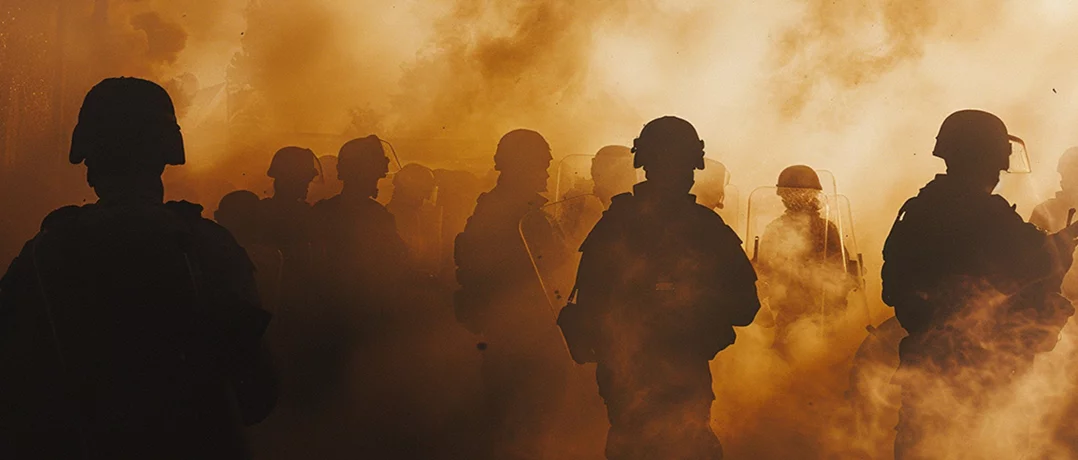
In the fields of Political Science and International Relations (I.R.), leaders and armed movements facing major external setbacks have often sought to compensate for their losses by redirecting pressure inward toward the domestic arena. This phenomenon is commonly associated with the concept of “diversionary conflict,” whereby external failures, military defeats, or declining strategic influence push actors to reinforce their position internally through escalation, mobilization, or the use of coercive force.
Today, following two devastating armed conflicts between Hezbollah and Israel (2023-2024 and 2026), growing speculation has emerged regarding the possibility of a renewed 7 May scenario in Lebanon. Therefore, these concerns raise critical questions not only about whether such a development is genuinely looming on the horizon, but also about the measures necessary to prevent Lebanon from descending once again into internal violence.
Is a new 7 May scenario emerging?
The aforementioned perception is driven by several key indicators which might contribute to igniting such internal strife and confrontation.
First, Hezbollah and its supporters have increasingly adopted hostile rhetoric toward their opponents. When reviewing social media platforms and media outlets affiliated with the aforementioned group, one could notice a systemic pattern of campaigns against domestic factions, political parties, as well as political and religious figures who disagree with Hezbollah and the Axis of Resistance’s line of thought and convictions; more recently, the Maronite Patriarch Bechara Boutros al-Rahi, President Joseph Aoun, and Prime Minister (P.M.) Nawaf Salam were targeted. These campaigns range from accusations of treason and espionage in favor of Israel and the United States (U.S.) to even implicit and explicit threats to forcibly overthrow the government and presidency entirely.
Second, given the massive territorial, material, and human losses that Hezbollah suffered from with its confrontations with Tel Aviv, the likelihood of internal escalation to compensate such damages has significantly increased. A significant portion of Hezbollah’s fighters has been killed, most of its senior commanders and leaders assassinated, thousands remain displaced, and over 50 towns and villages in southern Lebanon previously liberated after Israel’s unilateral withdrawal in 2000 have fallen under Israeli occupation (with some being utterly destroyed altogether). Such drastic setbacks could incentivize the group to resort to violence and coercive means in the domestic scene against a government it perceives to be “hostile,” hoping to tip the balance in its favor once again; similar to what Hezbollah resorted to on 7 May 2008 following the 2006 July War.
Third, amidst the ongoing direct talks between Lebanese and Israeli officials, with the potential beginning of broader negotiations, Hezbollah appears keen on hindering and obstructing such efforts or any political trajectory that could undermine its traditional role. Creating internal instability would likely divert the Lebanese government’s attention away from the negotiation process while simultaneously weakening its bargaining position vis-à-vis Israel. This is especially concerning as political fragmentation and domestic polarization would undermine the coherence and credibility of the Lebanese negotiating team, which would in turn impact the outcome of these talks in favor of Israel. Such strategy was similarly adopted by Hamas in the 1990s as a means to break down the Israeli-Palestinian reproachment (culminating in the 1993-1995 Oslo Accords) between Tel Aviv and the Palestinian Liberation Organization (P.L.O.).
Taken together, these indicators signal that while no imminent domestic armed conflict is at hand, the prospects of Hezbollah attempting to reignite a new 7 May scenario in pursuit of political and strategic objectives remains a serious threat which must be confronted effectively.
 Armed militants affiliated with Hezbollah and its allied factions advance through a Beirut street past a burning vehicle on 7 May 2008, amid a nationwide strike that escalated into armed clashes with pro-government supporters, marking a critical moment in Lebanon’s 2008 internal crisis.
Revisiting the events of 7 May 2008
The crisis of 7 May 2008 did not emerge suddenly, but was rather the result of months and years of escalating political tension.
Since the assassination of former Lebanese Prime Minister (P.M.) Rafik Hariri and the Cedar Revolution of 2005, Lebanon had been severely divided into two major and rival blocs: 8 March and 14 March alliances. This deep political polarization paralyzed state institutions and fueled tensions between the contending camps, especially with regards to Hezbollah’s maintaining of its security and military apparatus outside state authority; establishing “a state within a state.”
On 5 May 2008, former Lebanese P.M. Fouad Siniora’s government issued two bold and notable decisions, which stipulated dismantling Hezbollah’s illegal telecommunications network in Beirut as well as dismissing the head of Beirut Rafic Hariri International Airport (B.I.A.) security, Brigadier General Wafiq Choucair, at the time. The decisions were aimed at confronting Hezbollah’s illegal, parallel structure, including its installment of surveillance cameras belonging to it on the airport’s perimeter fences and monitoring air traffic to and from it. Meanwhile, Hezbollah viewed the telecom network as a strategic component of its security infrastructure, especially after the 2006 July War with Israel, and considered the decisions a violation of the ministerial statement (which included the infamous “people, army, resistance” formula) and a direct threat that must be repealed by any means necessary.
The clashes began on 7 May 2008 after the Council of Ministers’ decisions coincided with a general strike called for by the labor unions, and violence escalated between pro-government and opposition protesters. Indeed, former Hezbollah Secretary-General Hassan Nasrallah delivered a speech in which he described the government’s decision as a declaration of war on the group, leading to an armed conflict between opposition forces led by Hezbollah and its allies, and pro-government forces of the Future Movement and its allies in Beirut. Within two days, Hezbollah took control of several neighborhoods in West Beirut, offices belonging to political parties aligned with the government (namely those of the Future Movement), and media outlets affiliated with the 14 March alliance. Subsequently, the fighting spread to other areas such as the Mountain (especially Chouf and Aley), with dozens killed and injured. During this conflict, the Lebanese Armed Forces (L.A.F.) adopted a neutral stance, as it decided to refrain from intervening and avoid confrontation with dissident factions.
The brief domestic conflict, which nearly pushed the country into a renewed civil war, ended not through decisive military victory, but rather through a political settlement brokered in Qatar on 21 May 2008, known as the Doha Agreement. The accord led to the formation of a “national unity government” was formed, granted Hezbollah and its allies a “blocking third” (effectively veto power in cabinet decisions), introduced amendments to the electoral law, and paved the way for a consensus president (which resulted in the election of former L.A.F. Commander General Michel Suleiman).
Nonetheless, the events of 7 May remain deeply embedded in the Lebanon’s collective memory. They unveiled the fact that Hezbollah’s weapons have become a burden on the state rather than a strategic asset, and a threat to Lebanese themselves after years in which it had been framed primarily as a “resistance” force against external threats, particularly Israel. While strengthening Hezbollah’s political position within the Lebanese system, the crisis also highlighted how the absence of an exclusive state monopoly over the use of force could enhance and facilitate internal conflict and the overturning of governmental decisions by force.
 Lebanese rival political leaders, alongside Arab mediators, attend the final session of negotiations in Doha on 21 May 2008, where the Doha Agreement was reached to end an 18-month political standoff that had escalated into deadly clashes, bringing the country to the brink of renewed civil war.
Preventing the recurrence of another 7 May
Preventing a renewed 7 May scenario requires addressing both the immediate risks of escalation and the deeper structural causes of instability in Lebanon.
First, preserving the authority of the L.A.F. is essential. The state’s inability in 2008 to fully impose its authority reinforced the perception that armed groups could alter political realities through force. Strengthening the army institutionally and politically remains crucial to maintaining stability and reaffirming the principle that the state alone should hold authority over security matters. Closely related is the Hezbollah dilemma. The issue of the latter indefinitely maintaining security and military structures outside state authority remains incompatible with the concept of sovereignty enshrined in international law and the 1945 United Nations Charter.
Second, political and sectarian incitement must be contained. Lebanon’s history shows that internal violence is often preceded by campaigns of mobilization, accusations of treason, and inflammatory rhetoric. The increasing use of hostile discourse against political opponents risks transforming political disagreements into existential confrontations. Political leaders, media outlets, and religious authorities therefore bear responsibility for reducing tensions rather than escalating them.
External actors also have an important role to play. Lebanon has repeatedly suffered from becoming an arena for regional rivalries, particularly between Iran, Israel, and other regional powers. Reducing the likelihood of internal escalation requires protecting Lebanon from broader regional conflicts as much as possible while supporting state institutions rather than factional interests.
Ultimately, preventing another 7 May demands strengthening state institutions, reducing sectarian tensions, reaffirming the state’s monopoly over force, and ensuring that political conflicts are resolved through democratic processes rather than coercion. Hence, the lesson of 7 May is that no “political victory” achieved through force can produce lasting stability; it only deepens fear, division, and the fragility of the state itself.
-
-

-
Anthony ChamounResearcher/WriterFocusing on Political Science and International Affairs.
-
