



A new report finds that solar installations are surging across Africa far faster than official statistics suggest, driven by cheap Chinese panels and a largely decentralized boom that is allowing businesses to generate their own electricity beyond the reach of national grids.
The solar boom Africa’s statistics are missing
The solar boom Africa’s statistics are missing
By The Beiruter | August 27, 2026

Reading time: 5 mins
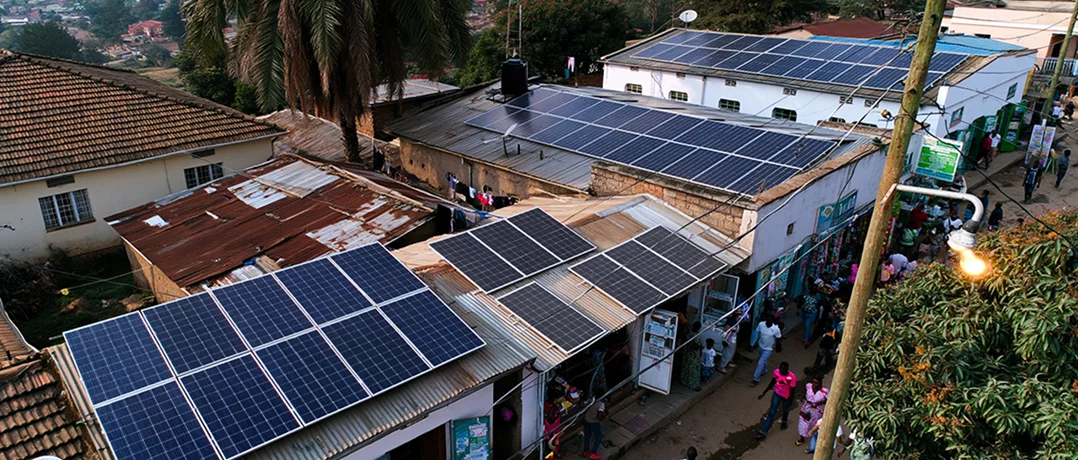
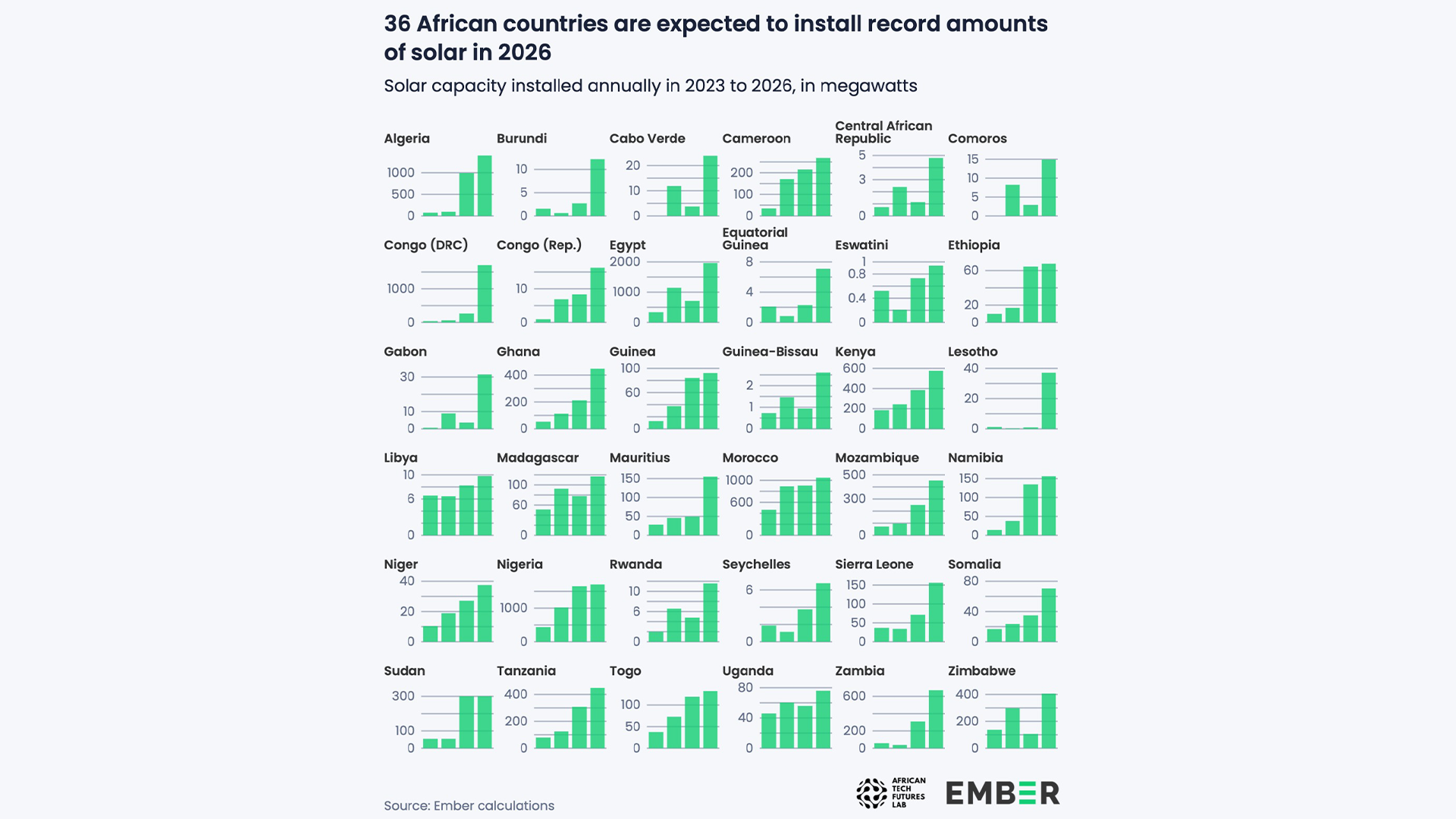
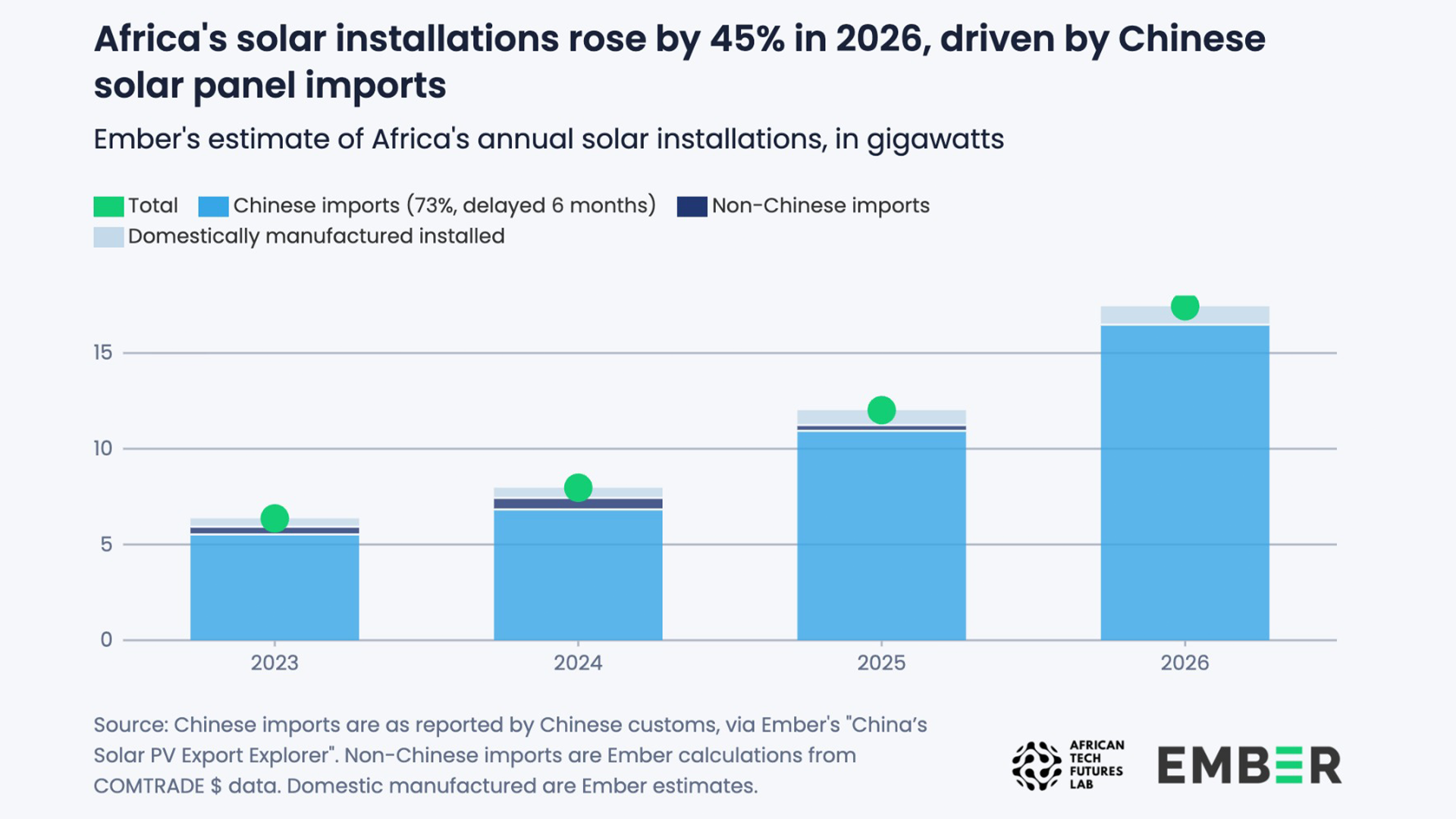
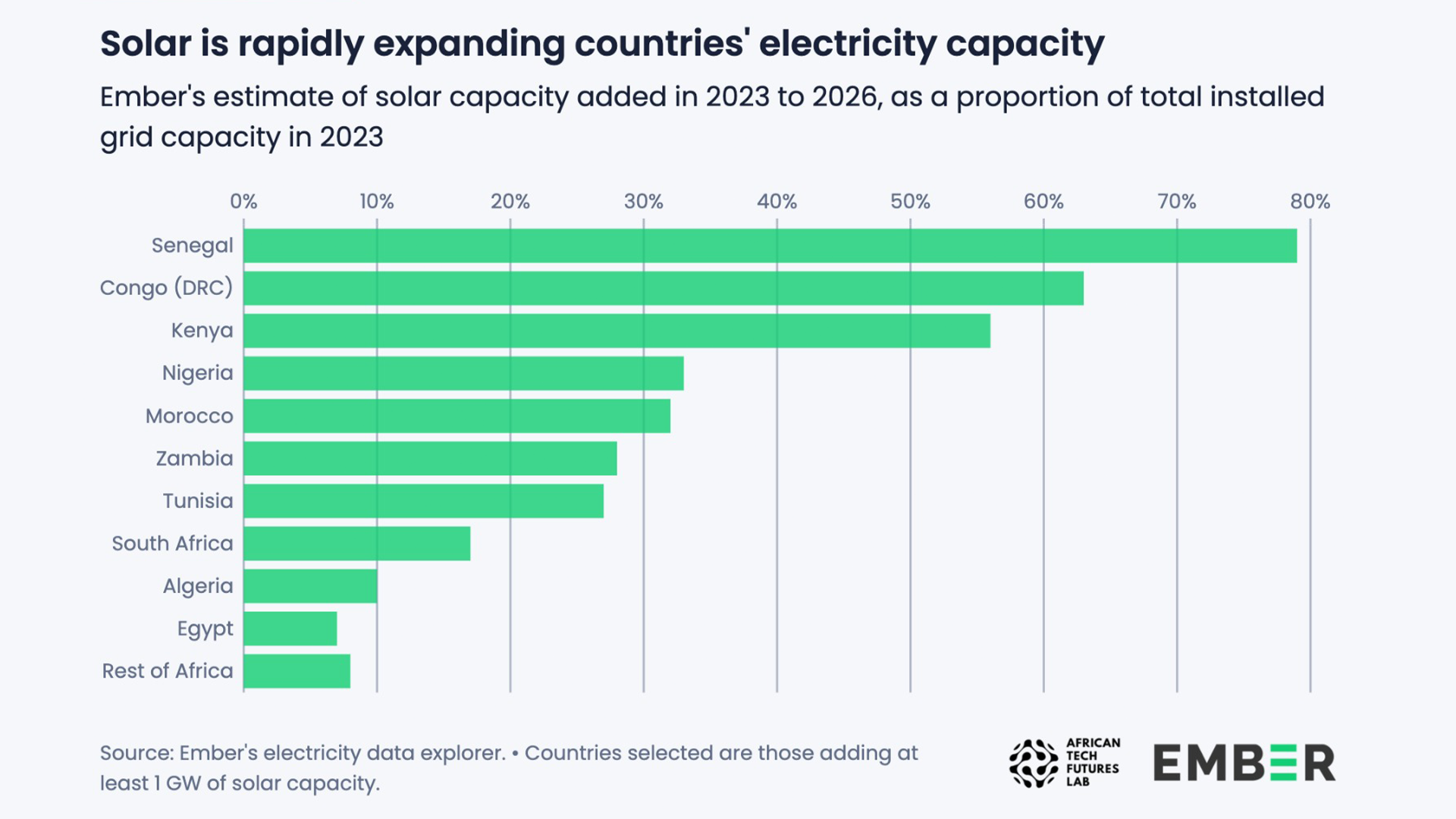
A solar boom is sweeping across Africa faster than many of the continent’s governments can measure it. The continent is on track to install a record 17 gigawatts of solar capacity in 2026, a 45% increase from last year and its third consecutive annual record, according to new research from energy think tank Ember and the African Tech Futures Lab. That amounts to about 47 megawatts of new capacity, or roughly 100,000 solar panels, installed every day. The surge is no longer concentrated in a handful of major markets. Thirty-six of the continent’s 54 countries are expected to set installation records this year, while Ember estimates that 75% of the 26 GW added between 2023 and 2025 came from distributed solar, the small-scale systems that are among the hardest for governments to track. Africa has entered a period of solar “takeoff,” said Dave Jones, Ember’s chief analyst and lead author of the report, speaking to The Beiruter. Falling prices are allowing businesses and households to generate their own electricity without waiting for stronger grids, offering an alternative to unreliable power and costly diesel generators. In parts of Africa, deployment is moving faster than the institutions responsible for measuring and planning it. Some of the clearest evidence of Africa’s solar expansion comes not from utilities or national energy agencies, but from Chinese trade records, which provide a detailed view of where panels are going even when national statistics fail to capture them. The shipments show how far the market has moved beyond South Africa, whose share of Chinese panel exports to the continent fell from 52% in 2023 to 20% by June 2026. Nineteen African countries are expected to more than double annual installations this year, including the Democratic Republic of the Congo, where Ember projects growth of 544%, Zimbabwe at 282%, Egypt at 176% and Zambia at 117%. 36 African countries are expected to install record amounts of solar in 2026. Source: Ember and African Tech Futures Lab When exports began climbing in late 2024, Jones said, Ember researchers thought the increase “would probably be a blip.” It continued through 2025. Official statistics have been slower to register the change. Ember found national solar capacity figures for 36 countries, but only 14 had data covering 2025. Just South Africa, Tunisia and Tanzania published some figures monthly or quarterly. Distributed solar is particularly difficult to capture because, unlike a utility-scale project, a system purchased privately by a business or household may never appear promptly in a government registry. To estimate the missing capacity, Ember used panel shipments, estimating that about 73% of exports translate into installations after an average six-month lag. The reliance on foreign trade records to reconstruct national energy trends points to a significant gap in how solar deployment is tracked, Jones said. The trade data also points to one of the boom’s principal drivers. An estimated 94% of panels installed across Africa in 2026 will have been imported from China, compared with just 6% manufactured domestically. Chinese imports account for an estimated 94% of Africa’s 2026 solar installations. Source: Ember and African Tech Futures Lab China’s vast manufacturing industry has helped push panel prices low enough to alter the economics of electricity generation. Jones said a panel can now cost about $80 and generate electricity for 30 years, putting the technology within reach of many consumers across Africa. Solar’s cost advantage is particularly stark against diesel, widely used as backup power where grids are unreliable. Chinese panels exported to Africa in the 12 months through June cost $2.4 billion. Ember estimates that generating the same electricity from diesel at $1.40 per liter would cost $2.4 billion every three months. Commercial users are particularly suited to solar because much of their electricity consumption occurs during daylight hours, reducing reliance on both the grid and diesel. “A lot of what we're seeing, when we say distributed, is less on the rooftops of households and more on the rooftops of businesses,” Jones said. But falling prices have also left Africa’s solar expansion heavily dependent on a supply chain centered elsewhere. “This isn't the ideal solution,” Jones said. There are early signs of that shift. Ember expects African panel production to reach about 3.5 GW in 2026, roughly quadrupling, although much of the new capacity is being developed for export rather than African demand. U.S. tariffs on Chinese panels have also encouraged manufacturing in Africa, Jones said, because African-made panels can be exported to the U.S. market without facing the same barriers. The emerging industry therefore presents an unusual split. Africa is importing almost all of the panels powering its domestic solar boom from China, even as factories begin producing panels on African soil for customers abroad. The longer-term significance of the boom will depend on electricity demand itself. Ember estimates that this year’s installations will generate 23 terawatt-hours annually, equivalent to 2.3% of Africa’s 2024 electricity generation and slightly above its average annual demand growth of 2.2% over the previous decade. In 28 countries, new solar generation is expected to exceed historical demand growth. Recent solar additions are equivalent to a significant share of existing grid capacity in several African countries. Source: Ember and African Tech Futures Lab That potential could grow as more global energy consumption shifts toward electricity. “As energy demand rises, more of that growth is coming specifically from electricity,” Jones said. For African countries, Jones argues, that could offer a path to higher energy consumption without repeating the fossil fuel dependence of today’s wealthier economies. “Historically, countries have gone through this period of huge fossil fuel dependence, not just in the electricity sector but across the whole energy system,” he said. Distributed solar can bypass one of Africa’s major constraints, weak grids, because businesses can install panels without waiting for new power stations or transmission lines. Utility-scale solar can produce cheaper electricity at scale but requires stronger grid infrastructure. Jones said the strongest system would combine distributed installations with large solar farms and smaller utility projects that can integrate more easily into national grids. Such projects are already being developed in parts of West Africa, often with international financing. The remaining challenge is capital. Cheap electricity over a project’s lifetime does not eliminate its upfront costs or the investment needed to strengthen national grids. Africa’s solar boom has shown how quickly deployment can accelerate once panels become affordable. Turning that expansion into an electricity system capable of supporting much higher demand will require governments and financial institutions to keep pace.Solar is consistently coming into almost every country in Africa at a big enough scale to start impacting their electricity systems.
A boom hidden in plain sight
This report is partially a call to action for governments to step up and understand what is happening within their own country.
China is powering Africa’s solar boom
The ideal solution is for Africa to build up and develop its own supply chain.
Can solar allow Africa to leapfrog?
The International Energy Agency keeps saying we're entering the ‘Age of Electricity,’ where energy demand growth is electricity demand growth. That puts solar's potential in a much bigger, long-term context.
The expansion of solar really creates the potential for African countries to leapfrog the energy systems that every other country has developed.
-
-

-
The Beiruter
-
