Easter in Lebanon is a deeply spiritual and cultural celebration, marked by a blend of religious rituals, family traditions, and a renewed sense of hope that resonates in the country’s resilience.


Easter in Lebanon is a deeply spiritual and cultural celebration, marked by a blend of religious rituals, family traditions, and a renewed sense of hope that resonates in the country’s resilience.

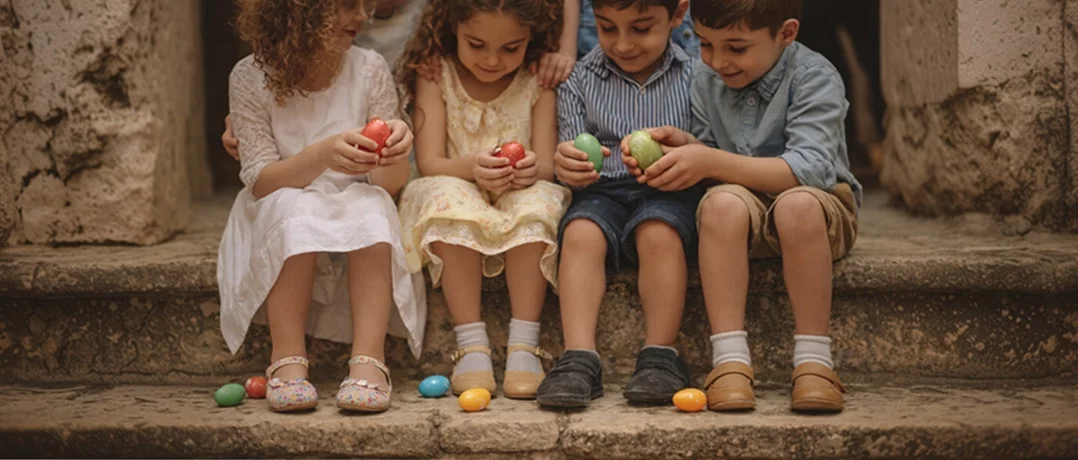
Easter in Lebanon is at once a profound religious observance and one of the most deeply felt cultural events of the year, a moment when the country's Christian communities, in all their denominational richness, gather around a shared story of death, resurrection, and the stubborn persistence of hope.
To speak of Easter in Lebanon is to speak in the plural. The country is home to a remarkable array of Christian denominations: Maronite Catholics, Greek Orthodox, Greek Catholics, Armenian Orthodox, Syrian Orthodox, Roman Catholics, and others, each with its own liturgical customs, its own sacred music, its own particular way of marking Holy Week. In some years, Eastern and Western Easter fall on the same date, and Lebanon observes a single shared celebration. In other years, like this one, the dates diverge, and the country experiences two consecutive seasons of church bells, family gatherings, and holiday tables.
Holy Week in Lebanon is lived with genuine spiritual intensity. Churches that see modest attendance on ordinary Sundays fill to capacity from Palm Sunday onward. Good Friday is observed with particular gravity, a day of fasting, of the Way of the Cross processions through village streets, of darkened altars and the mournful hymns that mark the Passion. In some mountain villages, the procession winds through the streets at night by candlelight, the whole community walking together in a tableau that has changed little in generations.
Then comes the turn. Holy Saturday's midnight service is among the most dramatic moments in the Lebanese Christian calendar. As the clock approaches midnight, churches plunge into darkness. A single flame is kindled, from the altar, from a candle carried in by the priest, and spreads through the congregation until every hand holds light. The announcement of the Resurrection rings out, the church erupts in joy, and outside, fireworks crack across the mountain sky. It is a moment of collective relief as much as religious joy: the long fast is over, the darkness has lifted, and the world is made new.
For Lebanese Christians, who share in the cultural warmth of the season, Easter is inseparable from family, food, and the particular pleasure of spring in the mountains. The holiday weekend is one of the great migration moments of the Lebanese year, as Beirut empties and the mountain villages fill. Grandparents who have waited all winter for the house to be noisy again suddenly find it overflowing with grandchildren. Tables are set for thirty. The smell of lamb roasting and Maamoul baking drifts from every kitchen window.
Maamoul, shortbread pastries filled with dates, walnuts, or pistachios, pressed into carved wooden molds and dusted with powdered sugar are the taste of Easter in Lebanon. Their preparation is itself a ritual: families gather days before the holiday to make them by the hundreds, children pressing the dough into molds with small, serious hands, the kitchen warm and fragrant. To receive a box of maamoul from a neighbor, is one of the small gestures of coexistence that Lebanon does better than almost anywhere.
The Easter table itself is a celebration of spring's arrival. Lamb, prepared in a dozen regional variations, holds the place of honour. Meat, chicken, kibbeh, and Kafta complete a spread that seems to have been designed to make the weeks of Lenten restraint feel worthwhile. The Kaak el Eid, a braided Easter bread, appears on tables and in bakery windows, its golden crust glazed and sometimes dotted with a hard-boiled egg nestled in the dough, an ancient symbol of new life.
The dyeing and cracking of Easter eggs is one of the holiday's most beloved customs, carrying the same universal symbolism, new life, the sealed tomb broken open, while wearing a distinctly Lebanese character. Hard-boiled eggs are dyed deep red in the Orthodox tradition, the color of the blood of Christ and of resurrection. Families hold cracking contests, each person tapping the tip of their egg against another's: the uncracked egg wins, and its owner is said to have good fortune for the coming year. It is a game played with great seriousness by small children and very old grandparents alike.
It is impossible to ignore the way the holiday's central narrative resonates in a country that has rebuilt itself from rubble more than once, that has buried its dead and returned to its streets, that has in living memory experienced destruction on a scale that should have ended it and did not.
Easter in Lebanon is celebrated with a fervor that feels, at times, like more than religious observance. It is an assertion. That spring comes after winter. That light returns to darkened churches. That the table will be set again, the family will gather again, the mountains will be full again. That something survives. Christos Anesti. In Lebanon, those words carry profound weight.

