



Iran and Israel escalate covert conflict as espionage arrests, executions, and internal breaches expose intensifying intelligence war and rising regional tensions.
The spy war intensifies between Israel and Iran
The spy war intensifies between Israel and Iran
By The Beiruter | April 25, 2026

Reading time: 4 min
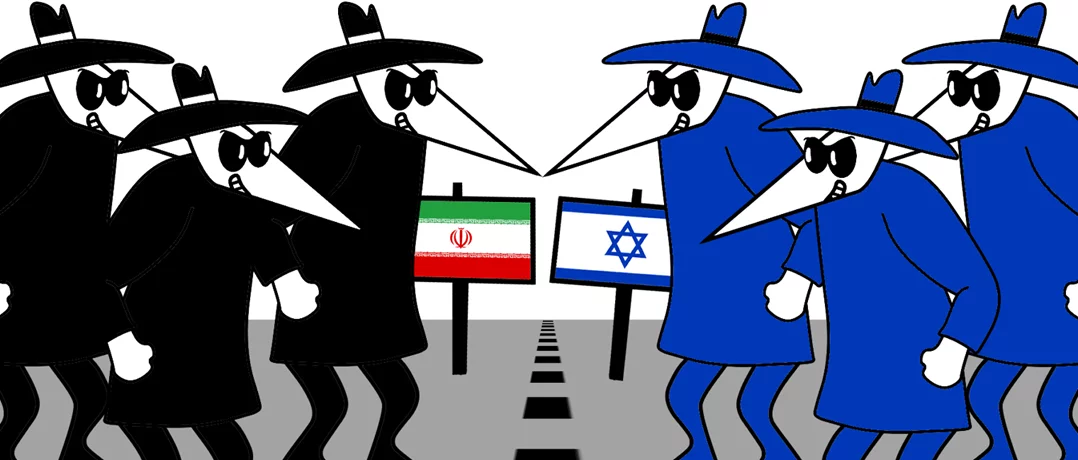
The long-running covert confrontation between Iran and Israel has increasingly shifted from the shadows into public view. Recent developments, including the execution of an alleged Israeli spy in Iran and the exposure of espionage charges against Israeli military personnel accused of working for Tehran, underscore a dangerous evolution in this intelligence war.
Iran’s execution and the message of deterrence
Iran’s judiciary recently confirmed the execution of a man identified as Soltanali Shirzadi Fakhr, also reported in some outlets as Mehdi Farid, who was accused of spying for Israel’s intelligence agency, Mossad. According to official accounts, the individual had access to sensitive information through his role within a civil defense unit and allegedly transmitted classified data, including organizational structures and security details, to Israeli handlers.
The Iranian authorities highlighted that the execution followed due legal process, including a review by the Supreme Court. However, human rights organizations have raised persistent concerns about the transparency and fairness of such trials, particularly in cases involving national security. Iran’s use of capital punishment, already among the highest globally, has drawn increased scrutiny, especially as executions reportedly surged significantly in 2025.
Beyond the legal and humanitarian debate, the execution carries a clear strategic message: deterrence. By publicly announcing and enforcing harsh penalties against alleged collaborators, Tehran signals both domestically and internationally that espionage will be met with uncompromising consequences. The timing, shortly after heightened tensions and direct confrontations with Israel, further reinforces the perception of an intensifying intelligence conflict.
The role of opposition groups and internal security dynamics
Iranian officials also alleged links between the executed individual and the People’s Mujahedin of Iran (MEK), an exiled opposition group long accused by Tehran of collaborating with foreign intelligence services. The inclusion of the MEK in espionage narratives reflects the Iranian government’s broader internal security concerns, where political opposition is often framed within the context of external threats and “conspiracies.”
This intersection of domestic dissent and foreign intelligence activity complicates the picture. For Iranian authorities, the perceived convergence of internal opposition and Israeli intelligence operations justifies stringent security measures. For critics, however, it raises questions about the politicization of espionage charges and the potential use of such accusations to suppress dissent.
Israel’s internal breach: Espionage from within
Reports indicate that 2 technicians from the Israeli Air Force have been charged with espionage for Iran. The individuals, stationed at a major airbase, allegedly transmitted sensitive technical data related to F-15 Eagle systems, including engine schematics and restricted imagery.
The case has alarmed Israeli security institutions, not only because of the sensitive nature of the leaked information but also due to the apparent motivations behind the breach. According to reports, financial incentives played a key role, with Iranian operatives allegedly offering payments in exchange for intelligence. This highlights a persistent challenge in counterintelligence: the exploitation of personal vulnerabilities within military ranks.
The involvement of multiple individuals, some accused of direct participation and others of failing to report suspicious activity, points to potential systemic weaknesses. Israeli authorities, including the Shin Bet, have launched investigations to assess the extent of the breach and prevent future incidents. The possibility of elevating charges to treason in one case underscores the seriousness with which Israel views the matter.
An expanding intelligence battlefield
These parallel developments illustrate a broader trend: the expansion of the intelligence battlefield beyond traditional methods. Cyber operations, human intelligence recruitment, and psychological tactics are increasingly intertwined, creating a complex and dynamic environment.
For both Iran and Israel, espionage is not merely about gathering information but also about shaping strategic outcomes. Intelligence operations can disrupt military planning, expose vulnerabilities, and influence political decision-making. In this context, even isolated incidents can have disproportionate consequences.
Moreover, the public disclosure of such cases marks a shift in how both states manage the narrative of their intelligence activities. By bringing these incidents into the open, each side seeks to project strength while exposing the adversary’s reach. This dual purpose, deterrence and psychological signaling, adds another layer to the conflict.
As both sides intensify their efforts to counter perceived threats, the risk of escalation grows; not only in the intelligence domain but potentially beyond it. In this evolving landscape, espionage is no longer a hidden dimension of conflict, but rather a central arena where strategy, security, and political messaging converge. The challenge for the region, and for the international community, lies in managing this shadow war before it casts an even longer and more destabilizing shadow.
-
-

-
The Beiruter
-
