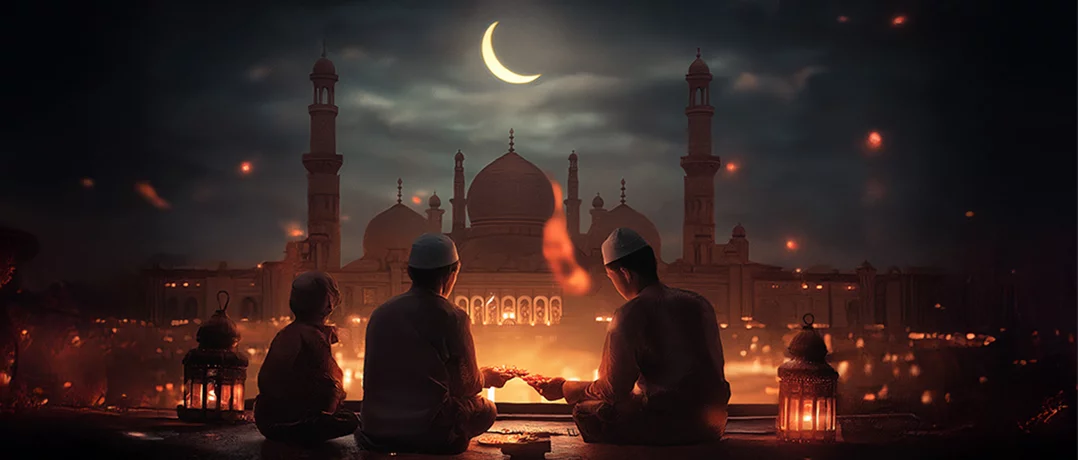
More than holidays, Eid reflects faith, memory, and the traditions that bind Muslim communities together.




More than holidays, Eid reflects faith, memory, and the traditions that bind Muslim communities together.

Religious holidays in Islam are defined by two main occasions that follow the performance of key acts of worship: the fasting of Ramadan, which is followed by Eid al-Fitr, and the pilgrimage of Hajj, which is followed by Eid al-Adha. What are sometimes referred to, figuratively, as other Islamic holidays beyond these two are in fact commemorations of religious events, such as the Islamic New Year, the Night Journey and Ascension (Isra and Mi’raj), and the Prophet’s birthday.
It is worth noting that among Sunni Muslims, religious holidays and occasions are characterized as moments of joy and celebration rather than commemorations of sorrow. This differs from practices among Shiite Muslims, who, in addition to celebrating the birth of the Imams, also mark their martyrdoms and deaths, most notably the martyrdom of Imam Hussein in Karbala, commemorated on the day of Ashura. As for the Druze community, their holidays, like those of Sunni Muslims, are occasions of joy. They celebrate the Islamic New Year and Eid al-Fitr, and place particular importance on Eid al-Adha, which is considered one of their most significant and widely observed holidays.
One of the distinguishing features of the eve of Eid al-Fitr, compared to Eid al-Adha, is the obligation of Zakat al-Fitr. A fasting Muslim is required to give this charity on behalf of themselves, their spouse, and their children, distributing it to the poor and needy on the night before Eid. The wisdom behind this timing is reflected in a prophetic saying: “Enrich them from asking on this day,” referring to the day of Eid, in order to bring joy and relief to those in need.
Eid al-Adha, meanwhile, is linked to the Quranic account of the Prophet Abraham. According to the narrative, Abraham took Hagar and his son Ishmael to the wilderness of Paran, as referred to in the Old Testament, located in the region of Mecca, and left them there. When Ishmael became thirsty and was close to perishing, Hagar ran between what would later be known as Safa and Marwa. On her seventh attempt, she discovered a spring of water emerging beneath Ishmael’s feet. Fearing that the desert sands would absorb it, she gathered the water and surrounded it with earth, giving rise to the well of Zamzam.
As Ishmael grew up, Abraham saw in a dream during one of his visits that he was commanded to sacrifice his son. Ishmael responded,
O my father, do as you are commanded; you will find me, if God wills, among the patient.
On their way to carry out the command, Satan appeared and tried to dissuade them. Abraham and Ishmael responded by throwing stones at him and continued on their path. When they reached the point of fulfilling the command, God ransomed Ishmael with a great sacrifice.
Later, as Ishmael matured and married, Abraham set out to build the Kaaba near the well of Zamzam. After completing its construction, they performed the ritual circumambulation around it. The rituals of Hajj performed by Muslims today serve as a reminder of these events: the circumambulation of the Kaaba, the walking between Safa and Marwa, the stoning of the pillars, and the act of sacrifice. It is from this act of sacrifice that Eid al-Adha derives its name, marking the conclusion of the Hajj pilgrimage.
On the first day of both Eid al-Fitr and Eid al-Adha, it is recommended for Muslims to perform a ritual bath before leaving home to attend the Eid prayer, to wear perfume, and to dress in their finest clothes. It is also customary to eat before leaving the house to mark the breaking of the fast on Eid al-Fitr, and to recite the Eid takbirs while on the way to the mosque. It is further recommended to return home by a different route in order to greet and meet as many people as possible, exchanging well-wishes for the holiday. Visiting family, friends, and neighbors, offering gifts and food, and listening to meaningful songs are all part of the celebration, fostering joy, happiness, and a sense of togetherness among all.