



The papal visit inspired hope, reinforced coexistence, and boosted Lebanon’s tourism and international attention.
The true face of Lebanon

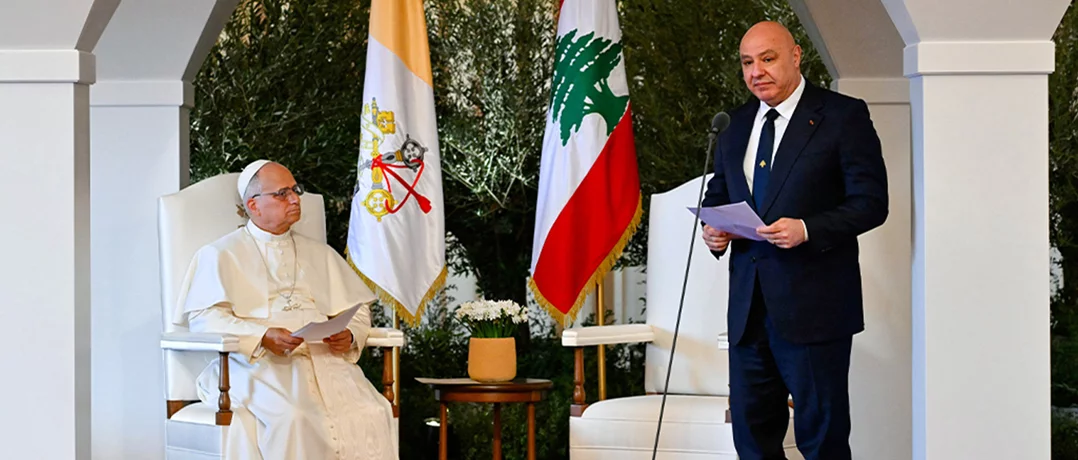
The reception of Pope Leo XIV in Lebanon became a moment that transcended protocol and entered the national memory one of the most remarkable papal welcomes seen worldwide in recent years. From the moment his plane landed in Beirut, the country projected an image of unity and vitality: streets draped with Lebanese and Vatican flags, crowds lining the airport road and the capital’s avenues, and a public mood blending spiritual anticipation with deep emotional relief. In a global context where papal visits are often solemn, Lebanon’s welcome stood out for its scale, spontaneity, and symbolism.
The extraordinary warmth of the popular reception turned the visit into a rare national moment, reflecting a country capable of coming together with intensity despite years of hardship. This is Lebanon. This is Beirut the city the world knows and admires, the city we are proud to belong to. This is the land of peace, and the meeting point of cultures and civilizations.
The visit also carried political and symbolic weight. A country overwhelmed by fear, frustration, and the shadow of a returning war seemed to transform overnight as a wave of joy and hope swept through Lebanon with the arrival of Pope Leo XIV. The Pope chose Turkey and Lebanon for his first pastoral journey abroad, making his Middle Eastern appearance through “the Lebanese gateway.”
Like the visits of his predecessors, this trip carried messages of deep significance regarding Lebanon’s role and standing. These messages extend beyond religious symbolism, Christian–Muslim coexistence, and the country’s distinctive social fabric, democratic system, and long cultural heritage. Today, the visit carries political weight as well, given the sensitive moment the region and Lebanon in particular is experiencing. What may appear directed primarily to Lebanon’s Christians clearly extends to the entire nation at a critical and transitional period for both Lebanon and the wider region.
This is not only a pastoral visit. It is a pivotal moment that sets boundaries and opens new political pathways. Just as Pope John Paul II’s 1997 visit became a turning point in Lebanon’s collective memory accompanying Israel’s withdrawal, the weakening of Syrian control, and an apostolic exhortation that broke longstanding fears Pope Leo XIV’s visit arrives to create an event with lasting impact, touching Lebanon’s open wound and moving beyond the spiritual into the national and political spheres.
The visit succeeded on all levels from the warm welcome at the airport to the contemplative atmosphere at its conclusion. The Pope appeared deeply moved by the energy and affection of the Lebanese people. The visit broadened his global recognition and gave a strong start to his new papacy, while offering the Lebanese especially Christians a renewed sense of hope, confidence, and strength.
The fear of escalation
Much has been said about a “papal truce,” with reports that Israel, at Washington’s request, agreed to pause strikes until the visit ended. The question now is whether escalation will resume, or whether the pause will extend until the end of the year the deadline set by the Trump administration for Lebanon regarding Hezbollah’s weapons.
The visit coincided with troubling signals, including U.S. envoy Tom Barrack’s trip to Baghdad, where he warned the Iraqi Prime Minister against the involvement of armed factions in any future Lebanese Israeli confrontation, hinting at a severe Israeli response if they intervene. At the same time, Israeli leaks increased regarding expanded operations against Hezbollah, with scenarios anticipating retaliation from Yemen, Syria, or further abroad.
Israeli analysts say the northern front has been placed on full alert, with military plans ready pending the visit of U.S. envoy Morgan Ortagus to Beirut. Security assessments in Israel view Lebanon and Syria as a single operational front, with rising tension expected at the start of the new year.
Hezbollah’s Message to the Pope… and Internal Disputes
Hezbollah approached the visit on three levels:
• A public reception along the airport road in the southern suburbs
• Official attendance at Baabda Palace
• An open letter to the Pope addressing “coexistence,” “consensual democracy,” and “resistance to Israeli aggression”
A striking scene was the mobilization of around three thousand scouts from the Mahdi Scouts to welcome the Pope an image shared by the Vatican’s Arabic-language page.
Opponents of Hezbollah, led by the Lebanese Forces, described the letter as misleading and an attempt to “whitewash its record,” arguing that it does not change the reality of the group’s weapons or its violations of the constitution.
They also noted that replacing Hezbollah’s posters with images of the Pope in several Shia villages was a political gesture aimed at the Vatican, but one unlikely to alter the Church’s view of Lebanon’s crisis.
Sheikh Ali Al-Khateeb’s remarks in Martyrs’ Square drew wide attention after he said they “are not enthusiasts of weapons,” calling on the world to help Lebanon.
Economic and tourism impact
The visit delivered a valuable boost to the tourism sector at a difficult economic moment:
• Airport traffic rose, especially among foreign media delegations.
• Beirut hotels recorded occupancy rates between 60% and 80.
• Regions outside the capital reached 35% to 50%.
• Religious tourism increased from Syria, Iraq, and Jordan.
While the surge may be temporary, establishing Lebanon as a religious destination can bring long-term benefits. The Pope’s visit to the Shrine of Saint Charbel, for instance, is expected to elevate the monastery as a global pilgrimage site, strengthening Lebanon’s position on the religious tourism map.
Officials note that the economic value of the visit goes beyond immediate gains, potentially helping reconnect Lebanon with international markets and revitalizing the holiday season.
After the Visit: Hopes for lasting peace
Many hopes rest on the possibility that the Pope’s messages become an opportunity for lasting peace in Lebanon and that Western and Arab countries take these signals seriously by supporting Lebanon, reintegrating it into development plans, securing depositors’ funds, and initiating reconstruction.
The importance of the visit lies not only in its spiritual dimension, but in its timing at a moment when the region, including Lebanon, is being reshaped. The Vatican sought to reaffirm its commitment to Lebanon as a state, a homeland, and a defined territory.
Peace inside Lebanon and across the region is essential, for regional stability directly reflects on Lebanon and aligns with the Vatican’s view of human dignity and the value of life.
This was a historic visit addressed to Christians and Muslims alike, to all Lebanese urging them toward the state as the only guarantee, and to the world reminding it that Lebanon is a nation worth preserving.
-
-

-
Josiane Hajj MoussaReporter
-
