



The escalating US–Israel confrontation with Iran, examining the race for a decisive outcome and the global risks if the conflict turns into a prolonged war.
The two opposing timelines of the US-Israel vs Iran confrontation
The two opposing timelines of the US-Israel vs Iran confrontation
By Mohamed Chebaro | March 09, 2026

Reading time: 4 min
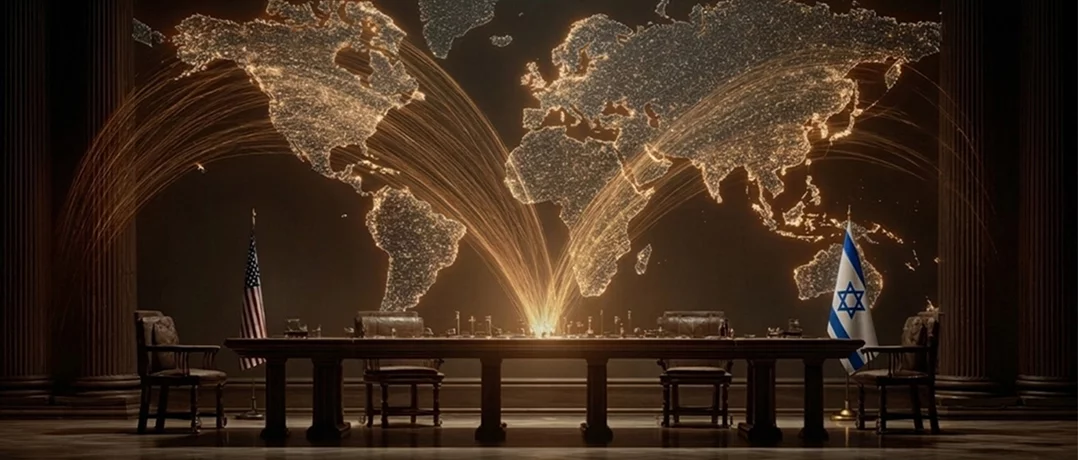
As the smoke of bombings and war engulfs Iran, but also parts of many neighbouring countries from the Gulf states to Lebanon, Iraq to Azerbaijan and Turkey, the US and Israel on one side, and Iran on the other, seem racing to achieve a victory that seems elusive so far.
That is unless we factor in a sudden regime collapse in Iran, which could form a welcome surprise for the Americans and the Israelis, or a major accident that leads to the immediate cessation of strikes which could form a miracle for the Iranian regime trying hard to regain its balance after the decapitation of its leadership in the opening salvos of this round of strikes.
Let us not doubt that the history of the Iranian regime over the past 47 years since its inception has never tired from being an agent of discord with its neighbouring Arab countries through direct and indirect meddling in their affairs, in ways that undermined peace and security in the region. During the past decades, the same regime was bent on sowing chaos in the Islamic world propagating an extreme form of militant Islam, not shying away practically and ideologically from mobilising sectarianism to coerce and control from Iraq, Gaza, Lebanon, Yemen to Syria, before Assad’s regime fall over a year ago. During that same period Tehran was secretly developing its nuclear and ballistic capabilities to levels seen as threatening to the international community as a whole, and especially the US and the gulf region that supplies a fifth of the world’s energy needs.
The US- Israeli strikes on Iran, it is believed by many in the Middle East region to have come very late, but most of those would not be batting an eye lid to see regime change or an end to the Islamic Republic, specially its extremist form of Islam propagating a near messianic form of theocratic dictatorship.
The burning questions though after the launch of the US- Israeli attacks against Iran and its retribution spilling fires across the Arab Middle East and beyond remain whether there is a consensus about what forms a victory for all conflicting parties, at a time of unprecedented discord geo strategically where the US under president Trump seem to be hacking away at rule based international systems, created by the west after WWII, while Russia, and China seem to be sitting it out, observing how far could the US go in achieving its goals, with all the political, economic, and social fallouts that will ensue, if the conflict does not come to an end quickly.
For someone who has followed Iranian affairs and travelled in that country covering its news over the years, I fear those strikes could usher in a long protracted war that fails to yield the desired effects quickly.
It is hoped that the US president has factored in that time is on the side of the regime as well as the vast geography and reach at the disposal of its primitive, conventional, yet wide reaching cheap arsenal. Again Washington and Tel Aviv are claiming that they could finish the job promptly, but till now they have failed to spell out how.
The US and Israel are clearly placing their bets on overwhelming force that would push the regime to drink the poisoned chalice as it did at the end of 1988, ending the 8 years infamous Iraq Iran war. 2026 Iran though, is not what it was in 1988, and the world too has changed.
The best case scenario for the Americans, the Israelis, the region and the world is for Tehran to surrender as called upon by president Trump, which would lead to end Tehran nuclear program, its ballistic capabilities, breaking links with militant groups across the region, and a reformed Iran could emerge free of its religious revolution.
A less savoury scenario, not totally implausible though, is if Iran witness a total collapse of law and order leading to civil strife between the various ethnicities that form the Iranian nation.
But time is against those protagonists, as a short and limited window of opportunity exist before the US congress embark on restraining the powers of the President for this unsanctioned adventure, or if Trump is pressured by his Maga anti interventionist constituency, or even before running the risk the military’s and US allies exhaust their stock of expensive interceptors, not to forget the energy unsustainable price surge and the forthcoming midterms elections and how the war would impact a badly needed victory domestically for president Trump.
On the Iranian side, reprisals focused on bombing its Arab neighbours first, targeting their key installations and civilian infrastructure, while declaring they are targeting US interests in those countries, would not wash, as Tehran hopes its acts would have cumulative impact to force the hand of its enemies to defend multiple fronts, raising the economic and psychological cost for everyone. But Also time is not on the side of Tehran that is burning down its stocks of drones and missiles while its launchers and manufacturing installations are being decimated by relentless airstrikes, limiting Iran’s ability to preserve and replenish some capabilities to fight another day, with a less compliant population that feel the regime legitimacy has withered a long time ago.
The regime election of Mojtaba Khamenei, the son of its slain supreme leader Ali Khamenei is a symbol of defiance and indicate the regime continuity instead of ushering in a change of course. After ten days of conflict, The US, Israel, and Iran are in a race against the clock. The regime is betting on its enemies not staying the course. But so far, the US and Israel are upbeat in their beliefs of achieving a clear and quick victory. Failing that, the ramification of a long war would not be in anyone’s interest. In our connected world, the long conflict in this strategically critical area of the world, an extended war could disrupt and damage world economy, raising oil prices with all the implication this will have on the state of the global economy.
-
-

-
Mohamed ChebaroJournalistPolitical and International Affairs Commentator.
-
