



UN reforms its outdated budget rules to ease liquidity pressures, while persistent member-state arrears continue threatening the organization's financial stability.
The UN ends a decades-old budget flaw

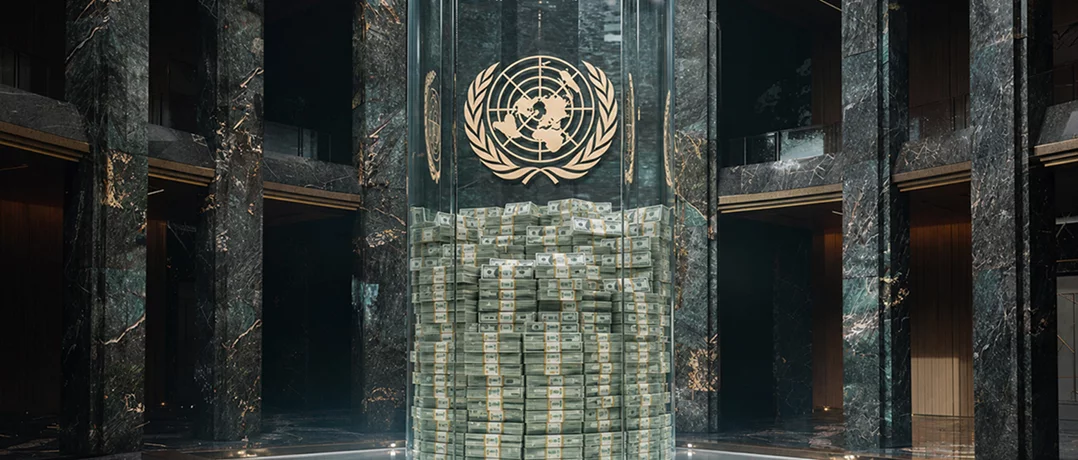
The reform comes at a critical moment for the UN, which is grappling with its worst liquidity crisis in modern history. Mounting unpaid contributions from member states have strained the organization’s finances, forcing widespread spending restrictions, delaying recruitment, reducing peacekeeping expenditures, and raising concerns about the UN’s ability to fulfill its global mandate. Secretary-General António Guterres described the reform as essential for safeguarding the organization’s operational continuity and preventing further financial deterioration.
The recent ruling and why it matters
For nearly 8 decades, the UN operated under a financial rule requiring it to credit back unspent assessed contributions to member states by reducing their future payment obligations. While intended to ensure transparency and fairness, the mechanism became increasingly problematic as governments delayed or withheld their mandatory contributions.
The contradiction was simple yet damaging. When member states failed to pay on time, the UN was forced to reduce spending because the necessary cash was unavailable. Yet under existing regulations, those unspent allocations still had to be returned as credits against future assessments; even though the organization had never received the money in the first place.
Secretary-General Guterres repeatedly described this as a “Kafkaesque” system that trapped the organization in an unsustainable financial cycle. Rather than strengthening the UN’s finances, the rule continuously depleted future revenue and worsened recurring cash shortages.
Under the newly adopted methodology, the UN will only return unspent funds that are actually backed by cash collections. Officials estimate that the reform could preserve approximately $1.5 billion over the next year alone, significantly improving the organization’s liquidity and enabling more predictable financial planning.
Guterres thus welcomed the decision, calling it a critical reform that will particularly benefit peacekeeping operations and ensure that future Secretaries-General are no longer required to refund money that was never paid.
The UN’s widening financial crisis
Although the budget reform addresses one structural weakness, it does not resolve the underlying cause of the organization’s financial instability: member states’ failure to pay their assessed contributions fully and on time.
The UN concluded 2025 with a record $1.6 billion in unpaid regular budget assessments, while total outstanding arrears across the regular budget, peacekeeping operations, and international tribunals exceeded $6.5 billion. With no authority to borrow commercially, the organization depends almost entirely on timely government payments to finance its activities.
By mid-2026, only slightly more than half of the regular budget assessments had been collected, despite modest improvements compared to previous years. Cash reserves had become so limited that senior UN officials warned available funds would cover legal obligations only until August unless additional payments were received.
The situation is particularly influenced by delays from the organization’s largest contributors. The United States (U.S.) and China together account for over 40% of the UN’s regular budget assessments. However, substantial outstanding payments from both countries have significantly constrained the organization’s cash flow.
The resulting financial pressures have already forced difficult decisions. More than 3,000 positions have reportedly been eliminated as part of cost-cutting measures, while hiring freezes, reduced operational spending, and lower peacekeeping expenditures have become necessary to preserve essential functions. The proposed 2026 regular budget has also been reduced by approximately seven percent compared to the previous year.
Despite these austerity measures, UN officials continue to warn that budget reforms alone cannot guarantee financial stability. Predictable and timely contributions from member states remain indispensable if the organization is to avoid recurring liquidity crises.
Lebanon’s previous loss of voting rights over unpaid dues
Under Article 19 of the UN Charter, any country whose unpaid contributions equal or exceed the amount owed for the previous 2 full years automatically loses its voting rights in the UNGA unless the Assembly determines that the failure to pay resulted from circumstances beyond the state’s control.
Lebanon experienced this consequence in 2023, when Secretary-General Guterres announced that the country had lost its General Assembly voting rights after falling into arrears on its mandatory financial contributions. Lebanon required a payment of approximately $1.84 million to restore its voting privileges.
The suspension reflected the broader financial collapse that Lebanon has endured since 2019. Following the collapse of its banking sector, sovereign debt default in 2020, and prolonged political paralysis, the Lebanese government struggled to meet numerous international financial obligations, including its assessed contributions to the United Nations. Shortly afterward, however, Lebanon transferred the required funds, allowing the country to regain its voting rights and resume full participation in General Assembly deliberations and committee work.
Although this drawback was relatively short-lived, it underscored how domestic economic crises can directly affect a state’s diplomatic influence within multilateral institutions. For Lebanon, restoring its voting rights was not merely an administrative matter but an important step toward maintaining its international representation, especially in a body it was a fundamental founding member of.
To conclude, as the UN seeks to strengthen its financial foundations, member states likewise remain responsible for ensuring that their commitments support the effective functioning of the world’s foremost multilateral institution.
The United Nations General Assembly (UNGA) has approved one of the most significant reforms to the organization’s financial rules in decades, ending a longstanding requirement that effectively forced the United Nations (UN) to return money it had never actually received. The decision, adopted following recommendations from the General Assembly’s Fifth Committee, introduces a 4-year trial period under which unspent funds will only be returned to member states if those funds have been collected in cash.-
-

-
The Beiruter
-
