

A new U.S.-backed Iraq-Syria pipeline aims to bypass the Strait of Hormuz, reshaping regional energy security, trade, and Middle Eastern geopolitics.
The U.S.-backed pipeline that could bypass Hormuz
The U.S.-backed pipeline that could bypass Hormuz
By The Beiruter | July 23, 2026

Reading time: 5 min
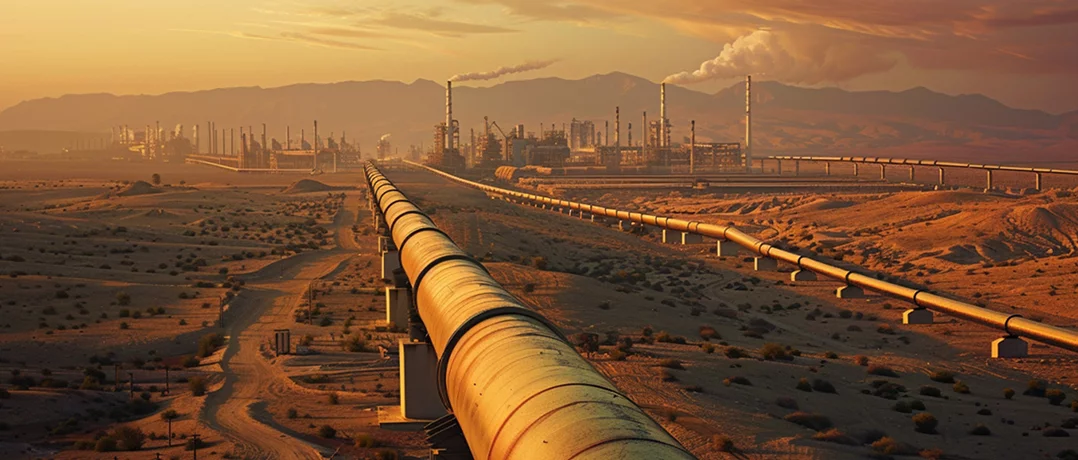
A new chapter in Middle Eastern energy geopolitics is beginning to take shape with the announcement of a United States (U.S.)-backed agreement between Iraq and Syria to rehabilitate and expand an oil pipeline linking Iraq’s northern oilfields to Syria’s Mediterranean coast.
Signed during Iraqi Prime Minister (PM) Ali al-Zaidi’s inaugural visit to Washington, the agreement goes far beyond an infrastructure project. It represents an ambitious strategic initiative aimed at transforming regional energy flows, reducing dependence on the vulnerable Strait of Hormuz, strengthening economic integration across the Levant, and redefining the nature of US engagement in the region.
The pipeline, expected to transport up to 2 million barrels of crude oil per day, revives a historic route that has remained largely dormant for decades. At a time when maritime security in the Gulf has become increasingly uncertain due to regional confrontations between Iran, Israel, and the U.S., the project offers Iraq an alternative export corridor while positioning Syria as an essential transit state connecting Gulf energy resources to Mediterranean markets.
A strategic alternative to the Strait of Hormuz
For decades, Iraq has relied overwhelmingly on the Strait of Hormuz for exporting the vast majority of its crude oil. While the route has facilitated access to Asian markets, it has also exposed Baghdad to recurring geopolitical risks.
Thus, the proposed Iraq-Syria pipeline seeks to mitigate that vulnerability by creating a western export corridor extending from Iraq’s oil-producing regions to Syria’s Mediterranean port of Baniyas. Once operational, Iraqi crude could reach European and international markets without entering the Gulf, providing Baghdad with significantly greater strategic flexibility.
Although Iraqi exports through Hormuz will remain indispensable for years to come, diversification of export routes has become a national security priority rather than merely an economic objective. The project therefore strengthens Iraq’s and Syria’s resilience against future regional crises while enhancing global energy security.
Reviving a historic energy corridor
The agreement effectively revives one of the Middle East’s oldest oil transportation networks.
Originally constructed in the early 1950s, the Kirkuk-Baniyas pipeline once served as one of Iraq’s principal export arteries to the Mediterranean. Political tensions between Baghdad and Damascus during the Iran-Iraq War (1980-1988) led to its closure (as Syria sided with Tehran), while the 2003 invasion of Iraq and subsequent years of conflict left much of the infrastructure severely damaged.
Rather than simply repairing the existing pipeline, the current project envisions constructing a modern high-capacity system capable of transporting approximately 2 million barrels per day; several times the capacity of the original network. Officials estimate construction could require around 30 months following the completion of final technical and financial agreements.
The scale of rehabilitation extends beyond laying new pipes. It will require rebuilding pumping stations, storage facilities, electrical systems, monitoring technologies, and export terminals, effectively creating an entirely new energy corridor adapted to modern production volumes.
American strategy: Economics as regional statecraft
The project also illustrates a notable evolution in Washington’s Middle East strategy.
Rather than focusing primarily on military partnerships, the U.S. is increasingly promoting large-scale economic integration as a mechanism for regional stability. U.S. Energy Secretary Chris Wright described the initiative as part of a broader effort to transform the Middle East from a theater of conflict into a center for trade, investment, and infrastructure development. Meanwhile, the U.S. State Department described the pipeline’s renewal as a
“priority infrastructure project of bilateral and regional strategic significance.”
American companies are expected to play leading roles throughout the project. Chevron will participate in the rehabilitation of the pipeline alongside an international consortium responsible for financing and technical implementation. At the same time, ConocoPhillips has agreed to acquire a major stake in the development of Iraq’s Kirkuk oilfields, while several additional agreements involving healthcare, technology, communications, and infrastructure were signed during the Washington summit.
Collectively valued at more than $60 billion, these agreements demonstrate that Washington seeks to deepen its relationship with Iraq through long-term commercial partnerships rather than exclusively through security cooperation.
From the American perspective, encouraging Iraqi energy exports through Syria also serves broader geopolitical objectives by reducing regional dependence on Gulf shipping lanes and diminishing Iran’s leverage over international energy markets.
Economic opportunities for Iraq and Syria
For Iraq, the pipeline promises multiple economic advantages beyond export diversification.
Greater export capacity can increase production flexibility, attract additional foreign investment, and improve long-term revenue stability. International companies are generally more willing to commit capital when multiple export routes reduce operational risk.
For Syria, the project could become one of the country’s most significant post-conflict economic opportunities. Years of civil war devastated much of Syria’s infrastructure and severely constrained government revenues. Serving as a transit state for Iraqi oil could generate substantial transit fees while stimulating reconstruction efforts around ports, logistics facilities, transportation networks, and associated industrial sectors.
The project also has the potential to restore economic connectivity across the Levant by encouraging similar investments in transportation, electricity, and cross-border trade, thereby strengthening regional economic integration.
Political and security challenges remain
Despite its strategic promise, the project faces considerable obstacles.
Large portions of the proposed route pass through areas that have experienced years of armed conflict, terrorist activity, and political instability. Ensuring pipeline security across hundreds of kilometers will require sustained coordination between Iraqi and Syrian authorities as well as continued international support.
Political uncertainties also remain significant. Iraq continues to balance close relations with both Washington and Tehran, while Syria’s broader political environment remains subject to certain international sanctions, reconstruction challenges, and unresolved security issues.
Although American political backing provides momentum, constructing a modern cross-border pipeline of this scale requires extensive engineering work, long-term investment commitments, and stable political conditions over several years.
Consequently, while the pipeline would not eliminate the strategic significance of the Strait of Hormuz, the project would however substantially reduce Iraq’s vulnerability to disruptions there while reinforcing a broader regional vision based on trade, connectivity, and long-term economic resilience.
Hence, if completed as envisioned, the pipeline could reshape energy dynamics across the Levant, establish a new axis of economic cooperation between Baghdad and Damascus, and become one of the most consequential infrastructure projects in the Middle East in decades.
-
-

-
The Beiruter
-
