

From the Romans to the Byzantines, how did the Tyrian purple lie at the center of the Phoenicians’ world and how does that legacy echo on today?
The vibrant story of Tyrian purple

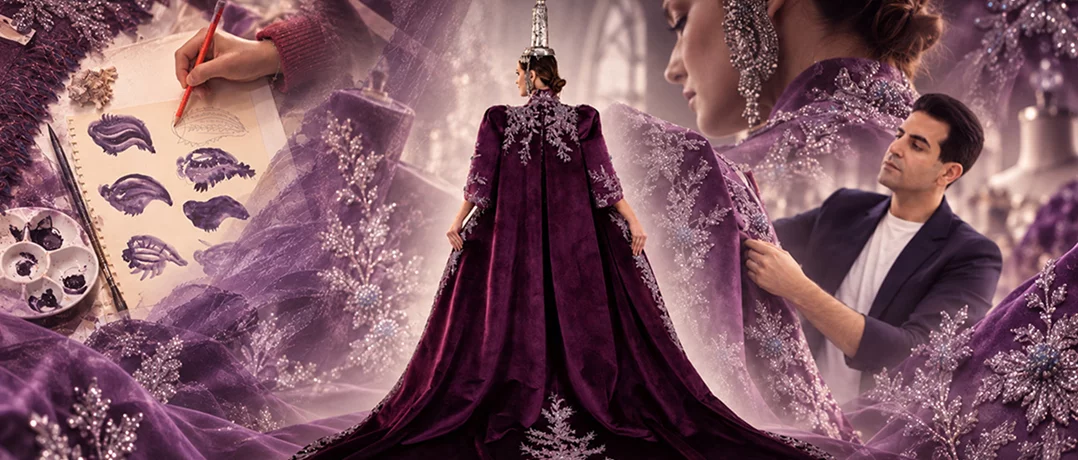
Photo Credit: Joe Challita
A hill of discarded snail shells stands in Sidon today. Located near the medieval Saint Louis Castle and largely covered by modern buildings, Murex Hill is there for those who know how to find it. Some visitors have caught fragments of ancient, crushed purple-dye shells from the hill that were, believe it or not, once used to make the most precious dye the ancient world had ever seen.
Murex Hill is the man-made result of hundreds of Murex sea snail shells discarded by the Phoenicians after they had extracted the snails’ glands from them in order to produce the legendary Tyrian purple dye on a massive scale. The Phoenicians honed this practice across modern-day Lebanon and other parts of the Levantine coast.
“The scale of production and symbolic dimension that Tyrian purple acquired through the Phoenicians during the Iron Age and in Classical Antiquity, the Hellenistic and Roman Age and later Byzantine period is the reason why we link this color to the Phoenicians,” said Charles al-Hayek, public historian and founder of the Heritage and Roots platform.
The number of Tyrian-purple dye workshops uncovered in Beirut, Arwad, Sidon, Sarepta, and Tyre as well as in other Phoenician colonies like Carthage, describes an industry that was so vast that it is a possible reason why we continue to call them Phoenicians today. Coined by the Greeks, the word ‘Phoenicians’ translates to ‘The Purple People’. “Ancient and modern etymologists derive ‘Phoenicia’ and ‘Phoenicians’ from the Greek word 'Phoinix,'" explained al-Hayek. ‘Phoinix,’ means ‘purple’ or ‘crimson’, and was used in this context to link the striking purple color of Tyrian purple with the Phoenicians’ flourishing production and trade of the expensive stuff.
Bronze age beginnings
Some scholars believe that purple-dye production began first in Bronze Age Crete. “The earliest evidence we have of Murex processing is in Crete, around 1800 B.C.E, there is also evidence in Aegina and Cyprus later on.” Dr. Borja Legarra Herrero, Associate Professor & Lecturer in Comparative Mediterranean Prehistory at University College London, shared.
That is not to say that the Levantine coast doesn’t harbor any similar finds. Deposits of crushed Murex shells were uncovered in Sarepta (modern-day Sarafand) and are attributed to the Late Bronze Age (13th century B.C). This would have operated under the Canaanites, the civilization before the Phoenicians. But facts change with every new archaeological find. “There is always a possibility that a new discovery in the Levantine coast may change everything.” Legarra Herrero noted.
Although there is no evidence of technological transfer, it could be a possibility. Legarra Herrero believes there are signs that Crete was producing purple-dyed textiles and that there were Cretan craftspeople working in the Levant and Egypt. “The transfer of technology from Crete to the Levant works well given the circumstantial evidence, but we do not have a smoking gun.”
The Tyrian connection
There’s no doubt that Tyre gave the purple dye its name. Yet, Tyrian purple-dye workshops have been unearthed in many different parts of Lebanon and the wider Levant, not just Tyre. So, why is it called Tyrian?
Tyre’s success for much of the first millennium B.C. was thanks in part to the major production and trade of the purple dye which Tyre had most notably participated in, to such an extent that a Murex snail was represented on most Phoenician coins of Tyre.
Tyre’s connection to Tyrian purple was also largely reflected in Greek and Roman mythology which placed Tyre as the birthplace of the dye. The Greek scholar Julius Pollux wrote that the famous dye was discovered in Tyre when the Roman god Hercules was strolling along the beach with a nymph named Tyros when his dog bit into a Murex snail, dyeing its mouth purple.
The very color of power
With its long-lasting properties and unique color, Tyrian purple became so expensive that in Rome, Tyrian purple was worth more than three times its weight in gold!
The color became the ultimate show of sovereignty. By the fourth century AD, laws in Rome ruled that anybody besides the emperor caught wearing it would be killed. That is where we get the phrase ‘donned in the purple’ to refer to someone becoming an emperor. Unfortunately for King Ptolemy however, this ruler of Mauritania did not last very long as King after he walked into an amphitheater in a Tyrian purple robe. For this grave offense, he was put to death by the Roman Emperor Caligula.
From snails to precious dye
Murex Hill in Sidon offers us a brief glimpse into how vital the Murex snails were in the production of Tyrian purple. The purple pigment was extracted from the mucus of the glands of the snail that when exposed to air and sunlight, changed its color to purple.
Sadly, these sea-snails are almost extinct today in Lebanon. In addition, we do not have any Phoenician text that directly explains the procedure for extracting the dye. “What we do have is a rather late account from Pliny the Elder, a Roman historian who specified how it was done in Phoenicia,” al-Hayek relayed.
According to Pliny the Elder, who explained the process in the 1st Century AD, thousands of snails were needed to end up with a single ounce of purple dye. Once the mucous glands were removed from the snails and fermented, they would have been placed in a vat of salt water and boiled down. On the tenth day, they tested the dye on a piece of fabric.
A purple legacy lingers on
The production of Tyrian purple continued to be restricted in the Byzantine Empire, where it remained a royal luxury. After the fall of Constantinople in 1453 AD, the production of the most sought-after color in antiquity gradually died down.
Very little evidence besides the purple-dye workshops and discarded Murex shells offer us a brief glimpse into that ‘land of purple’, which the name Phoenicia itself means.
This has left behind a gap in our knowledge to sift through. An endeavor that hasn’t stopped people in Lebanon today from honoring the remarkable history of the pigment that once occupied a special place here. That has been one such objective of Lebanese creatives like Joe Challita, the Guardian of Lebanese Fashion History, who drew upon Tyrian Purple to make the jaw-dropping design for Nada Koussa’s National Costume for Miss Universe 2024. “It was a deliberate act of historical recognition,” said Challita who has been invited to universities and fashion colleges in Lebanon and abroad to teach and engage with students about Tyrian purple.
