

The 2026 Iran war is intensifying pressure on Lebanon’s maritime sector, with rising costs and declining demand hitting shipyards and ports.
The war disrupting Lebanon’s maritime lifelines
The war disrupting Lebanon’s maritime lifelines
By The Beiruter | April 05, 2026

Reading time: 4 min
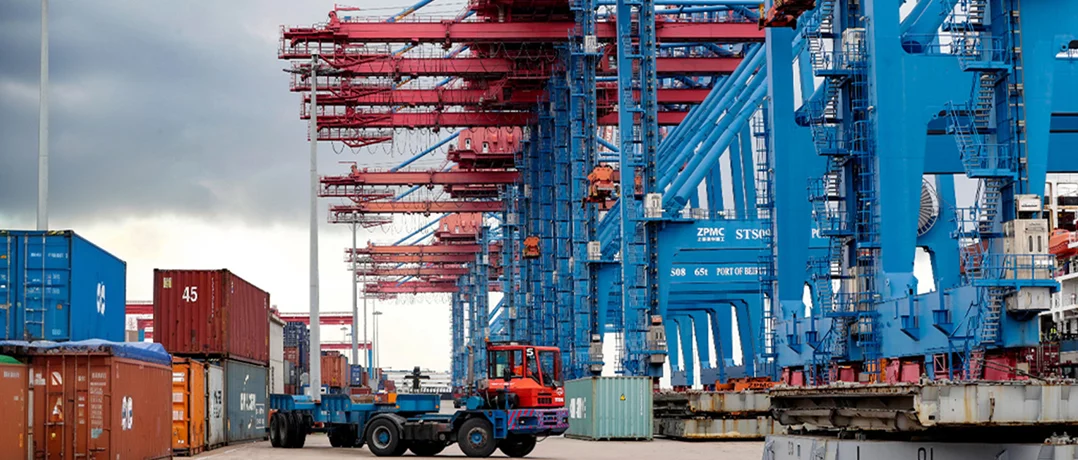
Lebanon imports more than 80 percent of its goods by sea, according to World Bank estimates, making maritime stability essential to its economic survival. As the 2026 escalation between Iran and Israel reverberates across the Eastern Mediterranean, that lifeline is under growing strain. Shipping disruptions, rising insurance premiums and volatile fuel and steel costs are compounding pressures on a country already grappling with prolonged economic collapse.
Industry leaders say the impact is immediate and tangible. Walid Al Badaoui, head of the Lebanese Company for Dry Dock and Construction Vessel (LCDC), said the war is reshaping the economics of maritime operations across the region. Speaking to The Beiruter, he described a sharp contraction in ship repair demand and mounting uncertainty among international clients.
Rising costs and shrinking demand
At the core of the disruption is cost escalation. Global shipping markets have reacted quickly to heightened geopolitical risk in the Eastern Mediterranean, a corridor that handles a significant share of Europe-Asia trade. The Eastern Mediterranean has long been a competitive maritime services hub, Al Badaoui explained, with shipyards in Lebanon, Turkey, Egypt and Greece serving overlapping markets.
In periods of instability, that flexibility can translate into delayed maintenance and shifting demand. A 2024 report by the United Nations Conference on Trade and Development found that global shipping demand tends to soften in regions exposed to geopolitical risk, particularly as operators postpone repairs and reroute vessels.
For shipyards like LCDC, the pressure is twofold. Input costs are rising while demand is weakening.
“The war is a bad influence for the maritime industry,” Al Badaoui said.
Steel prices and oil prices are going up on us as a shipyard, and customers are refusing to dock at these higher costs.
Al Badaoui said clients from Greece, Cyprus, Syria and Lebanon are redirecting vessels or postponing maintenance in anticipation of more stable conditions.
“We are losing many contractors because of this war,” he said.
The result is a slowdown in activity that extends beyond Lebanon, with some clients shifting operations to regional competitors such as Turkey or Egypt. Still, Al Badaoui stressed that the underlying pressures are not confined to one market.
“This is a global problem, not only in Lebanon,” he said.
Beirut’s central role, Tripoli’s constraints
Lebanon’s port infrastructure further shapes how these pressures are distributed. The Port of Beirut remains the country’s primary maritime gateway, handling most imports and a wider range of cargo, while Tripoli plays a more limited role.
“Usually the Port of Beirut has more variety of loading and unloading products,” Al Badaoui said. “The Port of Tripoli is limited.”
That imbalance extends to shipyard activity. Al Badaoui said only a small number of companies rely on Tripoli, limiting demand in the north. Most of LCDC’s current work is local, including maintenance for the Lebanese navy and a small number of Syrian vessels.
Al Badaoui said he is currently focused on local work tied to the Port of Beirut. Tripoli, he added, is seeing little to no activity.
Strategic and security dimensions
Despite the downturn in commercial activity, Lebanon’s maritime infrastructure retains strategic importance. Al Badaoui confirmed coordination with Lebanese naval authorities on maintenance operations, including periodic servicing of military barges capable of transporting heavy equipment.
Such assets, while not directly linked to current hostilities, underscore the dual commercial and security roles of maritime facilities. As regional tensions rise, ports and shipyards become critical nodes not only for trade but also for logistical preparedness.
Still, Al Badaoui emphasized that the current crisis is externally driven and beyond the control of the local maritime sector.
“We have nothing to do with this war,” he said. “What is happening is a disaster for the Lebanese people.”
A crisis beyond 2024
Lebanon’s maritime sector has faced repeated shocks in recent years, from the 2020 Beirut port explosion to the economic collapse that followed. However, Al Badaoui stressed that the current environment differs significantly from previous disruptions.
“The economic problem occurring in the Mediterranean and around the world is much different than what happened in 2024,” he said.
He described current conditions as more severe, driven by global inflation, supply chain volatility and geopolitical conflict. The 2026 Iran-related escalation has intensified these pressures across the region.
“This war is hurting everybody in the region, not only us,” he said.
Uncertainty ahead
For now, much of the industry remains stalled, with shipowners delaying decisions and activity slowing across shipyards and ports, especially in smaller markets like Lebanon.
Al Badaoui remains cautiously hopeful that conditions will stabilize, but acknowledges that recovery depends on factors beyond the maritime sector.
“International customers are most likely waiting and observing the situation for now,” he said.
As the conflict continues to impact the region, Lebanon’s maritime industry remains exposed. For a country heavily dependent on seaborne trade, prolonged disruption could deepen economic vulnerabilities and delay recovery.
-
-

-
The Beiruter
-
