



Why Donald Trump reportedly grew frustrated with Israel over Hezbollah, and how Lebanon remained a strategic bargaining chip in U.S.-Iran negotiations.
The war Trump says Israel didn't finish

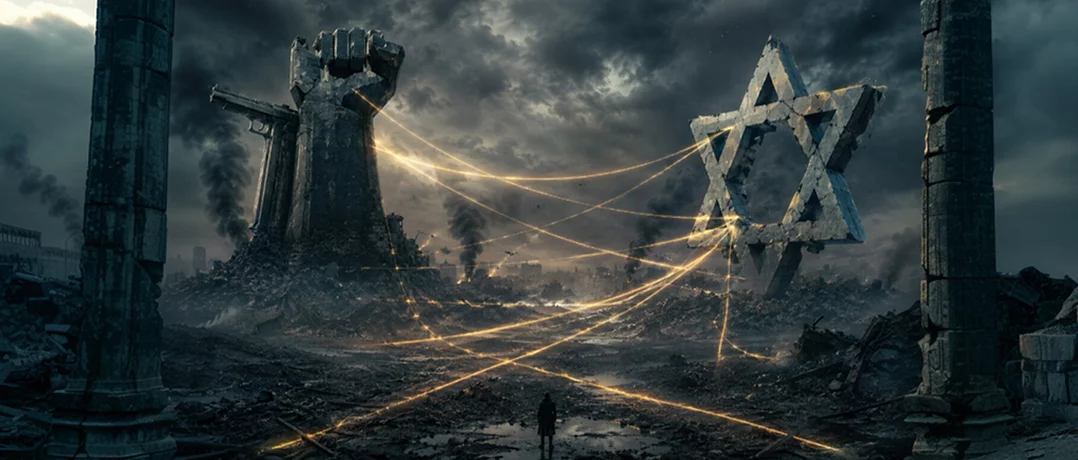
In Washington, Donald Trump's frustration with Israel would not stem from a difference in objectives, but from a difference in results.
In the eyes of the American president, war is not measured solely by the number of strikes carried out or the scale of destruction inflicted. It is measured by what it produces politically. Above all, it is measured by what it makes possible at the negotiating table.
And that is precisely where the Lebanese file appears to have fallen short of certain American expectations.
For years, Hezbollah has been one of the principal arms of Iranian influence in the Middle East. For Washington, any strategy aimed at reducing Tehran's regional influence necessarily required weakening this instrument of power projection.
The objective was not merely military. It was diplomatic.
The idea was simple: deprive Iran of its regional leverage in order to force it to negotiate from a position of weakness.
But despite the severe blows suffered by Hezbollah, the equation has not changed entirely.
The organization has been weakened. It has lost senior figures, infrastructure, and part of its capabilities. Yet it remains an indispensable player in the Lebanese landscape and an asset that Iran can still wield in any discussion about the future of the region.
That is where the real problem would lie.
From Trump's perspective, Israel won battles without managing to close the file once and for all.
And in any negotiation, leaving a file open often means leaving a card in your opponent's hand.
That card is Hezbollah.
Tehran has therefore retained a means of indirect pressure, allowing it to continue influencing American calculations. This reality mechanically reduces Washington's room for maneuver when seeking concessions on nuclear, security, or broader regional issues.
In other words, what was supposed to be an advantage for the United States has instead become a bargaining chip for Iran.
It is through this lens that Donald Trump's widely noted remarks should be understood when he suggested that Syrian President Ahmad al-Chareh could, for his part, "finish the job."
The statement came as a surprise. Some viewed it as a simple provocation. Others saw it as pressure on Israel.
In reality, it appears more like a strategic message.
A message first directed at Israel: when a military operation drags on for too long without producing a definitive outcome, it ceases to be an advantage and becomes a problem.
A message then directed at Iran: Washington still has options to challenge its regional networks of influence.
And finally, a message intended for the new Syria: in the emerging Middle East, some roles could be reassigned.
Trump's method has always been the same. He thinks in terms of the balance of power. Every military operation must strengthen the American position at the negotiating table.
When it fails to do so, it loses part of its strategic value.
That is why the American president's frustration, if it truly exists, would not be directed at Israel's objective, but at the fact that it was not carried through to its conclusion.
For as long as Hezbollah remains a variable in the regional equation, Iran retains leverage.
And as long as Iran retains leverage, the United States negotiates under an additional constraint.
Ultimately, the question may not be why Trump became critical of Israel.
The real question is whether, in his view, the war in Lebanon should have ended differently.
More quickly.
And above all, more decisively.
