

Syrian authorities-imposed curfews as rising sectarian clashes and protests intensified nationwide amid growing political instability.
The wave of sectarian tensions reaches Homs

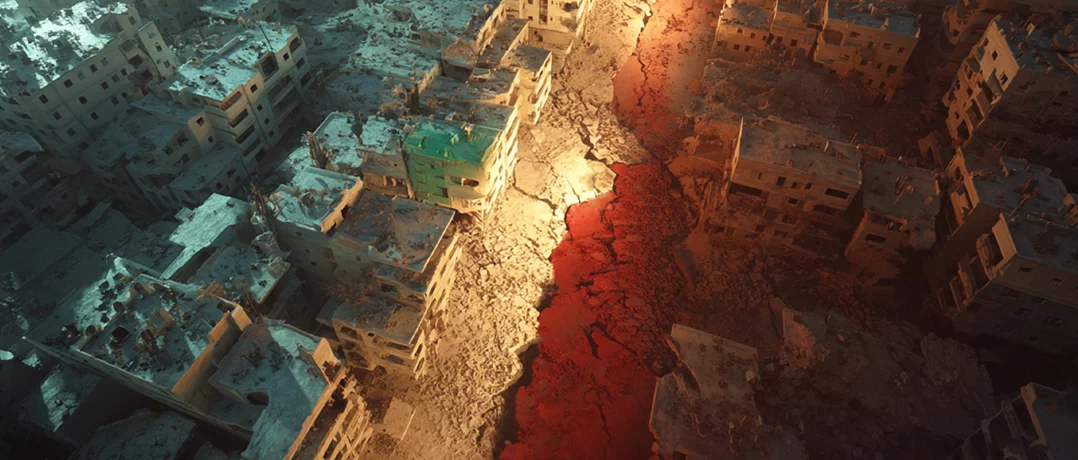
Tensions have recently flared in Syria’s central city of Homs after the killing of a Sunni Bedouin man and his wife triggered a wave of violence against members of the Alawi community.
Sectarian anxiety has risen ever since, with wide protests and warning statements issued by various Syrian factions. It is worth noting that the Syrian Observatory for Human Rights noted that retaliatory violence continued to rise nationwide, with more than 1,150 related deaths reported since the start of 2025.
What happened in Homs?
On 23 November 2025, Syrian authorities imposed a curfew in Homs after a sharp spike in violence triggered severe security tensions across the city.
The unrest began after a couple from the Bani Khalid tribe were killed in the nearby town of Zaidal, an incident that quickly escalated into widespread anger and retaliation. At the crime scene, provocative sectarian phrases were drawn, enraging local as well as national Syrian components. Armed members of the tribe launched attacks in several areas of Homs, damaging homes and shops and firing weapons in residential neighbourhoods.
Simultaneously, a statement issued by the tribes of Homs in Syria warning against “sedation” and calling on the interim authorities to fulfill their role in identifying the perpetrators and bringing them to justice, while also urging all residents of Homs to exercise restraint and fully comply with directives issued by the relevant authorities.
The sudden surge in violence prompted the deployment of army units and Internal Security Forces (ISF), especially around the Basil suburb and al-Muhajireen neighbourhood, in an effort to restore order. Residents reported fear and confusion, particularly as the unrest coincided with students leaving school, leading security agencies to restrict movement in some districts.
What was the Syrian interim authorities’ response?
Following the deadly events, Syrian Interior Ministry spokesperson Nour al-Din al-Baba announced that preliminary information “indicates that the crime is criminal in nature, with attempts to exploit it to stir sectarian tension,” emphasizing that all possibilities remain open as the criminal investigation pursues its work.
Albaba stated that the ISF command in Homs, in coordination with the Syrian army and the military police, “took immediate measures, including deployment, establishing checkpoints, and sending patrols into the neighbourhoods; steps that helped restore control and contain events with minimal losses.” He added that efforts are ongoing to restore a sense of security across all neighborhoods of the city, noting that security forces “detained several troublemakers who attempted to damage and vandalize civilian property.”
Meanwhile, al-Baba stressed that some parties “are attempting to exploit the events by spreading false and fabricated narratives on social media, aiming to destabilize security and undermine civil peace.” As he praised the role of residents and community leaders in “strengthening civil peace and preventing the spread of discord,” he nevertheless urged citizens “not to be drawn in by fake or misleading news intended to incite discord.”
Moreover, the Homs Governorate announced on 24 November 2025 the extension of the curfew in several neighbourhoods to preserve stability and public safety, after an initial assessment showed that almost 70 private properties (from homes, shops and vehicles) were damaged in the unrest.
Recent sectarian tensions, protests and clashes in the country
The clashes and tensions in Homs cannot be understood outside of the contextual situation in Syria as a whole.
Since the fall of the Assad regime on 8 December 2024 and the rise of Hay’at Tahrir al-Sham (HTS), headed by its former commander-in-chief (today the country’s interim president) Ahmed al-Sharaa, to power, Syria had witnessed sporadic sectarian clashes and anxiety erupt. The coastal clashes with the Alawites in March, the clashes between the Druze and the Bedouins and ISF in July as well as ongoing those between the Syrian Democratic Forces (SDF) and the Syrian army have fueled such tensions and anxiety between Syria’s ethnic and sectarian communities for a while now.
On 25 November 2025, the Syrian army and the SDF had initially agreed to halt the escalation in southeastern rural Raqqa, only for the former to announce the following day that some of its positions in eastern Deir ez-Zor countryside had come under attack by Syrian army forces. Likewise, on 26 November 2025, clashes broke out between ISF and a Turkmen military faction (which had taken up position inside a hotel week earlier after forcibly expelling its owner) in the village of al-Badrusiyah in the Latakia countryside.
Furthermore, demonstrations and sit-ins were held on 25 November 2025 in the governorates of Tartus and Latakia, calling for an end to the killings and injustice, decentralization as well as the release of detainees, while another one was witnessed in the al-Zahra neighbourhood of the Homs governorate. These events coincided with the removal of the word “Governorate” from the façade of the Saraya building in the Suwayda Governorate, as an expression of the demands of the governorates’ residents (mainly the Druze community) for independence as an administrative region not subject to the Syrian government.
-
-

-
The Beiruter
-
