



Lebanon and the United States, exploring how civic identity, shared values, and responsibility shape national cohesion and how their erosion leads to division.
Two flags, two futures: What America and Lebanon can learn from each other
Two flags, two futures: What America and Lebanon can learn from each other
By Philip Honein | June 19, 2026

Reading time: 6 min

I was raised between two worlds: America, which taught me what belonging feels like, and Lebanon, which taught me what losing it looks like.
Growing up in the United States, each school day began with the Pledge of Allegiance. Hand over heart, we pledged ourselves to a shared ideal embodied by the flag. It was not about politics; it was about belonging. It reminded us that we were part of something larger than ourselves and instilled the values of responsibility, gratitude, and civic pride. A nation's strength lies not only in its wealth, military power, or technological achievements, but in the values it passes on to its people.
In Lebanon, our particular form of democracy allows us to celebrate our freedoms, our diversity, and our many voices. Yet freedom, when detached from responsibility, can gradually lose its purpose. Tolerance, when detached from responsibility, can become an excuse to avoid difficult truths. That silence becomes a form of surrender. The Lebanese philosopher, diplomat, and statesman Charles Malik understood this well. Freedom, he argued, cannot endure without responsibility. Rights and duties are inseparable. When one is elevated above the other, democracy begins to weaken from within.
There was a time when Lebanon stood tall, when duty to country and fellow citizens mattered, and when the rule of law was respected. Public institutions, though imperfect, commanded respect. Civil order was not merely expected; it was valued. The gendarmerie, particularly the renowned 16th Squad, embodied a discipline that inspired both trust and accountability. Within that framework, Lebanon flourished; its universities attracted students from across the region; its banks inspired confidence; its economy served as a bridge between East and West.
Lebanon did not collapse overnight. Its decline came gradually, one concession, one compromise, and one ignored warning at a time. Successive waves of displaced Palestinians after 1948, 1967, and 1970, Syrian domination, Israeli invasions, Iranian proxies, armed factions, and external conflicts that became internal struggles, all placed enormous strain on Lebanon’s institutions and social fabric. The language of resistance slowly drowned the language of sovereignty.
At the same time, political leaders discovered that division could be profitable. Sectarian fear became political currency. Citizens were encouraged to see themselves first as members of sects, parties, and factions rather than as citizens of a common nation. Politicians exploited identity; financial elites profited from instability; and ordinary citizens paid the price. No one seemed committed to building the country. Everyone wanted a piece of it.
What troubles me today is that over the past two decades, I’ve seen echoes of this pattern in the United States. Americans seem less certain about the identity, values, and principles that once united them. Public discourse has increasingly been shaped by outrage, polarization, and declining trust in institutions. The patience required to understand complexity has been replaced by the urge to pick sides and move on. Too often, people seek victory rather than understanding, leaving Americans divided into camps that speak past one another rather than with one another. At the same time, the traditional stabilizing force of healthy democracies, the middle class, faces mounting pressure as economic power concentrates in fewer hands. These are not merely economic challenges; they are moral ones. When profit becomes more important than purpose, societies begin to erode from within. Faith in institutions is increasingly being replaced by faith in personalities, influencers, and online movements.
To add insult to already injured societies, technology has left people feeling more disconnected than ever from their families, neighbors, communities, and even their nations. Somewhere along the way, we traded family conversations for notifications, local communities for online tribes, and citizenship for identities that often divide more than they unite. We have become remarkably attentive to distant causes while neglecting the health of our own institutions, communities, and civic culture.
In both Lebanon and the US, I see young people searching for a sense of belonging. In Lebanon, many find it in sects and political parties. In the US, they find it in online tribes, movements, and causes. Such belonging has become easier than belonging to a nation. People increasingly rally behind the Palestinian flag, others the rainbow flag, while still others find belonging in ideological movements, partisan banners, or online communities. The symbols themselves are not the point. The question is why so many people feel a stronger attachment to these identities than to the nation they live in, whose freedoms make such expressions possible.
The problem is not activism. Every generation has causes worth defending. The problem arises when those causes begin to replace citizenship itself. A healthy nation can accommodate disagreement, diversity, and competing viewpoints. What it cannot survive is the erosion of a common civic identity. When citizens no longer see one another as members of the same national community, politics becomes a struggle between rival tribes rather than a debate among fellow citizens.
That realization led me, fifteen years ago, to establish the National Council for the Lebanese Flag. Our mission was simple: to place the Lebanese flag above politics and sectarian loyalties by promoting civic education, installing landmark flagpoles, and drafting Lebanon's first Pledge of Allegiance and Flag Code.
Inspired by my years in the United States, when these values mattered, we adapted the Six Pillars of Character Building to the Lebanese context: integrity, respect, responsibility, fairness, compassion, citizenship. Our goal was straightforward: to help Lebanese children develop a sense of belonging before division could take root; for them to experience the same sense of belonging I felt growing up in the United States, a pride rooted not in politics but in shared purpose, shared values, and shared responsibility.
From the wars and proxy conflicts that continue to reshape the Middle East, to the growing polarization across Western democracies, the lesson remains remarkably consistent: societies endure not because they eliminate disagreement, but because they preserve a common identity strong enough to withstand disagreement. When that identity weakens, divisions that once seemed manageable can quickly become existential.
For decades, we have asked how societies can become more diverse, inclusive, and tolerant. These are important questions. But another question receives far less attention: Can a society remain cohesive if every identity is celebrated except its national identity?
Lebanon taught me how fragile freedom can be. The US taught me how powerful unity can be. Today, both countries stand at a crossroads. One struggles to rebuild what it lost, while the other risks losing sight of what made it strong. Both suffer from the same underlying ailment: the gradual erosion of shared truths, civic identity, and moral confidence.
As Dwight D. Eisenhower warned, "A people that values its privileges above its principles soon loses both."
Freedom without responsibility turns into chaos.
Diversity without purpose turns into division.
Wealth without conscience turns into corruption.
These values are embedded in a nation’s flag – whether in Lebanon or the United States. A flag is more than a piece of cloth; it carries the memory of sacrifice, the spirit of a people, and the promise of tomorrow. When we stop honoring it, we lose more than a symbol. We begin to lose ourselves.
-
-
-
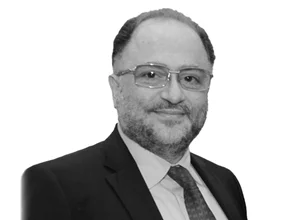
Philip HoneinSenior executive, engaged observer and nonprofit leader
-
