

Türkiye and Egypt are deepening defense cooperation, expanding military and industrial ties while reshaping security dynamics across the Eastern Mediterranean and Middle East.
Türkiye-Egypt defense partnership deepens

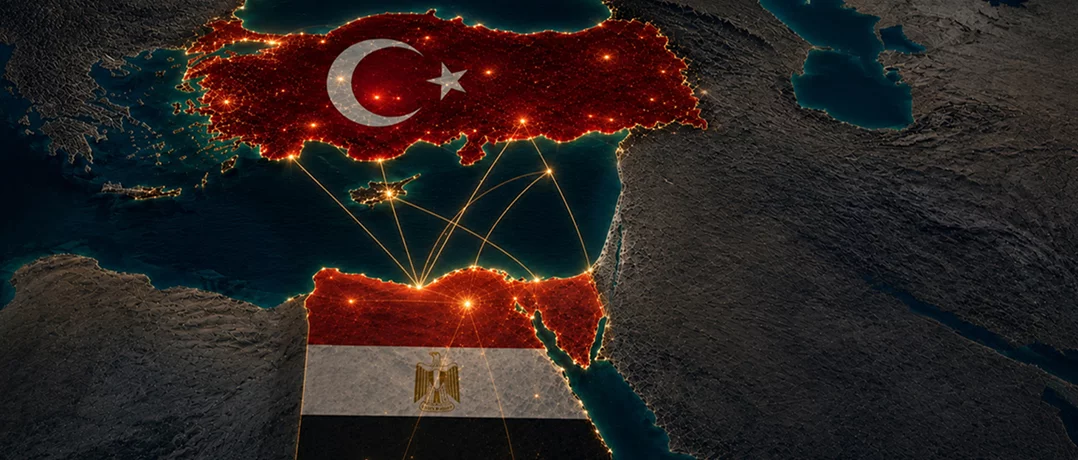
The deepening of defense and security cooperation between Türkiye and Egypt marks one of the most significant developments in Middle Eastern geopolitics. After relations became strained following the political upheaval in Egypt in 2013, Ankara and Cairo have gradually rebuilt diplomatic trust through sustained political dialogue, reciprocal high-level visits, and expanding economic engagement.
The latest agreements signed during Egyptian Defense Minister Ashraf Salem Zaher’s visit to Ankara represent another milestone in that normalization process, signaling both governments’ intention to institutionalize military cooperation while presenting it as a contribution to regional peace and stability.
Institutionalizing defense cooperation
During Zaher’s visit to Ankara, Türkiye and Egypt signed a letter of intent for defense cooperation, reflecting their commitment to placing bilateral military relations on a more structured and institutional foundation.
According to Turkish officials, the agreement aims to deepen cooperation based on mutual trust, shared interests, and historical ties while creating new mechanisms for collaboration in areas related to regional security.
Discussions between Turkish Defense Minister Yaşar Güler and his Egyptian counterpart covered a wide range of issues, including military training, joint operational planning, security coordination, and future defense projects.
Recent military exercises involving the air forces of both countries have demonstrated growing interoperability between their armed forces. Turkish officials stated that these exercises enhanced operational coordination, improved the exchange of military expertise, and strengthened joint capabilities that could contribute to regional security initiatives.
Expanding defense industry collaboration
One of the most significant dimensions of the evolving relationship lies in defense industrial cooperation.
During the Ankara visit, the Egyptian delegation held meetings with Türkiye’s Defense Industries Agency the defense electronics company Aselsan, and drone manufacturer Baykar. Discussions focused on expanding industrial partnerships, technology transfer, and joint production initiatives.
Reports indicate that Türkiye presented proposals covering cooperation in several advanced defense sectors, including unmanned aerial systems, unmanned ground vehicles, armored combat platforms, naval systems, electronic warfare technologies, and ammunition production.
Among the most notable reported developments is Egypt’s potential participation in Türkiye’s 5th-generation KAAN fighter jet program. Although details remain limited, such participation would represent a significant expansion of bilateral industrial cooperation and could strengthen Egypt’s role within emerging regional defense production networks.
Similarly, discussions reportedly advanced regarding the establishment of a local Bayraktar TB2 drone production line in Egypt. Beyond supplying Egypt’s own armed forces, the facility could potentially serve as a regional manufacturing and export hub for African markets, highlighting the broader economic dimension of defense cooperation.
Shared regional interests
Beyond military modernization, both countries have highlighted the broader strategic rationale behind their partnership.
Egyptian Ambassador to Ankara Wael Badawi described the relationship as rooted in long-standing historical, cultural, commercial, and humanitarian ties while highlighting cooperation across defense, energy, transport, healthcare, tourism, and infrastructure.
Regional security remains another major area of coordination. Cairo and Ankara have indicated their intention to continue consultations on several regional crises. For both governments, expanding defense cooperation serves not only bilateral interests but also supports their broader objective of increasing diplomatic influence in a rapidly changing regional environment.
Implications for Greece, Cyprus, and the Eastern Mediterranean
The strengthening Turkish-Egyptian partnership has inevitably attracted attention in Greece and Cyprus, where long-standing disputes with Türkiye over maritime boundaries, exclusive economic zones (EEZ), and the historical dispute over Cyprus continue to shape regional politics.
Despite these concerns, Egyptian analysts largely reject the notion that Cairo’s rapprochement with Ankara comes at the expense of its established partnerships with Athens and Nicosia. Since 2014, Egypt, Greece, and Cyprus have maintained an institutionalized trilateral cooperation mechanism encompassing political consultation, security coordination, energy cooperation, and regional diplomacy. Egyptian officials continue to describe this framework as a successful model of regional integration.
Egypt has consistently sought to maintain balanced relations with all 3 countries. While it remains a signatory to the United Nations Convention on the Law of the Sea (UNCLOS), Egypt’s interpretation of maritime boundaries differs from Türkiye’s position. Nevertheless, Cairo has focused on dialogue and negotiation as the preferred means of resolving disputes.
Some even suggest that Egypt’s improved relationship with Türkiye could position Cairo as an intermediary capable of facilitating future dialogue between Ankara, Athens, and Nicosia on contentious Eastern Mediterranean issues.
From political rivalry to strategic engagement
Relations between Türkiye and Egypt deteriorated sharply after the removal of former Egyptian President Mohamed Morsi in 2013 (a Muslim Brotherhood member who was backed by Ankara). Political disagreements over regional issues and differing foreign policy priorities resulted in years of diplomatic stagnation and limited military contacts.
Beginning in 2023, however, both governments initiated a gradual normalization process driven by changing regional dynamics and shared strategic interests; especially in light of Ankara resetting its foreign policy approach based on Ankara’s earlier “zero problems with neighbors” approach. High-level diplomatic exchanges culminated in reciprocal presidential visits, while mechanisms for regular political and military dialogue were reestablished.
This renewed engagement has steadily expanded from diplomatic relations into defense cooperation. Egyptian Armed Forces Chief of Staff Ahmed Khalifa’s visit to Türkiye in 2025 marked the first high-level military dialogue between the two countries, with both sides agreeing to hold annual meetings aimed at strengthening military coordination and exchanging operational expertise.
-
-

-
The Beiruter
-
