

UN experts warn Iran’s proposed foreign contact bill could criminalize international engagement and further restrict fundamental rights and civil society.
UN raises alarm over Iran’s foreign contact bill
UN raises alarm over Iran’s foreign contact bill
By The Beiruter | September 10, 2026

Reading time: 5 min
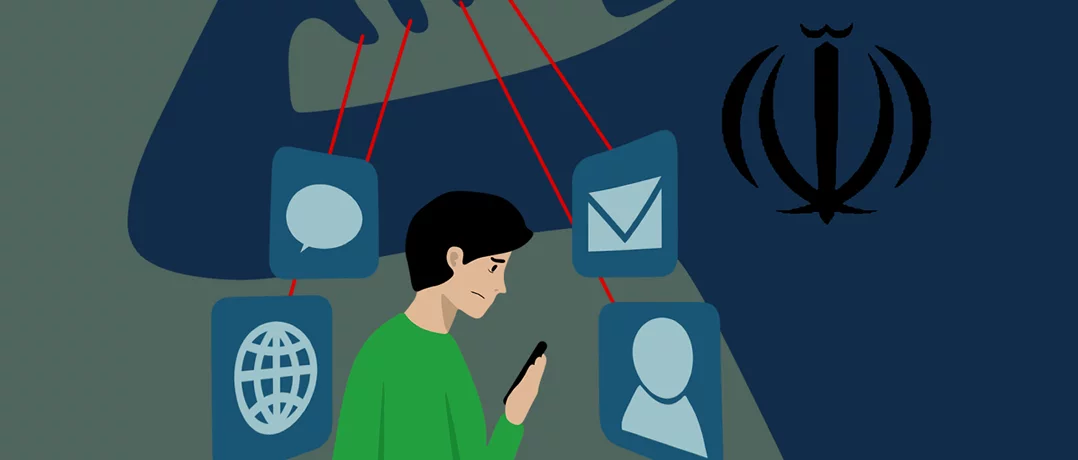
A proposed Iranian law aimed at combating what authorities describe as “foreign infiltration” has drawn sharp criticism from United Nations (UN) human rights experts, who warn that it could criminalize ordinary contact with the outside world and significantly expand state control over freedom of expression, academic cooperation, and civil society activities.
The draft legislation, currently under consideration in Iran’s parliament, would require broad categories of interactions with foreign individuals and organizations to receive prior government approval, with violations potentially punishable by prison sentences of up to 30 years.
A broadly worded bill with far-reaching consequences
The proposed legislation, commonly referred to as the “Countering Foreign Infiltration” bill, is framed as a means to protect Iran’s independence, national sovereignty, cultural identity, and national unity. However, its language extends well beyond traditional espionage or national security offenses.
According to the current draft, virtually any interaction by Iranians or persons living in Iran that is deemed to “undermine” Iran’s sovereignty, Islamic values, or national unity could be prosecuted. The bill establishes broad definitions of prohibited foreign influence, creating significant discretion for security agencies and judicial authorities.
The legislation also proposes an extensive registration system requiring Iranians to declare and obtain prior authorization for activities involving foreign individuals or entities. Approval would be managed through an online platform supervised primarily by Iran’s Ministry of Intelligence and the Intelligence Organization of the Islamic Revolutionary Guard Corps (IRGC), with security considerations taking precedence.
Impact on journalists, researchers, and civil society
The UN Independent International Fact-Finding Mission on Iran has expressed particular concern about the bill’s implications for journalists, academics, researchers, and human rights defenders.
If enacted, routine professional activities could require prior government approval. These include publishing books and articles, operating newspapers or websites, exchanging research and data, collaborating with foreign universities, participating in academic conferences, communicating with international media outlets, and engaging with human rights organizations or civil society groups abroad.
The proposed restrictions also extend to cultural activities, including artistic festivals, workshops, online training sessions, film production, musical performances, and visual arts exhibitions. Economic and commercial activities, including financial transfers, business cooperation, and the provision of goods and services involving foreign entities, would similarly fall under government oversight.
UN experts warn that individuals who fail to obtain prior authorization for such activities could face severe criminal prosecution, with some offenses reportedly carrying prison sentences of up to three decades.
Mission Chair Sara Hossain described the proposal as an attempt to subject ordinary Iranians to blanket criminalization for maintaining contact with the outside world at a time when the country is already experiencing prolonged international isolation resulting from sanctions, domestic repression, internet shutdowns, and recent regional conflicts.
Human rights concerns raised by the United Nations
The Fact-Finding Mission has characterized the bill as a dangerous escalation in Iran’s restrictions on fundamental rights.
According to the UN experts, the legislation would have a chilling effect on virtually every form of international engagement. Beyond freedom of expression, they argue that the measure could undermine freedom of association, academic freedom, the right to education, the right to work, access to information, cultural participation, and even ordinary commercial activity.
The Mission also warned that the legislation could discourage victims of human rights violations, witnesses, lawyers, and civil society organizations from cooperating with international human rights mechanisms, including the Mission itself. Such cooperation is protected under existing Human Rights Council resolutions, including 12/2, 24/24 and S-39/1, and Hossain added that “punishing any interaction by Iranians or persons living in Iran with the Mission under this bill constitutes a reprisal and the threat of criminalizing such activity is a form of intimidation and oppression.”
Mission expert member Max du Plessis stressed that any attempt to punish Iranians for engaging with the UN investigation would violate international human rights standards and would be closely monitored by the Mission in its future reports to the Human Rights Council.
Broader context of the UN Mission and increasing restrictions inside Iran
The controversy surrounding the proposed law comes against the backdrop of heightened political tensions inside Iran since nationwide protests that followed the death of Mahsa Amini in police custody in 2022. Those demonstrations triggered an extensive security crackdown that prompted the UN Human Rights Council to establish the Independent International Fact-Finding Mission on Iran on 24 November 2022.
The Mission was tasked with investigating alleged human rights violations committed in connection with the demonstrations that began on 16 September 2022, with particular attention to violations affecting women and children.
As concerns over Iran’s human rights situation continued to mount, especially following nationwide protests that began on 28 December 2025, the Human Rights Council expanded the Mission’s mandate on 23 January 2026 through Resolution A/HRC/RES/S-39/1, adopted during its 39th Special Session. The resolution extended the Mission’s work for an additional two years following the conclusion of the Council’s 61st session, authorizing it to investigate recent and ongoing allegations of serious human rights violations throughout the country.
The Mission continues to document alleged violations, document alleged abuses, and report its findings to the Human Rights Council. It also monitors potential reprisals against individuals who cooperate with UN human rights mechanisms, emphasizing that victims, witnesses, journalists, researchers, and civil society organizations must be able to communicate with international investigators without fear of intimidation or prosecution.
International observers note that Iran already ranks among the world’s most restrictive environments for independent journalism and access to information. Critics, including the UN Mission as well as Iranian and international rights groups, argue that the proposed legislation would further institutionalize state oversight of information, research, media activity, and international cooperation, reinforcing existing limitations on civil society and public discourse.
As parliamentary deliberations continue, the final version of the bill remains uncertain. However, the debate has already highlighted the broader tension between national security policies and internationally recognized human rights. The outcome of the legislative process will likely have significant implications not only for journalists, researchers, and civil society organizations, but also for Iran’s future engagement with the global community.
-
-

-
The Beiruter
-
