



UNESCO's groundbreaking virtual museum is making the world's stolen cultural objects visible again, one absence at a time.
UNESCO's virtual museum of stolen cultural objects
UNESCO's virtual museum of stolen cultural objects
By The Beiruter | May 20, 2026

Reading time: 3 min
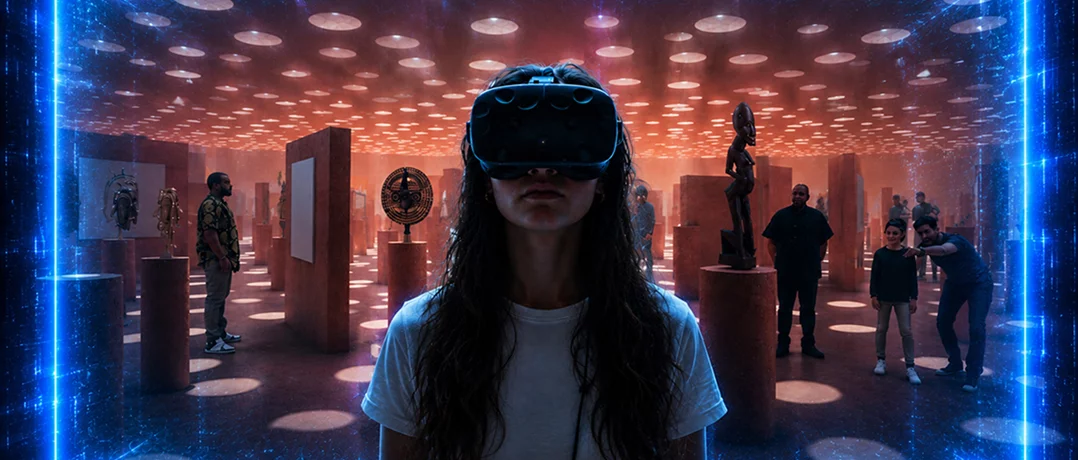
UNESCO has unveiled the world's first Virtual Museum of Stolen Cultural Objects, a free online platform showcasing over 250 looted artifacts from 46 countries, putting faces, stories, and communities behind the global crisis of cultural heritage theft.
A museum designed to empty itself
The concept is as striking as the architecture. Designed by Diébédo Francis Kéré, the Burkinabè architect and 2022 Pritzker Prize laureate, the museum exists entirely online, sited on a virtual mountainside inside a massive digital globe. Its spiraling, helical structure, inspired by the African baobab tree, a symbol of resilience, invites visitors to ascend through connected galleries at their own pace, on any device, anywhere in the world, entirely free of charge.
Inside, more than 250 stolen and missing cultural objects submitted by over 46 member states are rendered in 2D and 3D, each accompanied by its story: where it was created, how it disappeared, what it meant to the community that once held it. The collection spans continents and centuries, from a Ming Dynasty bronze Buddha to a Syrian gold pendant looted from the Palmyra Museum, from stolen manuscripts to sacred sculptures trafficked across borders and into private hands.
Objects are drawn from INTERPOL's Stolen Works of Art Database, the only international database of certified police information on missing art. INTERPOL's database lists more than 52,000 stolen cultural pieces; the virtual museum aims to eventually display around 600 of them.
And here lies the museum's most unusual ambition: it is designed to shrink. As stolen artifacts are recovered and repatriated to their countries of origin, they are removed from the collection and moved into a dedicated Return and Restitution Room, where successful recovery stories are documented and celebrated. Currently, this room features just a handful of objects, including a trilobite fossil returned to Morocco in 2024, but UNESCO intends the room to grow as international cooperation deepens.
Beyond the object
What sets this initiative apart from a simple database is its emphasis on human stories. Each missing artifact is presented as a rupture, a disrupted memory, an erased story, a community deprived of part of its identity. The museum includes testimonies from local communities, educational materials, and narratives that place the theft of cultural heritage in its full human context.
"Cultural objects carry the stories of their communities," the museum's own preamble states, a reminder that illicit trafficking is not merely a legal or economic problem. It is a wound to collective memory.
More than 205,000 visitors have already explored the virtual exhibition since its launch, demonstrating that global audiences are hungry not just for access to culture, but for accountability about its loss.
A global effort
The museum was three years in the making. It was developed with the generous financial support of the Kingdom of Saudi Arabia, with an additional contribution from the United States of America, a partnership that underscores how seriously the international community is taking the fight against illicit trafficking.
UNESCO member states were invited to nominate stolen objects of particular national significance, ensuring that the collection reflects the full geographic and cultural breadth of the crisis. The result is a platform that functions simultaneously as a memorial, an advocacy tool, and a practical instrument for recovery, one that makes the invisible visible, and demands that the world pay attention.
The illicit trade in cultural property is among the most pervasive threats to heritage globally. UNESCO's Virtual Museum will not recover every stolen artifact. But by giving each absence a face, a name, and a story, it changes the terms of the conversation, and perhaps, over time, the outcome.
-
-

-
The Beiruter
-
