UNICEF has launched a WhatsApp-based learning chatbot in Lebanon to help children continue their education amid school closures, displacement, and ongoing crisis.


UNICEF has launched a WhatsApp-based learning chatbot in Lebanon to help children continue their education amid school closures, displacement, and ongoing crisis.

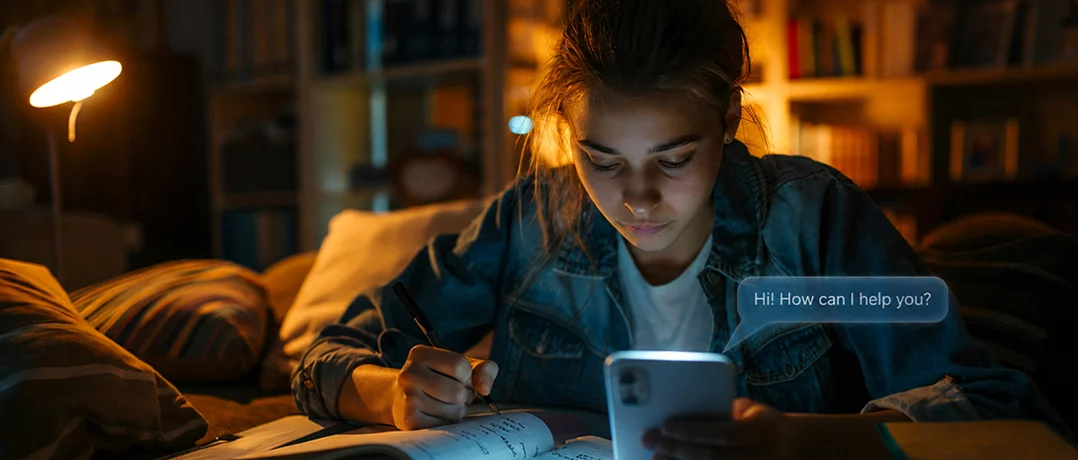
A new digital tool brings curriculum resources, teacher training, and parental guidance to anyone with a phone, as Lebanon's education crisis deepens.
Lebanon's schools have been in near-permanent crisis for years. Economic collapse, COVID-19, the Beirut port explosion, teacher strikes, and repeated waves of conflict have disrupted education for most of this decade. As of March 2026, an estimated 435 public schools are functioning as displacement shelters, with the education of over 115,000 students abruptly halted. As recently as January 2026, UNICEF reported that one in four Lebanese children remained out of school.
Approximately 1.3 million children and youth between the ages of 3 and 18 in Lebanon need support to access quality education, with around a third of school-aged children facing barriers to enrolment or regular attendance. For many families, particularly displaced ones, a functioning classroom is simply not an option.
It is against this backdrop that UNICEF's Digital Learning Hub in Lebanon has launched a new chatbot service, accessible through WhatsApp, designed to keep learning going regardless of whether a child has a school to go to.
The service provides four main functions: curriculum-aligned educational platforms for students, personalized guidance to support self-directed learning, resources to help parents track and support their children's education, and training materials for teachers managing remote or disrupted instruction.
UNICEF, in coordination with Lebanon's Ministry of Education and the Center for Education Research and Development, has already implemented a digital learning program in 14 public schools, targeting Grade 6 and 7 students in mathematics, science, and languages through Madristi, a localized version of UNICEF's Learning Passport platform aligned with the national curriculum.
In October 2025, Lebanon's Ministry of Education launched the Teaching and Learning Innovation Fund, funded by the European Union and implemented by UNICEF, empowering public schools to design their own innovative solutions to improve teaching and learning. The chatbot extends this ecosystem further, reaching families and students outside the formal school system entirely, the very population most at risk of permanent learning loss.
The consequences of sustained school disruption go far beyond missed lessons. A child who misses several years of school faces higher risks of child labor, early marriage, recruitment by armed groups, exploitation, and long-term exclusion from work and civic life, with girls facing sharper barriers where insecurity, poverty, and gender norms combine.
UNICEF has warned that the war has taken a "shocking toll" on children, affecting almost every aspect of their lives, their health, their education, and ultimately their futures. A chatbot cannot replace a classroom, a teacher, or a stable school year. But for hundreds of thousands of children in Lebanon who have none of those things right now, it offers a way to keep learning, from wherever they are.

